Related Articles


Company known for "mafia" of influential tech leaders claims its revised policy language simply "make[s] clear what has always been the case," at odds with more than a decade of its sanctions across ideological lines.
The digital payments company whose founders and former employees are so influential they are known as a "mafia," among them President Trump's allies Peter Thiel and Elon Musk, has new ambitions.
But one of its ambitions, becoming a bank, faces a significant hurdle: more than a decade of account freezes, suspensions and terminations seemingly based on viewpoint rather than fraud or misrepresentation, especially in the early years of the COVID-19 pandemic.
PayPal implemented new policies this week intended to convince the Federal Deposit Insurance Corp. to insure PayPal Bank, its proposed Utah-chartered "industrial loan company," but it appears to have misrepresented how it used at least one policy it just changed.
The company's Sept. 15 letter to the FDIC – updating its March 16 letter with "additional steps PayPal will take as part of its continuing commitment to serving customers fairly and consistently" – claims its user agreement's longtime prohibition on "false, inaccurate or misleading information" has never applied beyond "conduct in the payments relationship."
The claim appears to flatly contradict its record of punishments doled out to customers across the ideological spectrum, from conservative Moms for Liberty to left-leaning Consortium News. Both were targets of the censorship-industrial complex during the Biden administration, whose Treasury Department went so far as tacitly endorsing politically motivated debanking.
The Alliance Defending Freedom made public PayPal's Sept. 15 letter in announcing Thursday the conservative legal powerhouse was dropping its opposition to PayPal's FDIC bid, now that PayPal has "added protection against unfairly debanking customers based on their religious and political viewpoints or affiliations" as of Nov. 4.
Its new commitments "are an important step toward preventing the unfair debanking of its customers" and should be echoed broadly within the financial services and banking sectors, especially replacing "subjective terms like ‘hate’ and ‘misinformation’ with clear, objective standards that protect their customers," ADF senior counsel Jeremy Tedesco said.
ADF has fought a public war against politically motivated debanking for years, allied with House Republicans including Judiciary Committee Chairman Rep. Jim Jordan, R-Ohio, a candidate for House minority leader after the GOP's midterm bloodbath. It represented a Christian international mission against Bank of America, arguing the cutoff violated Tennessee law.
PayPal reversed some of its higher-profile account terminations in 2022, against the U.K. Free Speech Union, its founder Toby Young and his Daily Sceptic news outlet, two weeks after an international outcry that included members of U.K. Parliament.
In that case, it based the deplatforming on violating the "acceptable use policy," reportedly for spreading COVID vaccine "misinformation" and protesting lockdowns.
Weeks later, PayPal debuted and even more quickly reversed an AUP that would allow it to fine users $2,500 for "promoting misinformation" or "objectionable" content – even encouraging users to rat out supposed scofflaws – claiming the information was "incorrect" and "never intended to be inserted in our policy."
Just the News could not find a public record of PayPal's correspondence with the FDIC, including the March 16 letter mentioned in the Sept. 15 letter, and the company didn't answer queries. The FDIC website simply says PayPal's application was "accepted" June 9 but action remains "pending."
FDIC spokesperson Brian Sullivan told Just the News "we traditionally decline to comment on correspondence we receive," even if it raises red flags like the discrepancy between PayPal's portrayal of its former user agreement and actions it took against customers.
PayPal is a relative latecomer to changing its policies, according to ADF.
"Most of the nation’s largest banks made similar policy changes in the last few years," ADF said, citing the Office of the Comptroller of the Currency's report last month on "irrefutable evidence that the nation’s largest banks have denied, debanked and discriminated against customers and lawful businesses," in the words of Comptroller Jonathan Gould.
'Mere pressure' by DeSantis isn't enough to override a 'legal obligation'
Federal Trade Commission Chairman Andrew Ferguson's March 26 warning to financial institutions including PayPal said debanking customers "due to their political or religious views" may constitute false and misleading trade practices by violating terms of service, following up on President Trump's August 2025 executive order.
"Consumers cannot reasonably avoid this harm" from firms with "market power and dominance" like PayPal, "particularly where, as is almost always the case, the First Amendment-protected activity that triggered the adverse action against them had no logical connection to, or material bearing on, their commercial relationship with the payment processor," Ferguson wrote.
ADF's opposition in July to PayPal's bank application laid out evidence that it has "terminated or frozen customer accounts based on those customers’ lawful political beliefs and statements" in violation of President Trump's executive order.
The company "continues to use vague, subjective, and easily weaponized terms in its terms of service and other documents that could permit PayPal to unfairly debank its customers," ADF wrote, calling into question its willingness to serve the "convenience and needs" of its community, one of the FDIC criteria for approval.
"PayPal has a history of mixing business with politics," including when its then-CEO Dan Schulman halted a plan to open an operations center in Charlotte due to North Carolina's new law restricting bathrooms by sex, despite Schulman acknowledging there's no legal "line between free speech and hate," ADF's opposition said.
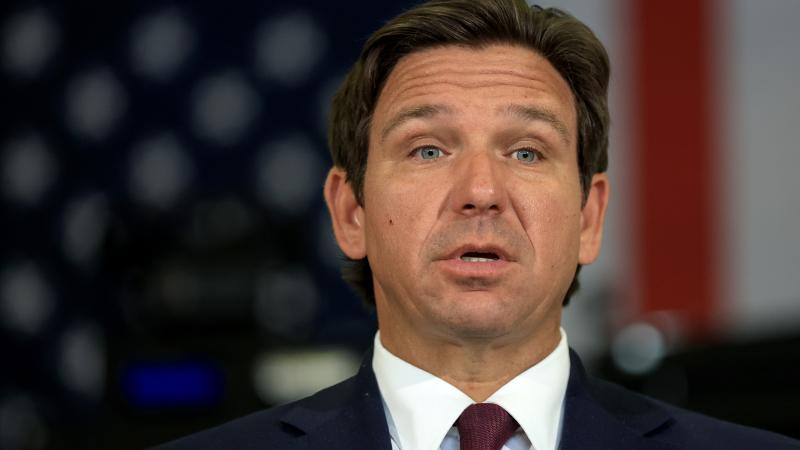
It names several targets of PayPal sanctions, including gender-critical evolutionary biologist Colin Wright and Moms for Liberty, whose accounts were unfrozen only after Florida GOP Gov. Ron DeSantis – who had just spoken at the latter's conference – floated countervailing legislation.
As with the Free Speech Union flap, "this reversal suggests that PayPal’s initial justifications were pretextual," ADF said, since "mere pressure" isn't enough to override a "legal obligation not to provide a service to a customer."
Just the News found roughly 20 incidents of PayPal punishing account holders for plausibly political reasons, including cutting off a legal fundraiser for intelligence leaker Chelsea Manning, terminating services for alternative social media platform Gab, and closing Joy in Liberty's account for raising travel funds for President Trump's supporters.
New language 'make[s] clear what has always been the case'
PayPal's March 16 letter detailed its years of "deliberate and ongoing effort[s] to review and update its relevant policies and processes to continue to ensure that account-related decisions are grounded in objective criteria based in legal and regulatory requirements, contractual obligations, and financial risk mitigation," the Sept. 15 letter paraphrases.
PayPal Bank President Mara McNeill told the FDIC: "These criteria help PayPal ensure that it reviews accounts fairly and consistently, making decisions based on account activity, not a customer’s religion, race, disability, gender, sexual orientation, national origin, political affiliation, or any characteristic protected under applicable law."
The updated AUP removes language prohibiting PayPal services for activities relating to transactions involving "the promotion of hate, violence, racial or other forms of intolerance that is discriminatory," she said.
It now prohibits "engagement in, or the encouragement, promotion, or celebration of, violence or discriminatory activity based on race, religion, disability, gender, sexual orientation, national origin, or any characteristic protected under applicable law."
ADF said the addition of the last four words assuaged its concerns.
The "restricted activities" section of the user agreement will no longer prohibit customers from providing "false, inaccurate or misleading information" undefined, McNeill told the FDIC.
"The updated provision will clarify the scope of that prohibition and make clear what has always been the case – that this restriction is limited to conduct in the payments relationship," she wrote.
The new language limits "false, inaccurate or misleading information" to "your identity, account or business, goods or services offered or purchased, transaction details" or related information.
PayPal's frequently asked questions page will now convey that it "makes assessments informed by legal, regulatory, financial, and contractual considerations to determine whether account activity warrants review or action," to address concerns such as "fraud, violations of law, unlawful discrimination, or risk to the security" of the platform or users," McNeill said.
"PayPal reviews accounts fairly and consistently, making decisions based on account activity, not a customer's religion, race, disability, gender, sexual orientation, national origin, political affiliation, or any characteristic protected under applicable law," the revision reads.