China Broadcasting Syndrome? U.S. media’s ties to Beijing questioned over Trump speech coverage
Trump is not pleased that American media outlets failed to vigorously cover his declassification and release of intelligence documents that detail Beijing’s efforts to obtain millions of voter registration records. It turns out that The Wall Street Journal, The Washington Post, and The New York Times collected millions from the CCP "house organ."
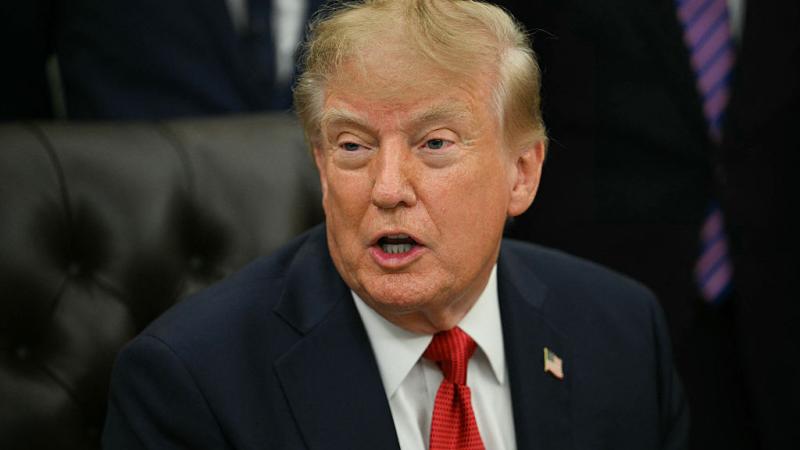
After President Donald Trump declassified hundreds of pages of intelligence documents showing that China obtained more than 220 million voter registration records since 2020 and that the Intelligence Community kept it from him, he lamented that the news media did not cover the disclosures more vigorously.
"They and others in the media are part of a plot. They want to continue this fraud for whatever reason. They want to keep it going. They want to protect the radical left,” Trump said last week.
Various news media organizations argued that the disclosures were old news or that the data China obtained was not a big deal because limited voter registration data is also commercially available.
Commercially available voter data is not the same thing
Security experts previously told Just the News that commercially available voter data is not the same thing, as the intelligence documents show Beijing obtained sensitive information like phone numbers not in the sold data.
While Trump accuses the media of downplaying the revelations because of favorability towards Democrats, China analyst Gordon Chang tells Just the News that it is likely that many American media companies are treading carefully because they do not want to anger Beijing.
“Now, if President Trump were going to lie, they could have covered it afterwards and said he did, but he didn't lie. What he did was he stuck to the facts. And shame on CNN and shame on the others for not carrying this, because you know what they are doing right now, it's not just the hatred of Trump, but also I think they have an eye on Beijing as well, and they didn't want to anger the Chinese because they saw a commercial advantage on staying on Beijing's side,” Chang told Just the News.
“So we've got a real problem here with our media,” he added.
The commercial entanglement of American media companies with China has long been a point of scrutiny, raising questions about the extent to which they can remain neutral while covering China. In one of the most striking examples, China reported to the U.S. Department of Justice in 2020 that one of its state-run media outlets had paid $19 million to various U.S. media outlets over the preceding four-year period.
The advertising campaign by the official China Daily news outlet resulted in $6 million in payments to The Wall Street Journal, $4.6 million to The Washington Post, $50,000 to The New York Times, and $260,000 to Twitter, now called X, Voice of America reported in 2020. The advertisements had previously drawn scrutiny for how they mimicked actual newspaper articles.
The advertisements were particularly contentious that year, the outlet reported, because of growing concerns about foreign meddling in that year’s election and amid a tense period in relations between Washington and Beijing.
Indeed, China Daily purchased a four-page insert in The Des Moines Register in Iowa that was critical of President Trump’s tariff policy. The advertisement, which was disguised as a news story under the title “China Watch,” drew the ire of the president, who accused China of meddling in the election.
At the time, The New York Times told VOA that it had stopped accepting branded content ads from state-run media outlets like China Daily. The Wall Street Journal still maintains a website denoting China Daily as a partner.
U.S. media self-censoring to curry favor with China
In the past, some media outlets have reportedly self-censored their reporting in order to avoid angering Beijing. In 2013, The New York Times reported that Bloomberg News killed investigative stories into financial ties between top Chinese leaders and the wealthiest men in China. Bloomberg L.P., the parent company of the news outlet, sells terminals in China that publish financial data and news articles.
The New York Times reported then-CEO of Bloomberg Peter Grauer as "[giving] a speech here on Thursday that the company should have reconsidered articles that deviated from its core coverage of business news, because they jeopardized the huge sales potential for its products in the Chinese market." As a result, several executive editors and well-regarded journalists resigned from Bloomberg News, it was reported.
Conflicts of interest
Additionally, the large entertainment conglomerates, like Disney and Paramount, that control major media outlets in the United States, have their own financial entanglements with China. Critical coverage could impact their bottom lines.
In the most recent example, Paramount Skydance and Warner Bros Discovery—which owns CBS News and CNN, respectively—had to seek regulatory approval from Chinese authorities for their proposed $110 billion merger.
Paramount came under fire for a creative decision in the 2019 “Top Gun: Maverick” trailer in which the company removed two jacket patches that originally showed the Japanese and Taiwanese flags. After social media backlash suggesting the decision was made to appease China, Paramount restored the Taiwanese flag in the final release. Under Chinese media law, the display of the Taiwan flag is illegal.
Initially in 2019, Chinese technology company Tencent was an investor in the “Top Gun” sequel, but later backed out for fear that the pro-American military themes would anger Communist Party officials in Beijing, The Wall Street Journal reported.
The Facts Inside Our Reporter's Notebook
Links
- declassified hundreds of pages of intelligence documents
- Trump said
- Voice of America reported in 2020
- drawn scrutiny for how they mimicked actual newspaper articles
- accused China of meddling
- told VOA
- still maintains a website
- sells terminals in China
- The New York Times reported
- had to seek regulatory approval from Chinese authorities
- removed two jacket patches
- restored the Taiwanese flag
- display of the Taiwan flag is illegal.
- backed out
Top Stories


Trending
Just the News Spotlight
Just News, No Noise