Abbey Gate trial verdict brings only partial closure, Pentagon vows 'honest accounting' of tragedy
The jury deliberated for about eight hours over two days, ending with a split verdict.
A federal jury on Wednesday found an Afghan national guilty of providing material support to a designated foreign terrorist group in connection with a 2021 bombing attack on a Kabul airport but deadlocking on whether such help directly resulted in the deaths of 13 U.S. service members and others likely means Americans will have to wait to get more answers and fuller accountability elsewhere over the deadly attack.
The defendant, Mohammad Sharifullah, was charged by the FBI with a single count of conspiring with others to provide material support and resources to a designated foreign terrorist organization – ISIS-K – resulting in death.
Thirteen U.S. service members and approximately 170 Afghans were killed in the Aug. 26, 2021, attack at the airport when a suicide bomber detonated an improvised explosive device near the airport entry known as Abbey Gate as U.S. troops were conducting a final evacuation operation from Afghanistan.
The FBI had said that Sharifullah confessed to being involved in “route reconnaissance” in the lead-up to the attack.
The recorded words of Sharifullah were played for hours during his eight-day trial, with the jury hearing the ISIS-K terrorist confessing to conducting reconnaissance ahead of the attack at the airport, denying foreknowledge of it occurring and raising concerns about his detention by the Pakistanis.
The defense team interviewed an Afghan-American interpreter who discussed the hostility of the Haqqani Taliban forces that he had personally witnessed at Abbey Gate, and the defense team also read into the record the summaries of multiple U.S. intelligence report summaries which all pointed to the Haqqani Taliban and its leaders facilitating the bombing in some form.
The DOJ also provided evidence in court that Sharifullah further confessed to a role in facilitating a June 2016 suicide bombing attack which killed more than 10 guards tasked with protecting the Canadian embassy. The FBI has said Sharifullah also claimed to have trained ISIS-K gunmen for a deadly attack on a concert hall in Moscow in 2024.
However, Sharifullah's defense team argued that prosecutors failed to present any evidence beyond its client's own words during hours of FBI questioning tying him to the bombing.
Public defender Lauren Rosen said Sharifullah told FBI agents what he thought they wanted to hear, perhaps because he was afraid of being tortured in Pakistani custody before he was brought to the U.S.
The jury deliberated for about eight hours over two days, with some jurors seeming to disagree about the role Sharifullah played in the attack.
Darin Hoover, the father of Staff Sgt. Darin Taylor Hoover, one of the 13 U.S. troops killed in the Abbey Gate attack, attended multiple days of the trial in northern Virginia.
“First of all, I'm frustrated at the fact that this terrorist has now been convicted of other acts that were committed both years before Abbey Gate and a couple after. In each of those cases that he admitted to, they were all eerily similar in the make-up, scouting of the area, and delivery of the bombs by him and his fellow terrorists,” Hoover told Just the News on Wednesday evening. “To me, Abbey Gate was similar in every way to the rest, but he was not found guilty of helping in that particular bombing, killing our kids. On the other hand, it’s a small win, in that one terrorist is taken from the field, only to be filled by several others, but a win nonetheless.”
U.S. Central Command identified the airport bomber as Abdul Rahman al-Logari, an Islamic State group militant whom the Taliban had released from an Afghan prison just prior to the attack.
The U.S. military relied upon the Taliban – including the Haqqani Network – to provide security outside the Hamid Karzai International Airport while it conducted the chaotic evacuation. The Taliban, a Sunni Islamist nationalist movement, took control of Afghanistan about a week before the bombing.
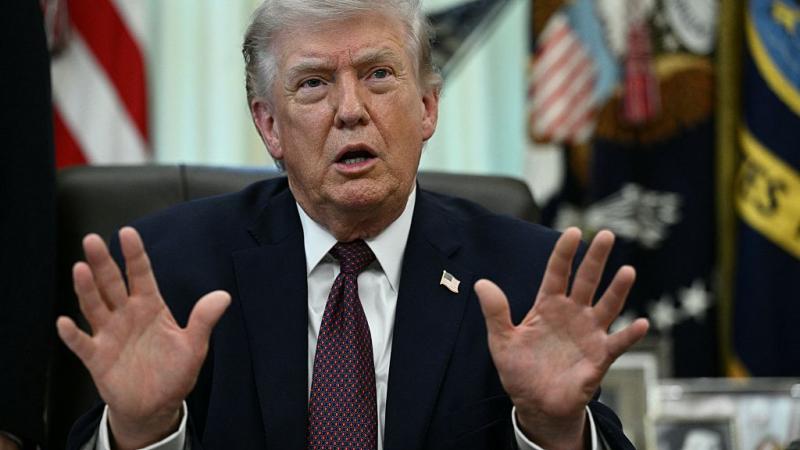
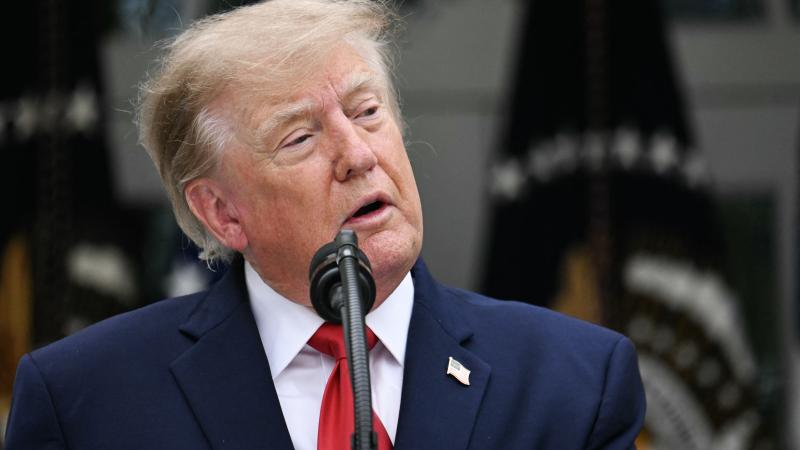
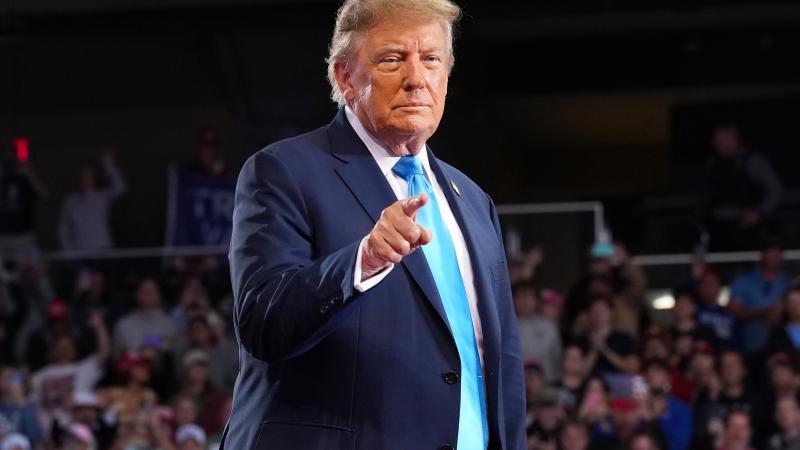
Sharifullah's capture by Pakistani intelligence, with alleged help from U.S. spy agencies, was announced by President Donald Trump at a joint session of Congress in March of last year.
Trump has thanked Pakistan for “helping arrest this monster.” Trump also called Sharifullah “the top terrorist responsible for that atrocity” which killed 13 U.S. service members on August 26, 2021.
FBI Director Kash Patel tweeted shortly after Trump's announcement last year that "tonight the FBI, DOJ, and CIA have extradited one of the terrorists responsible for the murder of the 13 American soldiers at Abbey Gate during the disastrous Afghanistan withdrawal. One step closer to justice for these American heroes and their families."
While the trial and the verdict likely did not provide the outcome many Americans wanted, a Pentagon’s special review panel on the airport tragedy may provide more answers and closure.
Pentagon’s special review panel on the Afghan debacle may provide answers
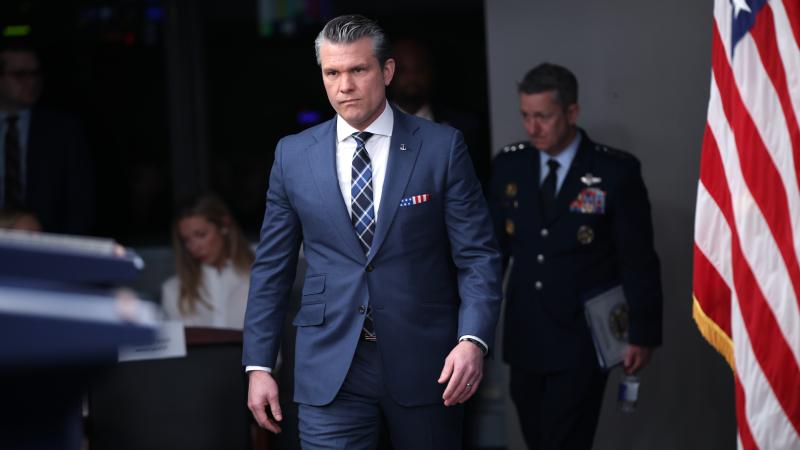
Sean Parnell, the Pentagon’s chief spokesman and the chairman of the Afghanistan Withdrawal Special Review Panel at the Department of War, said earlier this month that the panel “has completed the substantive phase of its interviews with senior military and civilian leaders.”
He also said the panel had “interviewed key figures involved in the planning and execution of the withdrawal” including Gen. Mark Milley, the former Chairman of the Joint Chiefs; Gen. Frank McKenzie, the former commander of U.S. Central Command; and Gen. Austin Scott Miller, the commander of U.S. Forces in Afghanistan through July 2021. The panel had also interviewed then-Maj. Gen. Chris Donahue and then-Rear Admiral Pete Vasely, the two top military commanders on the ground at the Kabul airport.
Parnell said that the panel had also reviewed “more than NINE MILLION documents drawn from multiple agencies and prior Department of Defense efforts” as he argued that “the previous Department-wide review commissioned under former Secretary Lloyd Austin examined around 3,000 documents and was significantly narrower in scope.”
“This will be the most thorough, transparent, and honest accounting the American people have received of what happened in August 2021,” the Pentagon official said. “We are executing at the direction of President Trump and [Defense] Secretary [Pete] Hegseth to deliver a full and unflinching examination of the systemic, institutional, and leadership factors that contributed to the collapse.”
The Pentagon also announced last week that it was upgrading the awards for Marines who had bravely manned Abbey Gate amidst the chaos and violence of the August 2021 evacuation.
“Following the Afghanistan Withdrawal Special Review Panel's recommendation and at the direction of Secretary of War Pete Hegseth, the United States Marine Corps has upgraded the valor awards for the Marines of Company G, 2d Battalion, 1st Marines, who stood at Abbey Gate on 26 August 2021,” Parnell said. “After reviewing the original awards and determining that several had been inappropriately downgraded, these awards have now been upgraded to levels that more accurately reflect the extreme risk these Marines knowingly accepted and the lives they saved under direct enemy fire.”
The panel leader added: “The Marines at Abbey Gate were positioned in the direct blast zone with minimal cover, fully aware of an imminent suicide attack, yet they held their ground to keep evacuation operations running. Their actions that day were heroic. The original awards did not reflect that reality. Today's upgrades correct that injustice.”
Parnell also said that further answers would be forthcoming.
“The Panel will continue its broader work to ensure the lessons from 2021 are learned and that we never again place our warfighters in positions where their courage is not fully honored,” the Pentagon spokesman said. “We owe the American people, the families of the fallen, and every service member who served in Afghanistan nothing less than the truth and the corrections that truth demands.”
Hegseth said that the chaotic evacuation and airport deserve a “full accounting.”
“We have, over the course of months, reviewed what happened leading up to and including the events at Abbey Gate and the disastrous withdrawal in Afghanistan. There's never actually been a full accounting in this department of the decisions that were made,” Hegseth told a Just the News reporter at the briefing. “There's been sort of papered-over congressional attempts, but never a real deep dive, where we brought everybody in to talk about what happened and why it happened. That has happened.”
The war secretary said the special review panel’s report would be released this summer.
Possibility of Abbey Gate collusion has been raised for years
The day of the bombing, Biden Administration officials quickly denied that there had been collusion between the Taliban and ISIS-K and defended the U.S. decision to coordinate with the Taliban members on airport security.
President Joe Biden immediately claimed he had seen “no evidence” of “collusion between the Taliban and ISIS in carrying out what happened today.”
The Pentagon under Biden argued that the attack was not preventable – going so far as to say it still would have occurred even if the bomber had remained behind bars rather than being freed by the Taliban – despite a host of evidence indicating that the attack did not have to happen the way it did.
McKenzie said in September 2021 that it was at least “possible” that the Taliban allowed the ISIS-K attacker through their security perimeter “on purpose.”[i] But he argued that “the body of intelligence indicates that is not in fact what happened.”
The general argued in his memoir that “I am certain that the Taliban did not cooperate or assist any ISIS-K attacker with their planning or execution over the course of the evacuation.”
The UN sanctions monitoring team said in 2020 that some countries noted that most ISIS-K attacks include “involvement, facilitation, or the provision of technical assistance” by the Haqqani Network, and that ISIS-K “lacked the capability to launch complex attacks in Kabul on its own” without Haqqani help. The UN team also said it had “viewed communication intercepts in the wake of attacks that were claimed by ISIS-K that were traceable to known members of the Haqqani Network.”
The UN team said that some countries “have reported tactical or commander-level collaboration between ISIL-K and the Haqqani Network.” Taliban spokesman Zabihullah Mujahid said that “we strongly reject this propaganda” and that “we have nothing in common (and don’t operate cells) with Daesh [ISIS-K].”
Miller told Congress in 2024 that “I could never verify a Haqqani-ISIS nexus.”
Major Gen. Buck Elton and Captain Joshua Fruth assessed in late 2021 that “the Taliban may have leveraged ISIS–K as a proxy strawman layer of separation to oversee and/or facilitate the attack on U.S. service members and Afghan civilians” at the airport.
Sharifullah told the FBI last year that the “emirs in Kabul” – the ISIS-K leaders in the Afghan capital – make decisions about what to strike, though he claimed he didn’t know who carried out the Abbey Gate attack.
He pointed to “Engineer Shahab” and “Nawab” – ISIS-K top leader Sanaullah Ghafari and Kabul area ISIS-K commander Qari Nawab — as the men who likely made the Abbey Gate decision, saying those two “must have been aware.”
Sharifullah said in the recordings that he had met with Ghafari, also known as Shahab al-Muhajir, in the lead up to a terrorist attack back in 2016. The State Department’s Rewards for Justice lists an award of $10 million for information on Ghafari.
West Point’s Counterterrorism Center published an article in 2022 stating that Ghafari had joined “Taliban factions affiliated with the Haqqani network” and “had close links to the Haqqani network’s senior commanders, Taj Mir Jawad and Qari Baryal, who ran terrorist networks in the capital.”
Taj Mir Jawad had been picked to be the deputy chief of intelligence for the Taliban-led government in September 2021, and Qari Baryal was selected to be the governor of Kabul province by the Taliban in November 2021.
Thus, not only was ISIS-K leader Ghafari closely tied to the Haqqani Network as a general matter, but he also had a close personal history to two Taliban officials who went on to be key leaders in the Taliban’s ruling regime.
Unanswered questions on whether Abbey Gate attack was truly “not preventable”
Biden's Pentagon argued that the Abbey Gate attack was not preventable — going so far as to claim that the attack still would have occurred even if the bomber had remained behind bars rather than being freed by the Taliban — despite a host of evidence indicating that the ISIS-K attack at Kabul airport did not have to happen the way it did.
Army Brigadier Gen. Lance Curtis insisted in 2022 that “this was not preventable." A Defense Department official asserted in an agency news article in 2024 that ISIS-K would have simply used a different bomber and thus the Abbey Gate attack still would have happened even if al-Logari had remained behind bars at Bagram Air Base. HFAC's report last year did not mention this claim.
The ARCENT investigation in 2024 also contained testimony revealing the alleged absence of U.S. video surveillance, surveillance cameras, and drone feeds pointed at the location of the bombing when the attack occurred.
The Taliban forces purportedly providing security outside of Kabul airport included the Haqqani Taliban’s Badri 313 suicide units. CENTCOM'S Gen. Kenneth McKenzie admitted on TV, in congressional testimony, and in his memoir that the Taliban repeatedly refused to search or raid potential ISIS-K locations during the evacuation.
A U.S. military investigation also concluded the Taliban failed to do all it could to prevent the attack.
Less than two weeks before the bombing, McKenzie held a meeting with Taliban leader Mullah Baradar in Doha, Qatar, which would end with the Taliban taking control of Kabul and the U.S. relying upon the goodwill of Taliban fighters to provide security at the Kabul airport during the evacuation.
During that meeting, Baradar said the Taliban was willing to withdraw its forces from in and around Kabul and would let the U.S. send in as many troops as it wanted to secure the Afghan capital and conduct the U.S. evacuation free from Taliban interference, but McKenzie admits that he turned the offer down on the spot.
A U.S. military investigation also found that the U.S. military had not done all it could to properly secure the airport against threats ahead of the evacuation. The U.S. military also did not conduct constant surveillance of Abbey Gate during the evacuation, despite the ISIS-K threats against the airport and against that gate. The U.S. military also did not carry out any strikes against ISIS-K until after the bombing.
It would later turn out that the deal McKenzie made would allow the Haqqani Taliban's notorious suicide unit, called the Badri 313, to be responsible for securing the airport.
The steps the U.S. could have taken to avoid the bombing have not been formally acknowledged, the role the Taliban may or not have played remains unclear and, following the trial, no ISIS-K members have been held accountable in court for their part in the attack either.
The Justice Department put out a press release on Wednesday touting that “a federal jury today convicted Afghan national Mohammad Sharifullah, a member of the terrorist organization the Islamic State of Iraq and ash-Sham-Khorasan Province, of participating in a nine-year conspiracy to provide material support and resources to a designated foreign terrorist organization.”
The DOJ made no mention of the jury deadlocking over the element of the charge which had alleged Sharifullah’s actions were responsible for deaths at Abbey Gate.
“This not guilty verdict is a setback to be sure but we are not abandoning our work on behalf of our kids. We are their voices and the work will continue,” Hoover told Just the News on Wednesday. “Next up is the Department of War investigation, that needs to come up with all the many failures from the top down of our war fighters and their places in the withdrawal from the war. Something like this should not and can not ever happen again.”
The Facts Inside Our Reporter's Notebook
Links
- charged with
- said
- confessed
- recorded words
- all pointed to
- chaotic and deadly
- provide security
- thanked Pakistan
- tweeted
- said
- announced
- declared
- claimed
- not preventable
- said
- argued
- said
- said
- said
- told
- assessed
- lists an award
- published
- picked
- selected
- argued
- insisted
- asserted
- said
- included
- on TV
- in congressional testimony
- in his memoir
- also
- concluded
- admits
- found
- did not
- did not carry out
- notorious suicide unit
Top Stories


Trending
Just the News Spotlight
Just News, No Noise