Related Articles
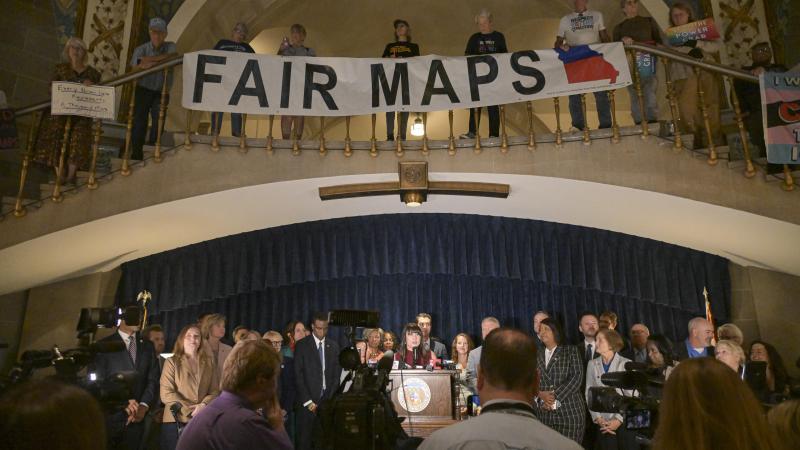

The Supreme Court’s April 29 decision in Louisiana v. Callais narrows the scope of the Voting Rights Act and sends Republican-led states rushing to redraw congressional maps.
The Supreme Court recently handed down one of its most consequential voting rights decisions in decades, striking down Louisiana’s congressional map in a 6–3 ruling that significantly curtails the power of Section 2 of the Voting Rights Act of 1965. The decision in Louisiana v. Callais, written by Justice Samuel Alito and joined by Chief Justice John Roberts and Justices Clarence Thomas, Neil Gorsuch, Brett Kavanaugh, and Amy Coney Barrett, has already triggered a rush of political condemnation and legislative action across the country, with governors calling special sessions and primaries being suspended in the final stretch before the 2026 midterm elections.
The case centered on a Louisiana congressional map drawn in 2024 that included two majority-Black districts, created after years of court-ordered redistricting. A three-judge federal panel had previously struck down the map as an unconstitutional racial gerrymander, finding that the map’s second majority-minority district—which stretched roughly 250 miles from Shreveport in the northwest corner of the state to Baton Rouge in the southeast, connecting pockets of Black voters across several cities—was drawn with race as the predominant factor.
The Supreme Court agreed. Writing for the majority, Justice Alito framed the ruling as a correction of courts that had “sometimes applied” the Court’s own precedents “in a way that forces States to engage in the very race-based discrimination that the Constitution forbids.” The majority held that while compliance with the Voting Rights Act could theoretically serve as a compelling interest in redistricting, it did not require Louisiana to add the second majority-Black district in this instance and therefore could not justify the race-based line-drawing the map employed.
Critically, the Court did not strike down Section 2 of the Voting Rights Act outright, as some legal observers had suspected might happen. However, it dramatically raised the bar for plaintiffs challenging maps under the law, requiring proof of “present-day intentional racial discrimination regarding voting” rather than allowing courts to infer discrimination from statistical disparities or historical patterns. The ruling also reworked the 40-year-old framework from Thornburg v. Gingles (1986), which had long guided lower courts in evaluating claims of minority vote dilution.
The three liberal justices—Sonia Sotomayor, Elena Kagan, and Ketanji Brown Jackson—dissented in sharp terms. Civil rights organizations condemned the ruling in stark terms. NAACP President Derrick Johnson said in a statement that the decision is a “devastating blow to what remains of the Voting Rights Act [...] The Supreme Court betrayed Black voters, they betrayed America, and they betrayed our democracy.”
The path to Wednesday’s ruling was long and winding. The underlying dispute began after Louisiana redrew its congressional districts following the 2020 census, initially creating only one majority-Black district. Federal courts found that this map likely violated Section 2 and ordered Louisiana to add a second. When the legislature complied by drawing the contested SB8 map, a separate group of plaintiffs—white voters who argued the new district constituted an illegal racial gerrymander—successfully challenged it before a different federal appellate panel.
The cases were consolidated at the Supreme Court as Louisiana v. Callais. After initial oral arguments in March 2025, the Court took the unusual step of ordering reargument for the following term, instructing all parties to address the broader constitutional question of whether creating a second majority-minority district violated the Fourteenth or Fifteenth Amendments. Notably, the state of Louisiana itself switched sides during that interval, filing a brief arguing that all race-based redistricting is unconstitutional. The Court ultimately issued its decision on the last day of April.
Within hours of the ruling, Republican governors across the South began positioning their states to take advantage of the new legal landscape.
Louisiana Gov. Jeff Landry and Attorney General Liz Murrill announced Thursday that the state would suspend its May 16 primary elections to give the legislature time to draw a new, compliant map. The move drew immediate controversy, as mail-in ballots had already been sent to overseas and early-voting residents. Landry’s administration defended the decision as necessary to preserve the integrity of the eventual map.
Tennessee Gov. Bill Lee called a special legislative session on Friday, directing lawmakers to convene as soon as possible. “After consultation with the Lieutenant Governor, Speaker of the House, Attorney General, and Secretary of State, I believe the General Assembly has a responsibility to review the map and ensure it remains fair, legal, and defensible,” Lee said. The target is widely understood to be the Memphis-area 9th Congressional District, the state’s sole Democratic seat, held by Rep. Steve Cohen. Tennessee’s state code prohibits mid-decade redistricting, meaning lawmakers would first have to repeal that provision before redrawing any lines. President Trump amplified the call, posting that the move “should give us one extra seat” and urging Lee to “push hard.”
In Alabama, Gov. Kay Ivey initially took a more cautious posture on Wednesday, citing ongoing litigation stemming from the 2023 Allen v. Milligan decision, in which the Supreme Court had ordered Alabama to create a second majority-Black district. “While we are not in a position to have a special session at this time, I hope in light of this new decision, the court is favorable to Alabama,” Ivey said.
By Thursday, Alabama had filed an emergency motion seeking to lift a federal injunction that had blocked the legislature’s preferred maps. And on Friday, Ivey reversed course and called a special session to begin Monday. Alabama Attorney General Steve Marshall said the state “will act as quickly as possible” to apply the Callais ruling and “ensure that our congressional maps reflect the will of the people, not a racial quota system the Constitution forbids.”
Mississippi Gov. Tate Reeves announced that a redistricting session would be held 21 days after the ruling. His initial call was technically focused on the state’s Supreme Court districts, but Republican operatives in the state said congressional redistricting could be added to the agenda—potentially targeting the state's heavily Democratic 2nd Congressional District, held by Rep. Bennie Thompson. Reeves was less measured than some of his peers in his public reaction. “First Dobbs. Now Callais. Just Mississippi and Louisiana down here saving our country!” he posted on social media.
Georgia Gov. Brian Kemp signaled that his state would not redraw its maps before November but acknowledged change was coming. “The Supreme Court’s decision in Louisiana v. Callais restores fairness to our redistricting process and allows states to pass electoral maps that reflect the will of the voters, not the will of federal judges,” Kemp said. “Voting is already underway for the 2026 elections, but it’s clear that Callais requires Georgia to adopt new electoral maps before the 2028 election cycle.”
South Carolina Gov. Henry McMaster also weighed in, suggesting his state would examine its options in light of the ruling.
No state moved more swiftly than Florida. Gov. Ron DeSantis had been anticipating the Callais ruling for months, calling a special legislative session in late April specifically to redraw the state’s congressional map. When the decision dropped on Wednesday, Florida lawmakers were already mid-session. Both chambers approved DeSantis’ new map the following day— the Florida House on an 83–28 vote, the Senate 21–1 — with the entire process from map proposal to passage taking just three days and drawing criticism from Democrats who noted that previous redistricting efforts had included weeks of public hearings.
The new map is designed to give Republicans up to four additional congressional seats by targeting Democratic-leaning districts in the Tampa Bay area, greater Orlando, and the Miami metropolitan area. “This is a great day,” said Republican state Rep. Alex Andrade after the House vote. “I got to read [the Callais decision], and it perfectly summarizes exactly why we could, and should, change our 2022 maps.”
The map does not entirely eliminate the state’s two majority-Black districts, but it does weaken their boundaries. DeSantis framed the map as correcting an improperly apportioned system, telling Fox News that it “more fairly represents the makeup of Florida today.”
Democrats and voting rights groups immediately announced plans to file suit once the governor signs the legislation. Legal experts noted that Florida’s state constitution contains a “Fair Districts” amendment that explicitly prohibits partisan gerrymandering.
Callais could prove to be the decisive thumb on the scale. Analysts estimate that if Republican-led states successfully redraw their maps in states like Alabama, Tennessee, Florida, and Mississippi, the GOP could net anywhere from one to nine additional House seats in 2026 alone—potentially expanding the party’s existing majority.
The obstacles, however, are formidable. Time is the most pressing constraint: several states have primaries scheduled in May and June, with filing deadlines long since passed and early voting already underway. Courts may also intervene to block new maps before they take effect, and any freshly drawn district lines are certain to face immediate legal challenges.
Civil rights advocates have vowed to fight the ruling on every front. The NAACP Legal Defense Fund said the decision “eviscerated Section 2 of the Voting Rights Act,” while FairVote declared that the ruling imposes “a new test for drawing districts that makes it nearly impossible for voters of color to win fair representation.” Congressional Democrats have called for legislation to restore Section 2’s protections, though such efforts face little prospect of advancing in the current Congress.
For now, the immediate fight is in state legislatures, courtrooms, and election offices—playing out in real time just months before an election that will determine who controls the House of Representatives.