Top Fauci adviser’s plea deal provides possible roadmap for further conspiracy prosecutions
The plea agreement from Dr. Anthony Fauci's former senior adviser details a scheme to evade public records laws, suggesting potential legal jeopardy for the others involved.
The plea deal agreed to by former top Dr. Anthony Fauci adviser David Morens, filed in federal court this week, provides a roadmap for further conspiracy charges in the scheme to conceal communications about coronavirus research grants from Freedom of Information Act requests, a review of the court documents shows.
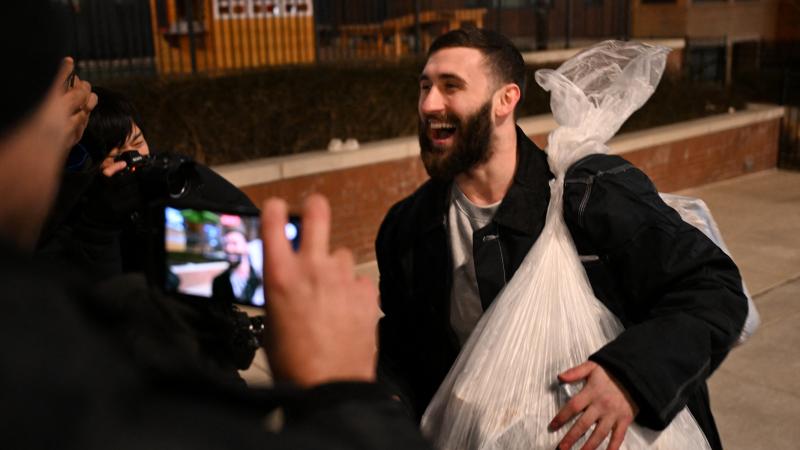
Morens, who served as a senior adviser to Fauci at the National Institutes for Allergy and Infectious Diseases for 16 years, pleaded guilty earlier this week to the conspiracy, admitting to working with two co-conspirators to conceal agency records from public view.
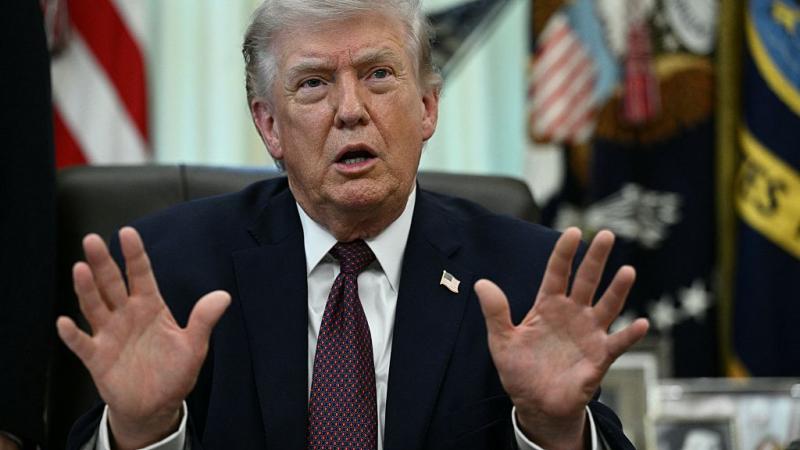
The records dealt with a National Institutes of Health grant to “Company #1,” an entity that sponsored coronavirus research at the Wuhan Institute of Virology laboratory in China. Just months after the COVID-19 pandemic spread to the United States, the NIH canceled the bat coronavirus grant to the company as it reviewed allegations that the laboratory may have been the source of the virus in a lab leak after President Donald Trump publicly acknowledged his awareness of the grant in late April 2020.
Though not identified by name by prosecutors, Company #1 is EcoHealth Alliance, the former New York-based nonprofit headed by Peter Daszak that Fauci’s agency used as a pass-through to fund controversial gain-of-function research at the Chinese facility. At the time, as questions swirled about the origins of the virus then spreading across the globe, federal health officials were assessing their agencies’ exposure to that research in China. EcoHealth and Daszak, which awarded sub-grants to the facility in Wuhan, were at the center of that scrutiny.
While the focus has been on Morens after his guilty plea earlier this week, the plea agreement provides significant detail about the overall conspiracy and identifies Daszak – by implication and not by name – as “Co-Conspirator 1” in the scheme to avoid FOIA requests, raising the possibility that the British zoologist could face his own legal jeopardy for his alleged involvement.
The agreement, which was signed by Morens, lays out in detail how he, Daszak and another conspirator worked to conceal records related to EcoHealth’s coronavirus research grant and used Morens’ status as a senior adviser to advance the interests of EcoHealth within the NIH.
“On or about April 25, 2020, after learning about the cancellation of the bat coronavirus grant from Co-Conspirator 1, MORENS forwarded his communications with Co-Conspirator 1 and Co-Conspirator 2 from his NIH email account to his Gmail account,” according to the Stipulation of Facts appended to Morens’ plea deal.
You can read the plea agreement and the addendum laying out the facts of the case below:
“MORENS then emailed Co-Conspirator 1 and Co-Conspirator 2, stating, ‘This is sent from my gmail account. Please send all replies here To gmail [...] There are things I cant say except [Senior NIAID Official 1] is aware and I have learned that there are ongoing efforts within NIH to steer through this with minimal damage to you, [Co-Conspirator 1], and colleagues, and to nih and niaid,’” the document also states, outlining Morens' effort to initiate the conspiracy to conceal federal records.
After the conversations were moved off of Morens’ government email account, he, co-conspirator 1, co-conspirator 2 “and others plotted and repeatedly expressed their intention to conceal federal records to evade FOIA and provided information to Senior NAID Official 1 that was favorable to Co-Conspirator 1 and Company #1.”
Additionally, the government alleges that Co-conspirator 1, who is Daszak, “provided and promised to provide MORENS with things of value for or because of official acts and ‘behind the scenes shenanigans’ favorable to Co-Conspirator 1 and Company #1,” including gifts of two bottles of The Prisoner Red Napa Valley wine after Morens drafted an article favorable to EcoHealth.
The gift included the following message from Daszak: “This is the first of what I hope will be a continued series of expressions of gratitude for your advice, support, and behind- the-scenes shenanigans in my battle against your bosses boss, his boss, and the ultimate boss on the hill. It takes courage and commitment to do what you've done, given your job and the vindictive nature of the Administration. I am eternally grateful for that, and hope I will be able to return the favor one day. In the meantime...Cheers.”
The government also identified a scientific commentary written by Morens arguing that COVID-19 emerged from nature and not from a scientific laboratory, as one of the acts done to benefit EcoHealth and its boss. “The scientific commentary was to benefit Company #1 and Co-Conspirator 1 …” the plea agreement addendum reads.
The House Select Subcommittee on the Coronavirus Pandemic first uncovered evidence in 2024 that Morens used his personal email, outside the scope of FOIA requests, to discuss NIH grants with EcoHealth, Just the News previously reported.
Earlier this year, the Department of Health and Human Services officially cut all federal funding and disbarred EcoHealth Alliance and its former president, Daszak, from receiving federal grants for five years.
The decision came after the department suspended EcoHealth Alliance's funding in May 2024, and recommended a permanent ban on funding for the nonprofit. It also first suggested EcoHealth and Daszak's disbarment, because the nonprofit had repeatedly violated the terms of its National Institutes of Health grant, but the agency did not make a final decision on the matter until January 2025, Just the News reported.
The National Institutes of Health sent a letter in January 2022 to the now-defunct EcoHealth, notifying the nonprofit that it was non-compliant with eight parts of a written agreement with the U.S. government. According to that letter, EcoHealth's sub-award agreements lacked several required components, such as having to follow federal statutes to receive funding. EcoHealth also did not provide "procedures for directing and monitoring the research effort," the report also found.
The Facts Inside Our Reporter's Notebook

Top Stories



Trending
Just the News Spotlight
Just News, No Noise