Trump administration hopes to thread the needle on Iran ‘regime change’
Senior officials say the U.S. is not aiming to enforce regime change, but wants to set the stage for the Iranian people to overthrow the Islamic Republic themselves. That's a delicate balancing act for President Trump, who campaigned against "endless foreign wars."
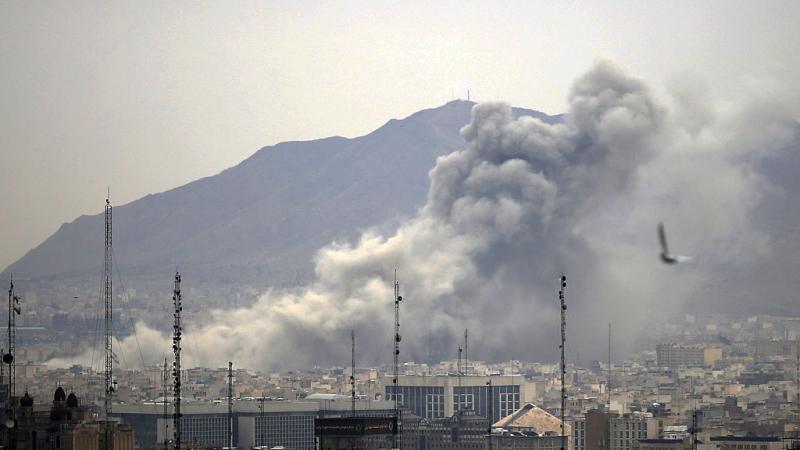
Days after military strikes on Iran began, the Trump administration is attempting to thread the needle by degrading the regime enough to spark a regime change from within, without being directly responsible for the regime change. Instead, the administration has outlined its primarily military goals and hopes that the theocratic regime will fall as a byproduct, not directly at the hands of the U.S. military, public statements from the president and other administration officials show.
“This is not a so-called regime change war,” Secretary of War Pete Hegseth told reporters in a briefing on Monday, the first from the Pentagon since aerial strikes against Iran began over the weekend. However, at the same time, he also echoed President Trump’s earlier calls for the Iranian people to rise up against the Islamic Republic, saying “now is your time.”
Later in the day, Secretary of State Marco Rubio said the U.S. would “love” for the Iranian people to overthrow the government but that this was not the objective of the mission.
A different kind of regime change
These remarks are a microcosm of the Trump administration’s delicate balancing act on the burgeoning Iran conflict. The president, who promised an end to endless wars on the 2024 campaign trail, is seeking to reassure Americans that he is not involving the country in another one of those wars while at the same time making his case for using military force against Iran.
“This is, in fact, regime change, but it's different than what happened in Iraq,” Fred Fleitz, former chief of staff to President Trump’s first-term National Security Council, told the John Solomon Reports podcast.
“President Trump is not going to repeat the mistakes of the nation builders in Iraq. He's creating an opportunity for the Iranian people to take a country back, but he's not going to do it for them. He's weakening the regime, he's attacking the security services, [and] he's also addressing issues of threatening air security, the nuclear program, the rapidly growing missile program,” said Fleitz.
The conflict may still pose a political problem for Trump at home, especially if the U.S. gets bogged down in a protracted conflict. Polling data shows that the American public so far remains sharply divided over the strikes. Reuters polling said that only one in four Americans were in favor of the strikes.
Go in and get out
Former White House Press Secretary Sean Spicer, who served during Trump’s first term, told Just the News that the potential political pitfalls of the military operation are not lost on the president. He said, however, that if Trump is able to wrap up the operation quickly, he will have proved that a new model of intervention – like his operation in Venezuela and earlier strikes on Iran’s nuclear program – is a viable alternative to regime change and nation-building operations.
“The reality is this is a president who campaigned against forever wars, military intervention, America first. So, a lot of people, I think rightly so, go ‘Wait, what are we doing?’” Spicer told the John Solomon Reports podcast on Monday.
“That being said, I think the president has shown a model, both through Midnight Hammer, as you said in the first time we struck Iran, and then Absolute Resolve, which is going to get Maduro, which is this, not every incursion needs to be a 10-year boots on the ground, regime change, meld the country, kind of operation,” said Spicer. “We showed in [those operations] that you can go in, achieve results and get out, right?”
On the other hand, he said, “if this thing becomes protracted, and we lose more lives we have, whether it's naval or other, you know, air assets that are taken out and it gets messy. I do think he will own that, and I think he knows that he doesn't need me to tell it to him.”
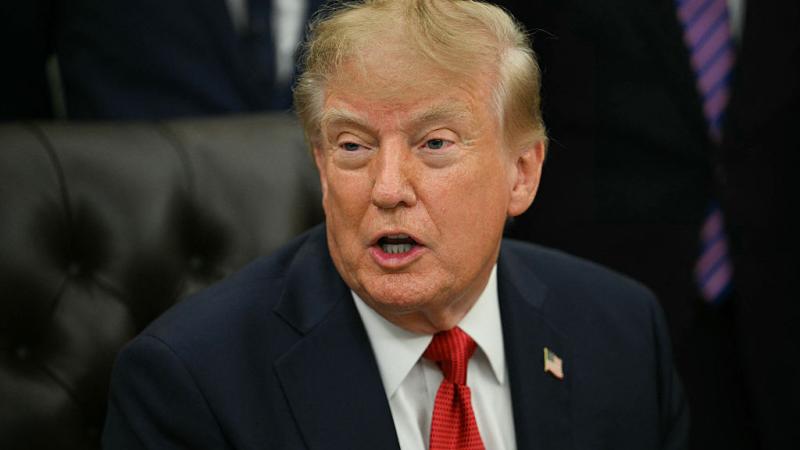
Trump appeared to aim to clear up on Monday some of the confusion about the goals of his military intervention, by outlining his key aims: dismantling Iran’s ballistic missile and nuclear programs, both of which he said pose a direct threat to the United States.
“An Iranian regime armed with long-range missiles and nuclear weapons would be a dire threat to every American,” Trump said in a video statement posted to X on Monday. “We cannot allow a nation that raises terrorist armies to possess such weapons that would allow them to extort the world to their evil will.”
The president reiterated his concerns about the regime’s missile capabilities and nuclear program in his first live remarks at a Medal of Honor ceremony at the White House on Monday.
Hegseth sought to reassure the public that the military has clearly defined objectives and that Trump officials were cognizant of the errors made by prior administrations that presided over the decades-long wars in Afghanistan and Iraq in the wake of the 9/11 terrorist attacks.
Hegseth said the clearly defined goals were “Destroy the missile threat, destroy the navy, no nukes [...] Our ambitions are not utopian but realistic.”
Trump: "I have to do the right thing."
In his speech at the White House ceremony, President Trump added a fourth objective to the list: stopping Iran from arming, funding, and leading terrorist groups outside its own borders.
Trump insisted on Monday that the strikes targeting Iran’s nuclear and missile programs as well as regime officials were the “right thing” to do, regardless of what the polling data says.
“I think that the polling is very good, but I don’t care about polling. I have to do the right thing. I have to do the right thing. This should have been done a long time ago,” he told The New York Post.
The Iranian regime’s nuclear weapons program has been a thorn in the side of successive U.S. administrations since the first stages of development began covertly in the 1990s. The Trump administration in particular viewed Iran’s aim to possess a nuclear weapon as a bright red line, given the regime’s long-time hostility to America and to other allies in the region.
Trump ordered a strike – dubbed Operation Midnight Hammer – against three Iranian nuclear sites last year after months of failed negotiations with the regime. Damage assessments from U.S. and Israeli intelligence agencies concluded that the regime’s nuclear program has been severely damaged. Last September, an independent nuclear monitor found that Iran has “no identifiable route” to enrich uranium after the strikes more than likely severely damaged its centrifuges and nuclear facilities, Just the News reported.
In negotiations this month, the Trump administration aimed to secure a permanent end to Tehran’s nuclear program as it built up military forces around the country, growing concerned about signs that Iran remained committed to rebuilding it.
Leavitt: "They refused to make a deal."
The U.S. negotiating team last week demanded Iran permanently end nuclear enrichment, dismantle its three nuclear sites, at Fordow, Natanz, and Isfahan, and turn over its stockpiles of enriched uranium to the United States. They also wanted the deal to last forever, unlike the nuclear deal negotiated by former President Barack Obama, which contained sunset clauses.
In a statement outlining the administration’s goals on Monday, White House Press Secretary Karoline Leavitt said that “the regime was fully committed to rebuilding their nuclear program” and “they REFUSED to make a deal, despite months of extensive talks and good faith efforts by President Trump’s top negotiators.”
The Trump administration has also classified Iran’s ballistic missile program as an unacceptable threat to U.S. forces in the region and our allies in Europe. Trump also said that, one day, Iran would have been expected to develop a missile that could reach the United States, which he said was a direct threat.
Currently, Tehran possesses missiles that can reach as far as Southeastern Europe, according to a report from the Congressional Research Service. U.S. intelligence agencies have also raised concerns that Iran’s nascent space launch program could provide the building blocks for longer-range missiles that could one day reach the United States.
The Facts Inside Our Reporter's Notebook
Links
- Hegseth told reporters
- Marco Rubio said
- remains sharply divided over the strikes
- the confusion
- Trump said in a video statement
- he told the New York Post
- Iran has âno identifiable routeâ to enrich uranium
- a statement outlining the administrationâs goals
- according to a report from the Congressional Research Service
Top Stories





Trending
Just the News Spotlight
Just News, No Noise