Anticipating criticism, Trump preempts claims Iran attack isn’t legal
Anticipating criticism from Democrats and a few Republicans, Trump prepared justification for this weekend’s strikes on Iran. Critics conveniently forget that his predecessors -- namely Barack Obama -- led 128 drone strikes in Pakistan alone that killed at least 89 civilians.
Following the military strikes on Iran this weekend, senior Trump administration officials informed reporters about multiple measures that were implemented to preempt not only the need for the strike, but also criticism from detractors both domestically and abroad, should it be necessitated.
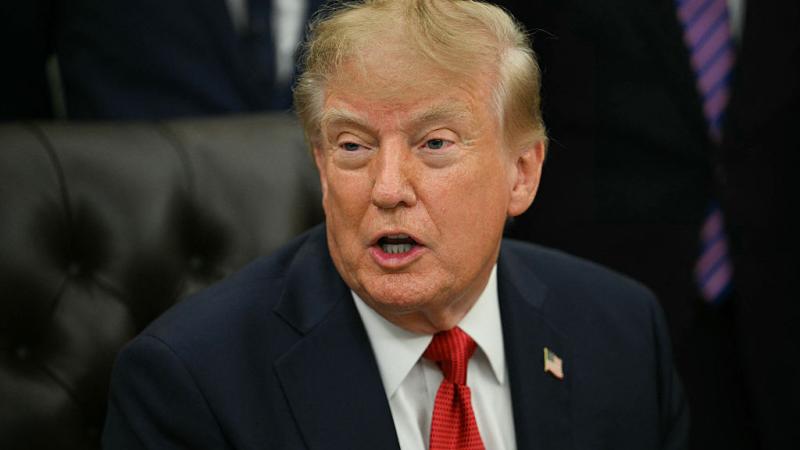
President Donald Trump reportedly offered Iran unlimited peaceful nuclear fuel, and was turned down, and detected that Tehran was planning a preemptive strike on Western assets before it struck this weekend. This, administration officials say, are two powerful pieces of evidence that will help the administration counter any claims that the joint offensive with Israel violated international or US law.
Operation Epic Fury a "preemptive defensive strike"
“The president decided he was not going to sit back and allow American forces in the region to absorb attacks from conventional missiles. We had analysis that basically told us, if we sat back and waited to get hit first, the amount of casualties and damage would be substantially higher than if we acted in a preemptive, defensive way to prevent those launches from occurring,” the official told reporters.
Senior U.S. administration officials described Operation Epic Fury as a preemptive defensive strike launched against Iran on Saturday to neutralize an imminent threat from Tehran's missile arsenal, which they characterized as posing an "intolerable risk" to American forces in the region.
The joint U.S.-Israeli operation targeted sites in Tehran, including the compound of Supreme Leader Ayatollah Ali Khamenei, causing heavy damage and resulting in the deaths of numerous high-ranking Iranian leaders, including Khamenei.
Officials emphasized that intelligence indicators showed Iran was preparing to attack U.S. assets first, prompting the decision to act rather than absorb potentially higher casualties.
Acting first was the best military option
Negotiations with Iran had broken down after Tehran rejected a U.S. proposal to provide free nuclear fuel indefinitely in exchange for abandoning uranium enrichment, officials said. The United States had three requirements: fully dismantle their nuclear program, stop enriching uranium, and limit their ballistic missile program, all of which Iran refused.
The urgency for this weekend's strikes stemmed from administration concerns that waiting for an Iranian first strike would lead to substantially greater damage and loss of life compared with proactive measures to disrupt missile launches. Three U.S. service members have been confirmed killed in action and five others were seriously wounded, according to U.S. Central Command (CENTCOM).
Trump monitored the operations from his Mar-a-Lago property and later confirmed Khamenei's death while offering immunity to his supporters who ceased fighting, signaling efforts to influence Iran's internal power dynamics amid the strikes.
War Powers act
Trump has received criticism at home, including from Republican Party members like Kentucky's Rep. Thomas Massie and former Georgia Congresswoman Marjorie Taylor Greene. Much of the criticism centers around a formal declaration of war required for such strikes. However, the last time that Congress formally declared war was June 1942. Since then, the United States has engaged in war in Korea, Vietnam, the Gulf War, Iraq, Afghanistan, and Syria.
President Obama authorized over 540 targeted drone strikes during his two terms, a significant increase from his predecessor, which resulted in an estimated 3,797 deaths, including over 300 civilians. These operations, primarily in Pakistan, Yemen, and Somalia, were often part of "Terror Tuesday" meetings where he personally approved targets.
The Harvard Political Review noted that "Obama authorized 54 drone strikes alone in Pakistan during his first year in office. One of the first CIA drone strikes under President Obama was at a funeral, murdering as many as 41 Pakistani civilians. The following year, Obama led 128 CIA drone strikes in Pakistan that killed at least 89 civilians. Just two years into his presidency, it was clear that the “hope” that President Obama offered during his 2008 campaign could not escape U.S. imperialism."
Furthermore, out of 45 U.S. presidents, 43 have ordered military strikes or actions without specific prior congressional approval or formal declaration of war. The exceptions are William Henry Harrison, who died after 31 days in office, and Zachary Taylor, who only served a little over the year and had no military engagements during his brief tenure as commander-in-chief.
The Facts Inside Our Reporter's Notebook
Links
- ordered military strikes
- three requirements
- President Obama authorized
- These operations
- Harvard Political Review

Top Stories


Trending
Just the News Spotlight
Just News, No Noise