Press secretaries need not apply — Trump has always had the largest megaphone
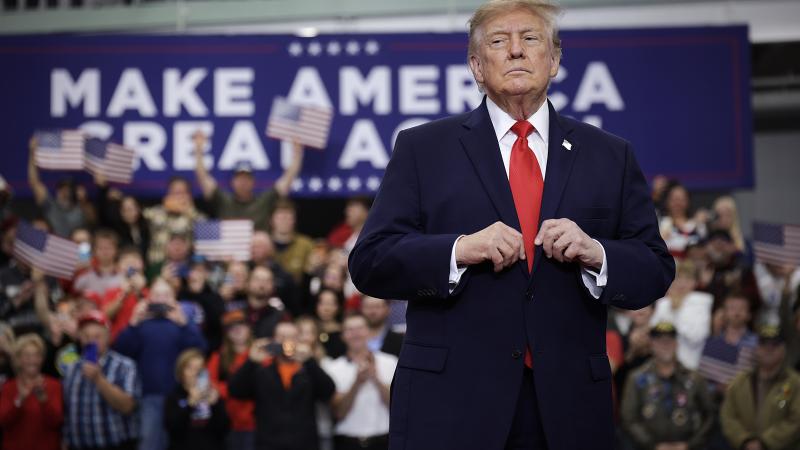
Trump’s Monday appearance at the podium highlights his ability to communicate directly to his voter and the media without a liaison, often painting his own vision of America, for better or worse. Sarah Huckabee calls him "his own spokesperson."
Donald Trump has lost two press secretaries in less than three months, and the most powerful podium in American politics hasn't gone quiet for a day, because the White House's most effective — and sometimes the loudest — messenger was never the person behind the lectern. It was always Trump.
No one understands that better than the woman who held the job longest. Arkansas Gov. Sarah Huckabee Sanders, reelected on Nov. 3, said the key to surviving the role is recognizing that Trump is "his own spokesperson most of the time." Nobody, she argued, can deliver his message better, because the vision and the words are his.
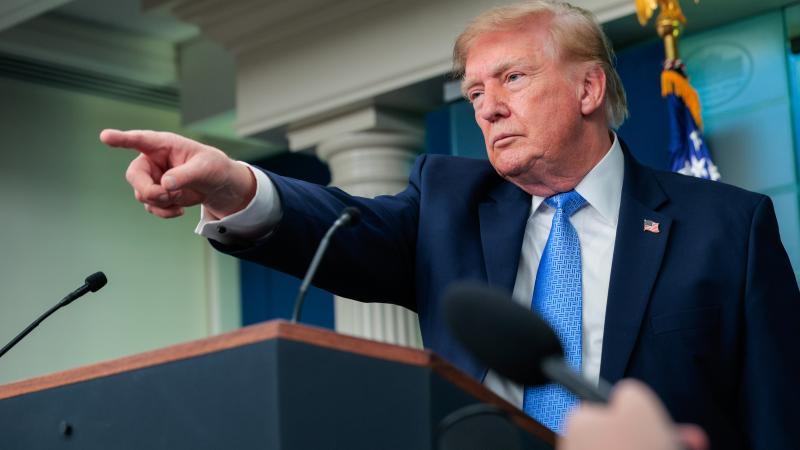
On Monday, Trump made a surprise briefing room appearance. He declared the U.S. "locked and loaded" on Iran while saying further military action wasn't needed for now. When Trump wants a message out, he simply walks into the room and delivers it himself.
Karoline Leavitt, whom Trump praised as a "highly effective communicator," became the youngest press secretary in history at 27. She served roughly 18 months, the second-longest tenure of Trump's two terms.
Leavitt's successor didn't last a week
On Aug. 12, Trump announced Leavitt would leave at month's end to spend more time with her young children. Even before then, the White House managed without her. During her maternity leave, briefings became far less frequent, and Vice President JD Vance and Secretary of State Marco Rubio filled in.
Her successor didn't last a week. Katie Zacharia, a former Fox News and Newsmax commentator, held one briefing on Oct. 13 and took questions from only three outlets. Reports soon surfaced that she had presented herself as a lawyer without having passed the bar, let alone being admitted to practice law. Trump told reporters he had advised her, "If I were you, I'd reconsider."
She was out after five days, the shortest tenure in modern history. That beat even Anthony Scaramucci's 11-day stint as communications director.
Since Zacharia's exit, the podium has belonged to the president.
The Messenger-in-Chief
Trump spent four decades mastering the media before he reached the West Wing. As a successful New York developer and entrepreneur, he courted the tabloids and turned his name into a brand. As host of The Apprentice and its associated spin-offs, he spent more than a decade in America's living rooms, learning how a catchphrase lands and how a moment travels.
That instinct shapes how he governs. In his first term, he disrupted long-standing norms by acting as his own chief spokesperson through rallies, his own briefings and an outsized social media footprint. In February 2025, he had more than 100 million followers on "X."
Today he takes questions on the South Lawn, in the Oval Office and aboard Air Force One. He breaks news on Truth Social before his staff can draft a statement. Truth Social is owned by Trump Media & Technology Group (TMTG), a publicly traded company on Nasdaq under the ticker symbol DJT.
This weekend alone, he offered the job of press secretary to UFC chief Dana White in a social media post. Then he sat for CBS' "60 Minutes" to give his own account of the midterms.
His formula is simple: go direct, go often and set the terms yourself. A press secretary filters the president's words. Trump's style depends on the opposite.
A Revolving Door at the Podium
Trump has now had six press secretaries, including four in his first term. By contrast, Franklin D. Roosevelt primarily had one main press secretary who served throughout his nearly entire 12-year presidency: Stephen T. Early.
Trump's pattern is hard to miss: the title changes hands, but the message keeps coming from the top.
Sean Spicer opened the first term by insisting the inauguration had drawn a record crowd, and he lasted about six months. Sanders held the post for close to two years but phased out daily briefings, holding her last in March 2019.
Stephanie Grisham then spent roughly nine months in the job without a single formal briefing, dismissing the format as "a lot of theater." Kayleigh McEnany revived regular briefings in May 2020. But through all of it, the White House never went silent, because the president did the talking.
An Empty Podium, by Design?
The White House shows little urgency to fill the job. After Zacharia's exit, Trump was reportedly in "no rush" to name a replacement. Nearly a month later, the post remains open.
The Dana White saga underscored the point. Trump told reporters Sunday he was "only kidding" about the offer. Then, on Monday, he posted AI-generated videos of White at the lectern before taking the real one himself.
Critics argue that a press secretary provides a steady, accountable channel for routine questions a president can't answer every day. That case may grow louder after Democrats' major midterm gains. The Zacharia episode also showed how quickly an unprepared spokesperson can become the story.
Still, the record points one way. Whoever comes next, the most important voice in the briefing room will be the one that showed up unannounced on Monday afternoon, the president himself.
Amanda Head is White House Correspondent for Just the News. You can follow her here.
The Facts Inside Our Reporter's Notebook
Links
- reelected on Nov. 3
- surprise briefing room appearance
- "locked and loaded"
- "highly effective communicator,"
- leave at month's end
- held one briefing
- presented herself
- told reporters
- shortest tenure
- 11-day stint
- disrupted long-standing norms
- more than 100 million followers
- on Truth Social
- offered the job
- sat for 60 Minutes
- four in his first
- a record crowd
- phased out daily briefings
- a single formal briefing
- "a lot of theater
- revived regular briefings
- "no rush"
- "only kidding"
- AI-generated videos
- major midterm gains
Top Stories


Trending
Just the News Spotlight
Just News, No Noise