Related Articles
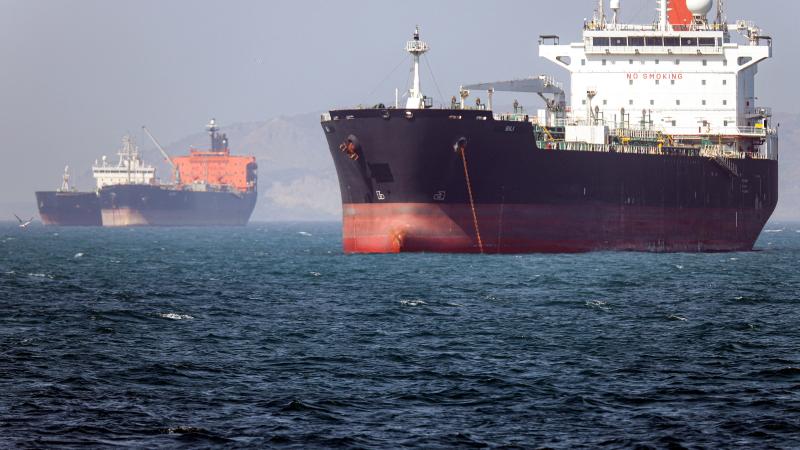
For years China has exploited U.S. sanctions on oil producers Russia, Venezuela and Iran to fuel its own growth and fill its strategic reserves at a steep discount. Trump may be putting an end to that windfall.
For years, China relied on exploiting U.S. sanctions to import steeply discounted oil from pariah states like Iran and Venezuela to fuel its economy and military buildup. Now, President Donald Trump’s interventions against both Caracas and Tehran have upended this lucrative arrangement.
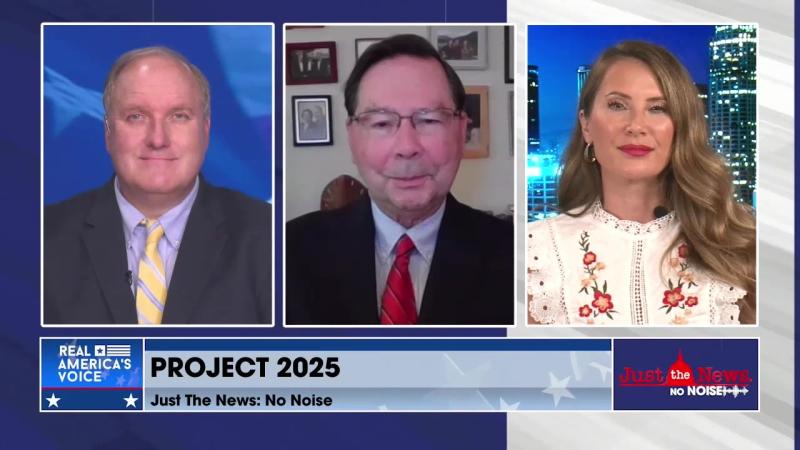
China is suddenly confronted with a very different strategic calculus ahead of a key meeting with the American president in Beijing tentatively scheduled for next month. “I think it's really China that all of this is centered on a grand strategic calculus,” Brent Sadler of the Heritage Foundation’s Allison Center for National Security told the Just the News, No Noise TV show, referring to the Iran war and intervention in Venezuela.
“Before [the Venezuela operation at] Christmas last year, China was the beneficiary of a lot of cheap oil in terms of trade that it dictated. Now over 20% of its oil that it imports, it's going to have to pay a fair market price, greatly higher than what it did before,” Sadler said. “[And], oh, by the way, their foe in D.C. is the one that controls it.”
Sadler said that these moves deliver a strong message to China ahead of the likely summit between Chinese President Xi Jinping and his American counterpart.
Before the military operation against Iran and the capture of Venezuelan dictator Nicolás Maduro earlier this year, China had exploited U.S. oil sanctions against both Iran and Venezuela to fill its strategic petroleum reserve at a discount and fuel its economy, which has been heavily dependent on foreign oil for decades.
The House Select Committee on the Chinese Communist Party recently found that by early 2026 China had stockpiled about 1.2 billion barrels–about 109 days’ worth of regular seaborne imports–of sanctioned oil at well-below market rates.
In 2025, China imported a total of 2.6 million barrels per day of sanctioned crude oil by sea: 1.4 million barrels per day from Russia, 852,000 from Iran, and 419,000 from Venezuela, according to a recent report from the House committee.
Before the war in Iran, imports of sanctioned barrels from these countries accounted for roughly 20% of China’s total oil imports. China was able to obtain oil from these countries–all of which were under U.S. sanctions for various reasons ranging from the Russian invasion of Ukraine to Iran’s illicit nuclear program–at a steeply discounted price. The committee cites estimates that importing sanctioned oil saved China roughly $12 billion to $15 billion in 2024 alone.
“Western sanctions on Russian, Iranian, and Venezuelan crude were designed to reduce the revenue available to hostile governments. Instead of fully removing those barrels from the market, however, the measures pushed them toward a narrower set of buyers willing to absorb the legal and financial risks of the trade—foremost among them China,” the Select Committee on the CCP concluded.
“The result is a market in which sanctioned exporters increasingly rely on a limited number of purchasers, while Chinese refiners benefit from access to deeply discounted crude,” the committee added in the report.
The congressional investigation found evidence that China’s exploitation of the sanctions regime ramped up in late 2025 and early 2026, aimed at obtaining cheap oil and generating leverage over the oil exporters.
Triggered by the U.S. enforcement actions against “shadow fleet” tankers in order to build pressure on Venezuela late last year, China exploited the subsequent decline in Russian crude oil prices. Russia relies heavily on the global shadow fleet to evade sanctions imposed by the U.S. following Moscow’s 2022 invasion of Ukraine.
China also directly sponsors at least one fleet, known as the Protean Fleet, whose 56 supertankers amount to nearly 5% of the global shadow fleet.
“By the time Chinese buyers returned to the market, Russia had no leverage left to resist their terms,” the committee said of the Chinese strategy. Afterward, China ramped up imports from Russia at a steep discount, using the proceeds to fill its massive petroleum reserves.
The committee found the same pattern as Iranian crude oil prices declined after President Trump renewed his signature “maximum pressure” campaign against the regime after he returned to office last year, the report shows.
However, the House committee notes that China’s sanctions evasion strategy may no longer be “viable” after the American interventions in Venezuela and Iran, which have interrupted shadow fleet operations and strangled shipping traffic in the Strait of Hormuz near Iran.
“Given the changing geopolitical dynamic with the ongoing conflict with Iran, the value of China's shadow fleet has greatly diminished and its ability to purchase sanctioned oil at a massive discount appears to be no longer viable,” the Select Committee on the CCP concluded.
China’s dependence on foreign oil imports was exposed by Iran’s attempts to hold the global energy market hostage by effectively blockading the Strait of Hormuz–through which 25% of the world’s seaborne oil trade transited before the conflict, the vast majority of it destined for South and East Asian markets.
Iran, a nominal ally of Beijing, may have expected to secure Chinese backing in its war against the United States. However, after initially backing Iran’s “legitimate rights” and giving rhetorical support, China soon began demanding that Iran reopen the strait to traffic.
When the conflict broke out, China relied heavily on Iran’s crude oil exports. Data show that China bought more than 80% of Iran’s shipped oil in 2025. It imported about 1.38 million barrels per day on average last year, representing 13.4% of its total oil imports by sea.
The conflict in the Arabian Gulf will also impact China’s Liquefied Natural Gas (LNG) supply. Qatar, a Gulf monarchy from whom China imports about 14% of its LNG supply, announced last month that it was temporarily suspending its production. Though China will likely be able to find alternative sources for crude oil imports, it will now be forced to do so at market prices, Just the News previously reported, undermining Beijing’s strategy to source crude at the steep discounts it was paying for sanctioned oil.
Sadler, the Heritage national security expert, told Just the News that the interventions in both Venezuela and Iran can be viewed as “strong power plays” leading up to the much-anticipated summit between Donald Trump and Xi Jinping.
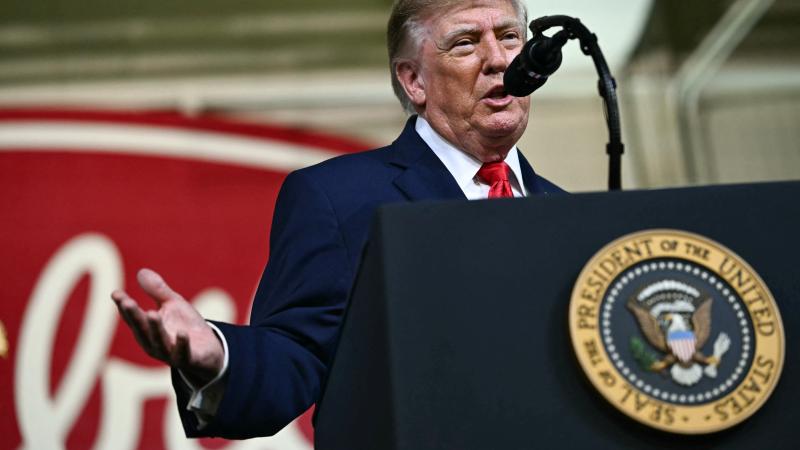
President Trump has already sought to exploit the disruption of the cheap oil supply to China, offering Beijing the opportunity for a deal to purchase Venezuelan oil–now being exported under strict supervision from the United States–at fair market prices.
“China is welcome to come in and would make a great deal on oil,” Trump said last month, before the intervention in Iran.
The summit, now tentatively scheduled for May, was once delayed after Trump authorized strikes on Iran in February aimed at destroying the country’s navy and ballistic missile program. There, the Trump administration hopes to negotiate a truce in the trade war with Beijing, possibly using China’s oil vulnerabilities as leverage.