Johnson delivers on getting SAVE Act to House floor, but Graham’s passing adds to Senate uncertainty
Senator Tommy Tuberville warns that Graham’s passing leaves a procedural void as Speaker Mike Johnson attaches the voter ID bill to Reconciliation 3.0
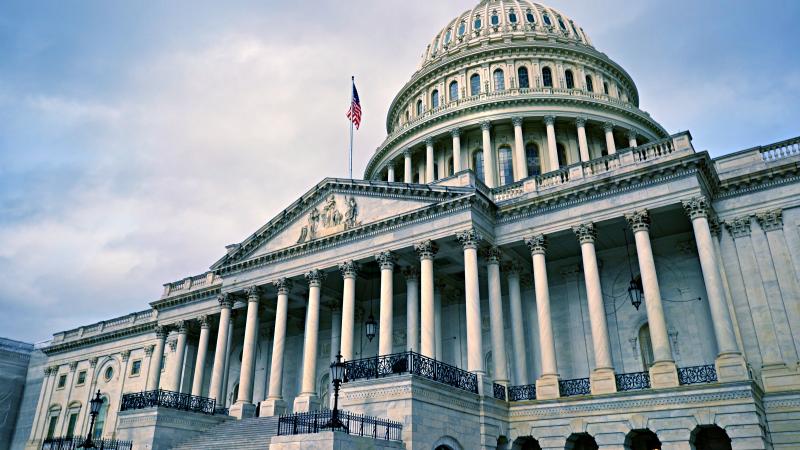
House Speaker Mike Johnson is getting the SAVE Act to the chamber floor with likely passage in the coming weeks, but it faces an even more uncertain future in the Senate without its champion, the late GOP Sen. Lindsey Graham.
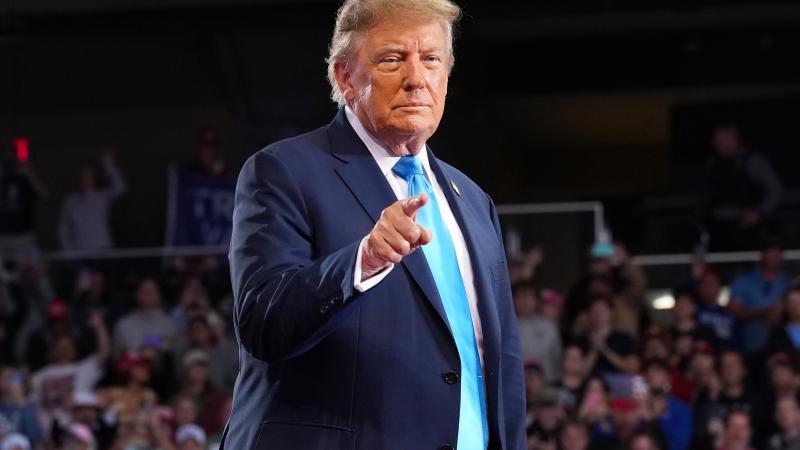
Johnson, a Louisiana Republican, under intense pressure from President Trump to get the SAVE Act passed, attached the measure to a third budget reconciliation, which funds the Pentagon.
A House committee will on Thursday put the final touches on the bill, in what is known as a "markup." Leadership hopes to pass it out of committee before the weekend so it can head directly to the House floor next week.
In his effort to get the bill to a final vote, Johnson also had to strike a deal with Florida GOP Rep. Anna Paulina Luna, who had closed the floor to force the Senate to also vote on the act, which if passed will require proof of citizenship and photo ID when registering to vote.
Still, even before Johnson released the text of a $95 billion budget reconciliation package, which provides $10 billion to the House Administration Committee to give grants to states that implement the SAVE Act, Alabama Republican Sen. Tommy Tuberville warned that Graham's death only adds to the uncertainty of the measure passing the GOP-controlled Senate.
Not only was Graham chairman of the Senate Budget Committee, which is responsible for structuring the legislative process that Trump has demanded Republicans use to pass the bill, he was also a strong supporter of the measure.
Trump says that Graham told him hours before he died Saturday, "We're all set" for the SAVE Act.
Tuberville said Graham also would have taken up Johnson's baton by keeping the act attached to the budget reconciliation bill and trying to pass it in the upper chamber. While budget reconciliation allows certain bills to pass with a simple majority of 51 votes, the Senate parliamentarian decides whether the SAVE Act meets the so-called Byrd rule requirement that it's a budget or spending bill.
Prior to his death, Graham had also introduced the Election Security Partnership Act to incentivize states with federal funding to remove non-citizens from their voter rolls.
“Lindsey's smart. He understood it. He understood that we didn't,” Tuberville said. “President Trump kind of leaned on Lindsey on this. ‘Say, Lindsey, you got to get this in. You've got to get into reconciliation. You got to push this.’”
Graham’s sister was sworn into the Senate on Tuesday to serve the remainder of his term, ensuring the party won’t lose his vote. Still, Tuberville said Republicans will miss Graham and his unique ability to “go into the back rooms and work with the Democrats.”
“You know they dislike President Trump so much that they won't even discuss any kind of bill we're putting on the floor, but Lindsey could at least get them to talk, and he was kind of the person that would try to get people to go our way,” Tuberville said.
Tuberville, also a strong supporter of the SAVE Act, argues the measure must be passed by Congress and signed into law by Trump because of illegal voting, claiming that “probably five, maybe six senators” from the 2020 elections are in office and “shouldn’t be here” because the ballot boxes were “stuffed.”
To bolster his argument, Tuberville pointed to remarks this past weekend by New York Democratic Sen. Elissa Slotkin in which she told a crowd of supporters that the act would make it “hard for any Democrat in any state to win any election.”
“She spoke the truth out loud for once," he said. "They know that if they have to have an ID to vote, they're going to lose a lot of seats."
The SAVE Act also aims to prohibit mail-in voting, with only some exceptions. The bill has passed the House three times but has then languished each time in the Senate.
Republicans have 53 members in the Senate, and most bills have to pass with 60 votes, requiring the GOP to get seven Democrat votes. The move to attach the act to the budget reconciliation bill is so that the bill can pass with a simple majority of 51 votes.
Yet in June, 49 Republicans voted for the bill and four voted against the amendment to add the SAVE Act to the budget reconciliation package – Sens. Thom Tillis, North Carolina; Mitch McConnell, Kentucky; Susan Collins, Maine; and Lisa Murkowski, Alaska.
Among their concerns are banning mail-in voting, and that the measure would indeed violate the Byrd rule and therefore would not be approved by the Senate parliamentarian.
Meanwhile, Senate Majority Leader John Thune has refused to amend the Senate’s rule to lower the legislative threshold and require bills to pass with a simple 51-vote majority, rather than the 60 votes required, though Trump has aggressively pushed for it, warning that the Democrats would alter the rule once they took power.
Trump also refused to sign a bipartisan housing bill that Congress sent to his desk as a protest to the Senate for failing to pass the SAVE Act.
Despite the heavy blow of Graham’s passing, Tuberville insisted that Senate Republicans would regroup and push the bill forward. The former football coach noted that "there are no timeouts in life."
“And you know up here, you know we'll continue to go," he said. "You can't stop things. Things are going to keep going no matter what happens. So we'll regroup and try to continue on, but he'll be desperately definitely missed."

Top Stories



Trending
Just the News Spotlight
Just News, No Noise