Fifteen sweeping actions Trump took to tighten election security ahead of midterms
His opponents call him a threat to democracy, but his adherents point to thousands of illegal voters on rolls, missing or lost ballots, phony candidates propped up to confuse voters and say Trump's actions actually improve the integrity of the election process.
When President Donald Trump delivered a national address from the White House East Room in July, he promised sweeping actions to address long-standing election vulnerabilities that had been swept under the rug for years.
He revealed that U.S. spy agencies had known for years that American ballot counting machines had vulnerabilities that could be exploited by foreign powers. Similarly, the intelligence community has long been aware that China has vacuumed up 220 million American voter files and put itself in a position to meddle in future elections.
He also disclosed that the Homeland Security Department, by matching voter registrations with government databases, had identified tens of thousands of suspected foreigners who had improperly made it onto voter rolls. Some had even cast ballots.
The message: Election security is national security
Although Democrats in general have painted Trump as suppressing the vote of allegedly disenfranchised people, in the weeks that ensued, the Trump administration's two-year effort to improve election integrity, grow the confidence of the American voting public and batten down the hatches on election security has come into clear focus. Here are the top 15 actions taken so far:
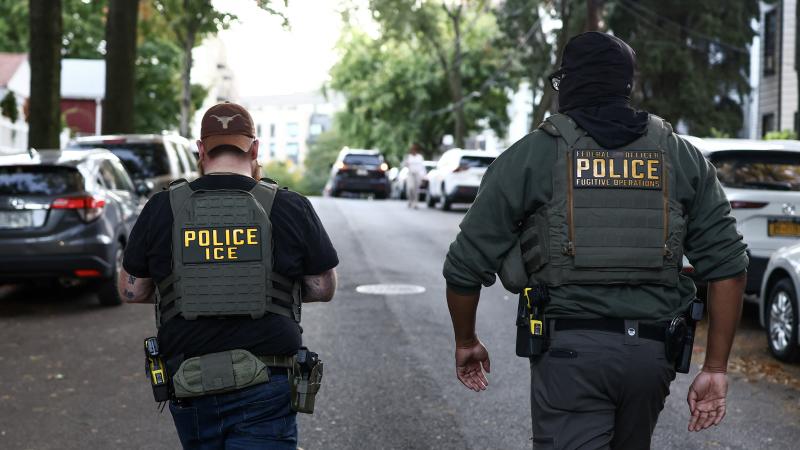
- The Justice Department and the Homeland Security Department have now prosecuted, arrested, or convicted more than 200 noncitizens or foreigners who legally voted or tried to register in federal elections. It's the largest in history, and it is a talking point that liberal activists often claim was a mere conspiracy theory. Results show near-daily arrests and court filings that show such fraud is more common than Democrats wanted to admit.
- War Secretary Pete Hegseth took steps to protect military voters by making it easier for military members and their families to vote. Hegseth ordered a one-day, military-wide voting stand-down day in October of each federal election year so that service members can register, request, and submit ballots in elections.
- The War Department also has closed loopholes in the absentee ballot application process that allowed purported U.S. citizens living overseas but have never lived in the United States to unlawfully get the same privileges reserved for service members abroad.
- The Department of Health and Human Services took steps to address numerous cases of nursing home residents who were taken advantage of by bad actors trying to steal their ballots or influence their votes. Secretary Robert F. Kennedy Jr. and Medicare and Medicaid Administrator Dr. Mehmet Oz issued nationwide guidance that made clear that vulnerable nursing home residents have the right to vote, to decline to vote, and to receive voting assistance from a trusted person. The goal was to keep activists inside such nursing facilities from interfering with or coercing nursing home residents to vote a certain way.
- U.S. Education Secretary Linda McMahon moved to keep private student data out of the hands of partisan NGOs that were using it to target students for voting. That included a "Dear Colleague" letter reminding all state and local education agencies that if they share private student data with partisan NGOs they are violating federal law and will lose their federal funding.
- The Department of Justice, under Attorney General Todd Blanche, recently opened an inquiry into Facebook billionaire founder Mark Zuckerberg having requested information from nonprofits he funded.
- DOJ is also seeking details about the use of state private motor vehicle data to allegedly help give Democrats an advantage in get-out-the-vote drives dating to 2020.
- The DOJ put state election officials on notice: if they violate federal election laws, they will be held accountable. That prompted an effort by some states and liberal activists to try to block such warning letters.
- Commerce Secretary Howard Lutnick’s team at the Census Bureau is proposing a major overhaul for the 2030 Census to make sure that the number of US citizens are properly counted, avoiding repetition of mistakes from the 2020 Census. That mistake yielded least 5 erroneous Democratic House seats
- Homeland's Cybersecurity and Infrastructure Security Agency has gotten out of the business of censoring Americans' political speech that it considered disinformation and returned the focus to ensuring state and local election officials have the tools that they need to keep our elections safe.
- CISA issued an historic report exposing the vulnerabilities in electronic voting systems and outlining commonsense mitigation strategies to ensure that election results are not impacted by manipulation or “glitches.”
- The U.S. Citizenship and Immigration Service has analyzed millions of publicly available voter files and identified tens of thousands of suspected foreigners who actually cast ballots. That has led to the enforcement crackdown by the DOJ, the FBI, and Homeland Security.
- FEMA has conditioned over a billion dollars of Homeland Security grant money on election security measures – like post-election manual audits of paper ballots and making sure the number of ballots cast does not surpass the number of voters in the election.
- Homeland Secretary Markwayne Mullin has made referrals to the DOJ regarding vulnerabilities in electronic voting systems that count votes on QR Codes and barcodes. DOJ is reviewing this information to determine if those systems comply with federal law or can be maliciously exploited.
-
Trump has made the SAVE system at USCIS available at no cost to state and local election officials, enabling states to identify and scrub nearly 500,000 dead people from voter rolls.
Editor's Note: John Solomon is working as an unpaid Special Government Employee as the chairman of the White House Government Transparency Task Force and has taken a leave of absence as Editor-in-Chief of Just the News while he serves in that role.
Top Stories



Trending
Just the News Spotlight
Just News, No Noise