Reserves and fracking prevented energy crisis, but challenges lay ahead despite ceasefire: experts
The double blockades on the Strait of Hormuz produced the world's largest disruption in energy supplies, yet the situation never produced the global energy crisis that some predicted. There are several reasons, including U.S. stockpiles proving more robust than expected. As for now, those supplies have been severely depleted.
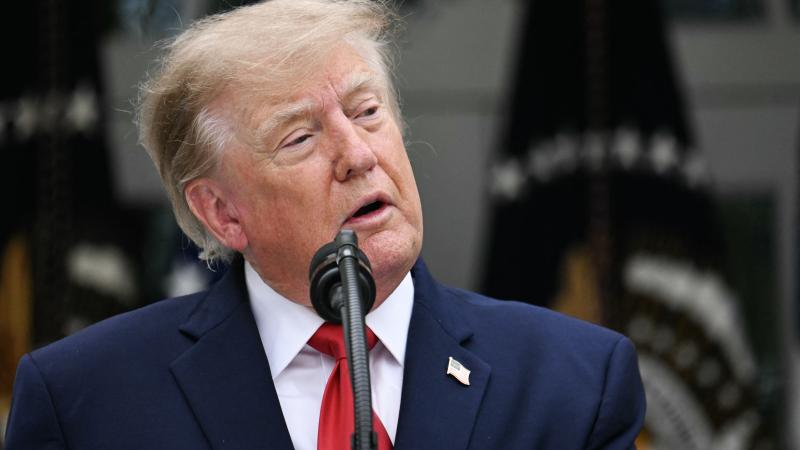
President Donald Trump on Wednesday signed a memorandum of understanding with Iran, which will bring a 60-day halt to hostilities while a long-term peace deal between the two countries is negotiated. Trump said the agreement opens the Strait of Hormuz immediately, and traffic began to crawl through the waterway on Thursday.
The blockades by the U.S. and Iran on the strait created the largest energy disruption in the history of the world. Around 20 million barrels of crude oil and petroleum products flow through the Strait of Hormuz every day, and the blockades brought this traffic to a near standstill.
Worse oil supply loss ever
This supply loss, according to the International Energy Agency, is greater than the supply loss the world saw during the 1973 OPEC oil embargo, the 1979 oil crisis sparked by the Iranian Revolution, and the shocks created in 2022 by the Russian invasion of Ukraine. Some analysts were forecasting in March that oil would rise over $200 per barrel.
Yet, despite the magnitude of the supply loss, the oil shock of 2026 produced no lines for gasoline at stations and the West Texas Intermediate oil price, the American benchmark, never broke $130 per barrel since the conflict began at the end of February.
“People tend to always forget how resilient and innovative the US oil and gas industry, and the global oil and gas industry, truly is,” David Blackmon, an energy analyst with over 40 years in the industry, told Just the News.
As the world now looks to a return to energy normalcy, analysts are predicting that a full recovery could be months or years away, and a lasting peace between the U.S. and Iran isn’t certain. Over the course of the conflict, stockpiles were heavily tapped, which means future disruptions won’t be as easy to manage.
Shock absorbers "surprisingly effective" researcher says
Blackmon, who is author of the “Energy Additions” Subtack, said there are a number of reasons why the world didn’t see an energy crisis while the U.S. and Iran tried to out-blockade each other for nearly four months.
Experts had underestimated the ability of storage to sustain countries. Nations stockpile oil so that disruptions in supply don’t cause major shocks like those seen in 1973. The United States’ Strategic Petroleum Reserve was created specifically for that reason. The crude oil for the reserve is stored in 60 salt caverns that are 200 feet wide and over 2,500 deep in the ground. Like the U.S., other countries store oil in salt caverns, ground-based tanks and tankers floating on the water. Jim Burkhard, global head of crude oil research at S&P Global Energy, told The Washington Post earlier this month that “These shock absorbers have been surprisingly effective.”
Major energy consumers also quickly adapted to the situation. Blackmon explained in a post on X that China cut its exports, which allowed it to hoard its own refining products and cut its import needs by 4 million barrels per day.
Venezuela increased its export capacity at a much higher pace than expected. The South American country exported an estimated 1.25 million bpd in May. The U.S., India and Europe were its primary buyers. Blackmon attributed Venezuela’s rapid rise to the influence the U.S. now has over the country since it captured Venezuelan President Nicolás Maduro.
America’s allies in the Middle East also utilized alternative routes to get around the Iranian blockade of the Strait of Hormuz. Saudi Arabia, for example, was able to fully restore the capacity of its East-West pipeline to seven million barrels per day, an increase of 700,000 barrels per day.
The other factor is what Tim Stewart, president of the U.S. Oil and Gas Association, calls “Fortress North America.” Due to the innovation in hydraulic fracturing and horizontal drilling, the U.S. became the largest producer of oil in the world. Combined with the output from Canada, the world had a large supply to tap to keep energy markets from going into crisis mode.
Challenges remain, not out of the woods yet
Tapping strategic reserves could not go on indefinitely. Experts were warning that these inventories were starting to run dry. Robert Rapier, a chemical engineer and editor-in-chief of Shale Magazine, told Just the News that we’re not out of the woods yet. The memorandum of understanding doesn’t fully address the issue of Iran’s nuclear program, which now has to be negotiated during the 60-day ceasefire.
Trump has been adamant that Iran needs to end its nuclear enrichment program, that its stockpiles of enriched uranium need to be moved abroad, and the country must never have a nuclear weapon. If Iran doesn’t agree to those terms and Trump doesn’t budge, negotiations could collapse.
Despite this uncertainty, Rapier said, oil markets are responding as if the conflict is fully resolved. Oil prices on Thursday morning were down to the mid-$70s per barrel, and Rapier said that throughout the conflict oil prices didn’t reflect the actual threat. Executives at Chevron and ExxonMobil warned of $150 per barrel oil, and markets just shrugged off the warnings. Now, Rapier said, there’s an “exuberant optimism” that doesn’t reflect the challenges and uncertainties ahead.
“The complete and utter disconnect is the oil markets just selling off like everything has returned to normal,” Rapier said. Nonetheless, global inventories have been depleted, Rapier said, including the United States’ Strategic Petroleum Reserve, which is hitting historic lows.
“They're going to have to replenish those, or they're going to be running without petroleum reserves. That's a really risky thing to do,” Rapier said.
If hostilities with Iran resume after the 60-day ceasefire or some other disruptions strike global markets, those inventories won’t be as robust as they had been over the past few months.
Irrational markets: "Investors are going to do what they're going to do"
There are also questions about how quickly and how much traffic will resume transiting the Strait of Hormuz and if there will be tolls imposed. Insurance companies, Rapier said, aren’t dropping premiums, which indicates continuing risk to shippers.
“The way things look, probably over the next couple of years, is probably bullish for oil,” Rapier said. Rapier said that markets are irrational at times, and they can be nearly impossible to predict. He doesn’t think American drivers will see average gasoline prices drop below $3 per gallon again anytime soon.
“But investors are going to do what they're going to do. They're going to bid, and if they all believe that inventories are okay and there's nothing to worry about, prices could drop back down. But on a fundamental basis they should not,” he said.
The Facts Inside Our Reporter's Notebook
Links
- crawl through
- 1973 OPEC oil embargo
- Iranian Revolution
- Russian invasion of Ukraine
- according to the International Energy Agency
- over $200 per barrel
- Energy Additions
- told The Washington Post
- Blackmon explained
- exported an estimated 1.25 million bpd
- fully restore
- Fortress North America
- largest producer of oil in the world
- Experts were warning
- Shale Magazine
- Oil prices
- hitting historic lows


Top Stories


Trending
Just the News Spotlight
Just News, No Noise