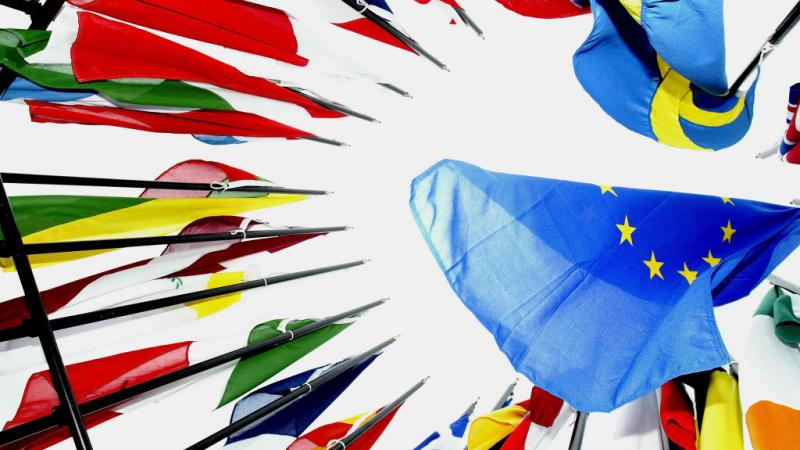
EU leaders increasingly fear over dependence on China, after years of worrying about US dominance
European officials fear repeating with China the same strategic mistake they made with cheap and accessible Russian energy.
When the cash-strapped Italian government joined China’s Belt and Road Initiative in 2019, it was interpreted as a sign of Europe’s shifting balance of power toward the east.
Italy was the first – and ultimately the only – Group of Seven country to formally sign onto Chinese President Xi Jinping’s ambitious infrastructure and soft power initiative. At the time, Italian leaders spoke glowingly about energizing their slow-growing economy with new investments and increased access to the massive Chinese market.
Italy’s signing of the agreement near the end of Donald Trump’s first term as president came as many European leaders believed the continent needed to reduce its dependence on the U.S. and be more open to alternate economic partnerships.
This was when the phrase “strategic autonomy” came into favor in European capitals, with leaders worried about depending too heavily on Washington for defense, technology, diplomacy, and trade.
Fast-forward five years, and Italy reversed course, with Prime Minister Giorgia Meloni withdrawing from the Chinese agreement and calling the original decision “a mistake.”
The shift showed how quickly European fears evolved: after years of worrying about American dominance, leaders are now increasingly worried about over-dependence on China.
Sparked by the coronavirus pandemic that scientists say started in China; the start of the war between Russia and Ukraine in which China stood with Russia with a “no limits” partnership; a broader reassessment of authoritarian powers, and China’s dominance on the global production of solar panels, electric vehicles and rare-earth minerals, Europe has become wary.
“China now holds enormous economic and geopolitical leverage over Europe,” European Commission President Ursula von der Leyen has warned.
Leaders say they want to avoid repeating the strategic mistake they made with Russian energy: prioritizing low cost and commercial convenience while underestimating long-term political vulnerabilities.
Before the start of the Russia-Ukraine war in 2022, the consensus in Europe was that deeper economic integration with Moscow would reduce geopolitical risk. Instead, dependence on cheap Russian gas gave Russia leverage over Europe during a security crisis.
Policymakers in Brussels, Berlin, Paris and Rome see an echo of that vulnerability in China’s critical supply chains, ranging from components of the green energy transition to pharmaceutical ingredients and industrial materials.
“The EU learned the hard way what dependency costs,” the European People’s Party alliance in the European Parliament said in a statement published earlier this year. “We cannot replace our reliance on Russian gas with a reliance on Chinese ports.”
The EU has responded with a new wave of tariffs on Chinese goods and subsidies for home-grown industries as calls for “de-risking” ties with China rather than completely severing ties emerge as a new buzzword in Brussels.
The Facts Inside Our Reporter's Notebook
Links
- a sign of Europeâs shifting balance
- Italian leaders spoke glowingly
- European leaders believed the continent needed to reduce its dependence on the U.S.
- strategic autonomy
- calling the original decision âa mistake.â
- scientists say started in China
- China stood with Russia with a âno limitsâ partnership
- reassessment of authoritarian powers
- solar panels
- electric vehicles
- rare-earth minerals
- enormous economic and geopolitical leverage over Europe
- repeating the strategic mistake
- The EU learned the hard way what dependency costs
- a new wave of tariffs on Chinese goods
Top Stories

Trending
Just the News Spotlight
Just News, No Noise