Democrats may have accidentally triggered Republicans to abolish filibuster
Be careful what you ask for: Democrats are being asked about scrapping the filibuster again, and refusing to answer. That may give Republicans a reason to scrap it themselves in the next two months.
In the wake of the midterms, Democrats may have inadvertently given cover to President Donald Trump and, some observers say, have created an opportunity for Republicans in Congress to use the next two months to pass legislation by ending the filibuster before their terms expire.
Democrats, prior to 2024, spoke about ending the filibuster to ram through more legislation that was being held back by Republicans who considered it radical. Once Trump was elected, however, Democrats' filibuster discussions ended. Now, Democratic leaders are still refusing to answer direct media questions about whether they will reverse course again. According to Fox News, Schumer also refused to answer questions earlier on Wednesday morning about some of his plans for the Senate as Democrats took back the majority. Eliminating the filibuster was one of the topmost questions directed at Schumer.
A Senate filibuster is a legislative tactic used to delay or block a vote on a bill, resolution, or nomination by extending debate indefinitely, and requires two-thirds (or 60 senators) to break. A three-fifths threshold is required for cloture to end a filibuster, so the procedural rule prevents advancing most legislation with a simple majority.
For Republicans, that could be a signal to go ahead and end the filibuster themselves, since Democrats may try to do it anyway. Republicans could use that move to pass legislation like The SAVE Act and tax-cut revisions. The SAVE Act passed the House but is currently stalled in the Senate.
The filibuster itself has been down a long and treacherous political road. In 2013, Democrats deployed what was called the "nuclear option" according to PBS, and got rid of the 60-vote requirement for federal judicial nominations, except for the Supreme Court, and executive-office appointments.
In 2017, Republicans triggered another legislative nuclear device using the same weapon handed to them by Democrats. The GOP eliminated the filibuster for Supreme Court nominees after Democrats refused to allow Trump’s nominees to move forward.
Schumer's non-denial denial amidst some dissent in party
Sen. Chuck Schumer, D-N.Y., who is set to return as Senate Majority Leader when Democrats take control of the Senate in January, did not say his party would not abolish the filibuster when back in power. Schumer was asked about ending the filibuster at a Capitol Hill news conference on Wednesday, to which he replied: "The first thing we are going to do is reduce people's costs and work the legislative process to do that." He, along with putative House Speaker Hakeem Jefferies, D-N.Y., refused to answer questions about it on Friday as well.
James Talarico, who is set to become the freshman senator from Texas, said during an interview with NBC News, he believes “the majority has the right to govern in this country.”
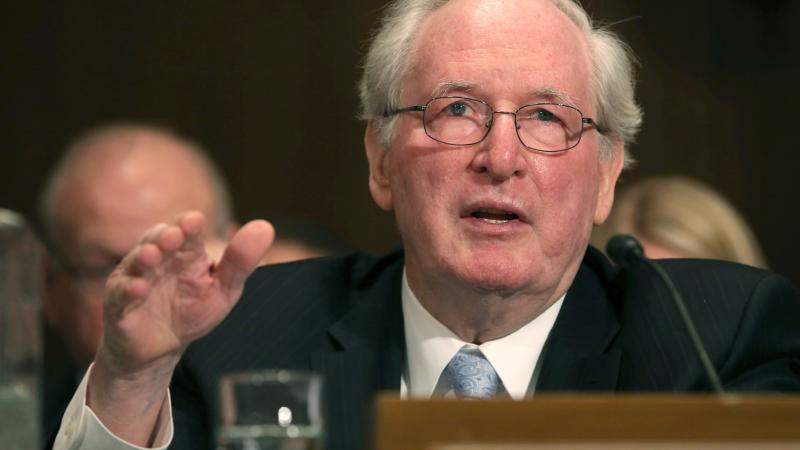
Not all Democrats are on board, however. In July, Sen. John Fetterman, D-Pa., wrote an op-ed in The Washington Post explaining why he no longer supported an end to the filibuster.
“History has vindicated former senators Kyrsten Sinema (Arizona) and Joe Manchin III (West Virginia), two people who were vilified by the Democratic Party for their support of the filibuster and whose courageous efforts damaged their political careers. The rule is a critical line of defense that prevents President Donald Trump from having a fill-in-the-blank government with new laws, deregulation or procedures of its choosing,” Fetterman wrote.
Scrapping the filibuster "puts party power over everything else," Fetterman says, citing Manchin
Fetterman also wrote that “And while I was once vocal in criticizing Manchin and many of his decisions in the Senate, I now wholeheartedly agree with his assessment that scrapping the filibuster is part of ‘extreme election-year politics that put party power over everything else.’ We cannot become a smaller version of the House of Representatives.”
Fetterman’s office did not respond to a Just the News inquiry about whether he still supports the filibuster now that Democrats are in control again.
Back in 2022, Schumer held a vote that would allow Democrats to end the filibuster to pass legislation. Manchin and Sinema voted with all 50 Republicans to block the effort. In September 2024, then-Vice President Kamala Harris said she supported the idea of ending the filibuster to pass pro-abortion legislation.
During his first term, Trump on several occasions suggested that Republicans end the filibuster to pass his preferred policies, but then-Senate Majority Leader Mitch McConnell, R-Ky., resisted the president’s calls in order to preserve the filibuster for future minority parties, including Democrats.
With Democrats now openly flirting with the idea of ending the filibuster in order to push through legislation – which Trump would likely veto anyway – the question of Republicans ending it ahead of time to pass their own legislation is likely to come up.
Senate Majority Leader John Thune, R-S.D., however, has repeatedly said he wouldn’t abolish the filibuster to pass Trump policies. Thune's office did not respond to a Just the News inquiry.
Republicans may wait for Democrats to end the legislative filibuster, as they did in 2013 when then-Senate Majority Leader Harry Reid of Nevada ended the filibuster for judicial nominees to get more judges on the bench under President Barack Obama.
Ideas being floated by GOP
Other Republicans have also floated ideas to work around the Democrats' filibuster attempts in the last two months of the legislative session. Rep. Harriet Hageman, who will begin the new year as Wyoming's newest Republican senator, told Just the News that her party should repeat their successful reconciliation bills – like the One Big Beautiful Bill – to pass key legislation prior to Democrats taking over in January.
"I think we ought to do another reconciliation package and fund some of these programs and agencies that we know that the Democrats are going to target," Hageman said on the Just the News, No Noise television show.
"We did it with reconciliation for the Department of Homeland Security just this summer. So yes, we have the ability to do that," she added. "We need to target those agencies that we know that the Democrats are going to target from the standpoint of trying to either destroy them, undermine them or fundamentally change where they go."
Hageman also suggested including border and immigration budget items and codifying the cuts to the USAID foreign aid budget, among other priorities.
Rep. Randy Fine, R-Fla., agreed with Hageman, adding that he was willing to work "around the clock" to accomplish those priorities.
"Part of the reason we lost the majority is voters didn't think we worked that hard," he said. "They saw the Senate not even trying to pass the Save America Act, and they said, 'What's the point in having them?' Well, we've got two months left, and we should use every minute to the maximum advantage that we have."
The Facts Inside Our Reporter's Notebook

Top Stories




Trending
Just the News Spotlight
Just News, No Noise