DSA celebrates 'Socialist Surge' after midterms, but large Dem majority means less influence
Socialist leaders say their expanded House bloc will push for an arms embargo on Israel and withhold support from Democratic leadership until their demands are met. But, with such a large House majority for Democrats their diluted influence may not move the centrists who outnumber them.
Following the midterm elections, the Democratic Socialists of America celebrated victories across the country in what they termed a “socialist surge” that brought six new lawmakers into federal office and hundreds into local office.
But, the sizable Democratic majority means the group’s small contingent will have a more difficult time extracting concessions from a party leadership not as welcoming to some radical left ideas.
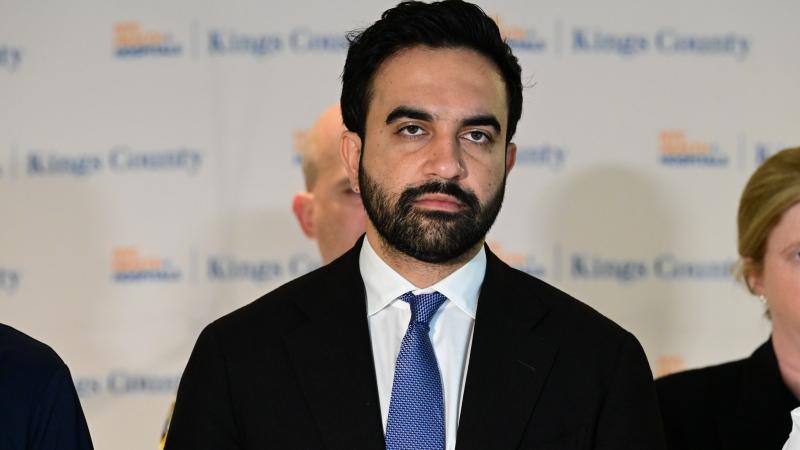
“DSA just had our biggest election cycle ever,” said DSA Co-chair Ashik Siddique in a livestream days after the election. “So, millions of people across the country showed a very clear signal that Americans are rejecting Trumpism and the rise of the far right,” he said. “But, more importantly for us, millions of people voted for socialists on our issues this election.”
Siddique later celebrated, “We’ve quadrupled our presence in Congress.”
Six new socialists head to the House
The six new members, all elected in safe Democratic districts, are Darializa Avila Chevalier and Claire Valdez of New York, Melat Kiros of Colorado, Angela Gonzales-Torres of California, Donavan McKinney of Michigan and Chris Rabb of Pennsylvania, according to the Associated Press race calls. They join Reps. Alexandria Ocasio-Cortez, D-N.Y., and Rashida Tlaib, D-Mich., bringing the DSA bloc in the House to eight.
Abolishing Immigration and Customs Enforcement (ICE) and Medicare for All were two central DSA planks that were in nearly every campaign platform. Kiros, who ousted a 30-year incumbent in the primary, pledged on her campaign website that she would “always stand for Medicare for All, Housing First, Universal Childcare, and an Arms Embargo.”
Rabb has backed state-owned grocery stores, and his campaign website calls for the U.S. to “immediately dismantle the military industrial complex.” Gonzales-Torres, who unseated Democratic Rep. Jimmy Gomez, ran on affordable housing, abolishing ICE and rooting out corruption.
Just the News previously reported on New York City Mayor Zohran Mamdani’s efforts to reshape the city’s congressional delegation. Candidates he backed, like Chevalier and Valdez, will head to Congress.
Allies outside the organization
Several Democrats sympathetic to the DSA, particularly those who remain close to the organization’s policies and networks, also won. Brad Lander, who was a former member of the DSA, won New York’s 10th District with the backing of Mamdani. Rep. Aisha Wahab, who is not a DSA member but was recommended by California DSA, won a full term in the seat vacated by former Rep. Eric Swalwell. Will Lawrence, a Sunrise Movement co-founder and former DSA member, defeated Republican Rep. Tom Barrett in Michigan’s 7th District.
Abdul El-Sayed won Michigan’s open seat but has kept his distance from the group, saying, “I’m not technically or practically DSA,” despite sharing many of the same policy goals.
Leverage over the speaker’s gavel
The bloc’s first test will be the vote for speaker. None of the incoming DSA members has publicly committed to Hakeem Jeffries, D-N.Y., who said in August, “I don’t support the DSA agenda, as has been articulated by the DSA itself.”
“As of right now, my vote is no,” Gonzales-Torres told Democracy Now on Monday. “What I don’t know is what Representative Hakeem Jeffries is offering my community.”
Before the election, Siddique said DSA and its endorsed candidates would set negotiating positions together, and the group weighed demanding committee seats and a democratic socialist caucus, The Wall Street Journal reported. DSA’s endorsement questionnaires asked candidates whether they would coordinate with the organization, consider fellow socialists for staff jobs and oppose military aid to Israel.
However, the size of the Democratic Party’s victory in last week’s midterms means that the DSA's leverage has its limits. Democrats so far have secured more than 250 seats in the House of Representatives. With only a simple majority of voting members required to elect the speaker — 218 or more — Jeffries could lose all eight DSA votes on most measures and still come out on top.
‘A people’s arms embargo’
There are more potential pitfalls for the DSA as their members take seats in Washington. Despite the successful national Democratic messaging on affordability, the DSA is hyperfocused on a set of post-election priorities that have little to do with dinner-table issues, such as reining in high gas prices or making groceries more affordable.
For example, the DSA’s leaders highlighted cutting off aid and scuppering the alliance with Israel as one of the organization’s top priorities. They are also focusing on Medicare for all and abolishing ICE.
“We are going to implement an arms embargo from below, a people’s arms embargo,” National Political Committee member Francesca Maviglia said on the call. DSA’s National Arms Embargo Campaign, launched Oct. 29, targets Israeli defense contractor Elbit Systems and United Airlines, which DSA accuses of flying military cargo to Israel.
In Congress, the bloc has promised to support the Block the Bombs Act, which would restrict certain U.S. weapons transfers to Israel. A DSA national resolution calls the bill “a step towards a full arms embargo.”
President Trump said Nov. 3 that the U.S. would stop roughly $4 billion in annual aid to Israel, citing Democratic attacks on the aid. The current agreement provides $3.8 billion a year through 2028, but because Congress appropriates federal funding, the president cannot end it unilaterally.
A tough sell beyond deep-blue districts
There are further concerns for the DSA, which may appear out of touch with the voters that launched the Democrats back into power. Most American voters still “don’t actually like socialism,” CNBC noted.
A Gallup survey found that 57% of Americans view socialism negatively and only 39% view it positively. Though 66% of Democrats hold a favorable view, compared with just 14% of Republicans, the support has not translated outside Democratic strongholds. All six DSA winners prevailed in historically solid Democratic districts.
DSA leaders, nevertheless, are charging ahead. “We’ve had success with more donors, but also we have an even stronger ground game to spread our message,” Romer told CNBC, adding that the infrastructure “will make a big difference for a potential left presidential candidate” in 2028. “It’s really kind of do-or-die time.”
The Facts Inside Our Reporter's Notebook
Links
- a livestream
- Associated Press race calls
- campaign website
- immediately dismantle the military industrial complex
- affordable housing, abolishing ICE and rooting out corruption
- previously reported
- recommended by California DSA
- former DSA member
- Iâm not technically or practically DSA
- said in August
- told Democracy Now on Monday
- the Wall Street Journal reported
- could lose all eight DSA votes
- said on the call
- National Arms Embargo Campaign
- national resolution
- stop roughly $4 billion in annual aid
- cannot end it unilaterally
- donât actually like socialism
- 57% of Americans view socialism negatively
- told CNBC
Top Stories



Trending
Just the News Spotlight
Just News, No Noise