Jury finds terrorist guilty of supporting ISIS-K in Abbey Gate attack, deadlocks on role in deaths
The defendant was charged with a single count of providing and conspiring to provide material support and resources to a designated foreign terrorist organization — ISIS-K — which resulted in death. The jury deadlocked.
A Virginia jury on Wednesday found an Afghan national guilty of being part of a conspiracy to provide material support to the designated foreign terrorist group ISIS-K that orchestrated the deadly 2021 suicide-bombing attack at the Kabul airport during the United States military's final withdrawal from the country.
However, the jury deadlocked on the key question of whether defendant Mohammad Sharifullah's support for the terror group resulted in any of the deaths at the Abbey Gate bombing, in which 13 U.S. service members were killed.
The Aug. 26, 2021, suicide bombing occurred at the Abbey Gate of the Hamid Karzai International Airport, in Kabul, Afghanistan. The blast killed 11 Marines, one Army soldier, one Navy corpsman and an estimated 170 Afghan civilians and injured dozens of others.
The bomber, who detonated an explosive vest, has been identified as Abdul Rahman al-Logari.
The FBI charged Sharifullah with a single count of providing and conspiring to provide material support and resources to a designated foreign terrorist organization – ISIS-K – which resulted in death. He pleaded not guilty to the charge.
The trial started April 20, and jurors heard closing arguments by prosecutors and defense attorneys on Tuesday, but were not able to reach any verdict until the judge thanked and dismissed them on Wednesday.
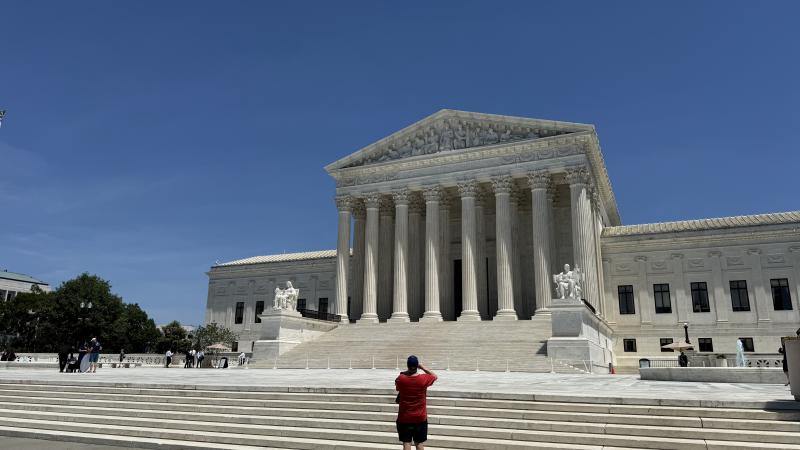
Judge Anthony Trenga, the federal judge presiding over the case, issued lengthy instructions to the jury on Tuesday following the closing statements by the DOJ and the defense.
The jury instructions included the admonition that involuntary statements by the defendant must be disregarded, and that the jury may not convict a defendant solely based on his own uncorroborated statements.
Trenga told the jurors that the DOJ must prove beyond a reasonable doubt that “but for the commission of the offense, the victim would not have died.” He said that the jury must unanimously agree beyond a reasonable doubt that, but for Sharifullah’s actions, at least one of the thirteen U.S. service members at Abbey Gate would not have died.
The verdict form provided to the jury included two key elements. The first was the jury’s decision on whether Sharifullah was part of a conspiracy to provide material support to ISIS-K. The second was the jury’s decision on whether this conspiracy by Sharifullah resulted in the death of at least one of the thirteen U.S. service members at Abbey Gate.
Late on Tuesday afternoon during the jury’s deliberations, the jurors sent a note to the judge asking, “What would happen if we cannot come to a unanimous verdict on count two?” There are not two criminal counts in the case, but rather just one, although the count has two elements which must be fulfilled for the jurors to find Sharifullah guilty.
Trenga asked the Justice Department for its thoughts on this question, and Gibbs remarked that if the jurors are not unanimous on the second element of the crime then it would have to be said that the crime had not been proven. He also noted that the jurors must have meant the “second finding” rather than the “second count.”
The DOJ prosecutor suggested that the jury was not revealing that they were unable to reach a verdict, but were just asking a clarifying question. He said the instruction from the judge should be that the jury needs to reach both findings unanimously.
Defense lawyer Geremy Kamens also told the judge that it was his stance that if the jury was not unanimous, then the crime was not proven.
Trenga brought the jury back in and told them that what would happen if they couldn’t reach a unanimous verdict would be up to him, and so they should not worry about that. He encouraged them to continue deliberating until 5:30PM on Tuesday. He did not clarify to them that there are two findings needed, rather than two criminal counts.
The jury was not able to reach a verdict Tuesday evening, and returned Wednesday morning to decide whether or not Sharifullah’s actions on behalf of ISIS-K led to the deaths of American troops at Abbey Gate.
The jurors on Wednesday morning sent a note to the judge yet again indicating that they could not reach agreement on the second finding — whether Sharifullah’s actions in support of ISIS-K had resulted in the deaths of Marines at Abbey Gate. The judge again encouraged them to keep at it.
By the afternoon on Wednesday, the jury indicated that they were hopelessly deadlocked.
The jurors sent the judge a note stating that they had reached a “unanimous verdict” on “count one” (material support for ISIS-K) but they were and had “for some time” been “deadlocked” on “count two” — whether Sharifullah’s material support resulted in death at Abbey Gate — and told the judge that “we will not be able to reach a verdict on that count.”
Assistant U.S. Attorney John Gibbs asked the judge for an Allen charge — instructions from a judge urging a hung jury to reach a unanimous verdict — but defense attorney Geremy Kamens opposed such a move, saying the jury had indicated that it was hopelessly deadlocked.
Trenga, the judge presiding over the case, declined to push or pressure the hung jury, saying that “I am going to accept the verdict at this time.”
The judge brought the jury in, and the foreman confirmed that they were deadlocked on the “resulting in death” element of the charge against Sharifullah. Trenga also polled the jurors, who all confirmed that they were deadlocked on the second finding in the charge against the defendant.
Sharifullah rose as the verdict was read by the court, finding him guilty of providing material support to ISIS-K, but also finding that the jury deadlocked on the Abbey Gate bombing element.
Trenga brought Sharifullah to the podium and told him that the jury had found him guilty of material support to ISIS-K, but that the jury had not reached a verdict on whether that support resulted in American deaths at the Kabul airport in August 2021.
The judge set a deadline for the end of May for the prosecution and defense to file motions on how he should handle the hung jury, and Trenga pushed off scheduling a sentencing date for now.
The FBI said that Sharifullah confessed to being involved in “route reconnaissance” in the lead-up to the fatal bombing.
The bureau had said Sharifullah was contacted by another ISIS-K member upon being freed from prison in August 2021 and that the fellow terrorist connected him with the plot to attack U.S. forces at the airport.
The FBI also said ISIS-K members provided Sharifullah with a motorcycle, funds for a cell phone, and instructions on using social media to communicate with them in the lead-up to the attack.
Al-Logari was freed by the Taliban from a prison at Bagram Air Base, after the U.S. had abandoned it week before the attack.
For the final withdrawal from Afghanistan, through the airport, the U.S. military relied on the Taliban, which took charge of the country about 11 days earlier, to provide security outside the airport. The Taliban's Haqqani Network also was involved in the effort.
Recorded words of Sharifullah were played for hours during his federal trial, with the jury hearing the defendant admit to involvement in a host of ISIS-K terrorist attacks, confessing to conducting reconnaissance ahead of the attack, denying foreknowledge of the Abbey Gate bombing occurring, and raising concerns about his detention and his family’s detention by the Pakistanis.
The defense team elicited testimony from an Afghan-American interpreter who discussed the hostility of the Haqqani Taliban forces that he had personally witnessed at Abbey Gate.
The defense team also read into the record the summaries of multiple U.S. intelligence report summaries that all pointed to the Haqqani Taliban and its leaders facilitating the Abbey Gate bombing in some form or fashion.
The Justice Department also provided evidence in court that Sharifullah further confessed to a role in facilitating a June 2016 suicide bombing attack which killed more than ten guards tasked with protecting the Canadian embassy. The FBI has said Sharifullah also claimed to have trained ISIS-K gunmen for a deadly attack on a concert hall in Moscow in 2024.
The closing arguments by the Justice Department and the defense team on Tuesday morning had largely echoed the themes of their opening statements last week, with the prosecutors pointing to Sharifullah’s ISIS-K membership and extensive confessions to the FBI. The defense team sought to deny their client’s involvement in the Abbey Gate attack, alleged that his confessions were coerced thanks to the Pakistanis, and shifted blame for the attack to the Taliban.
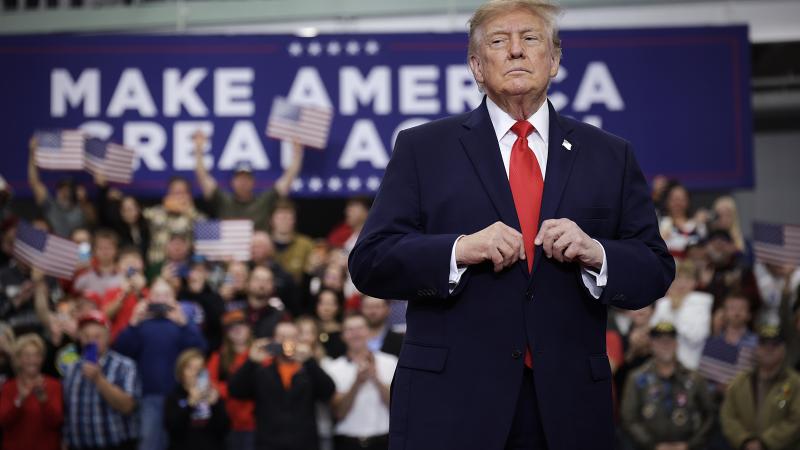
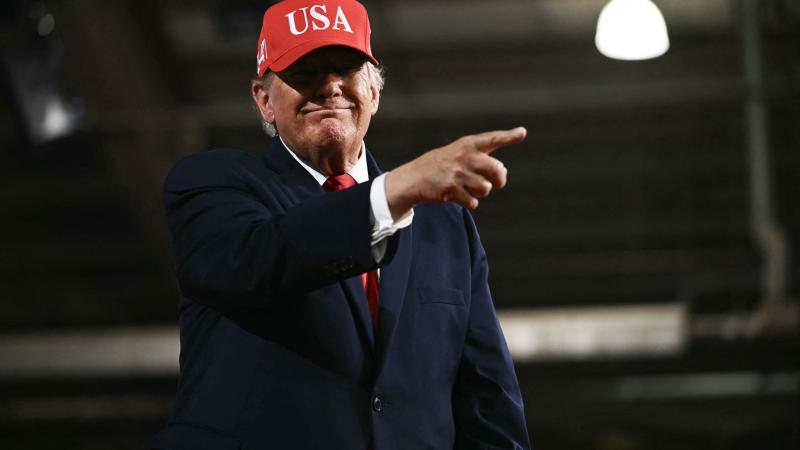
Sharifullah's capture by Pakistani intelligence, with alleged help from U.S. spy agencies, was announced by President Donald Trump at a joint session of Congress in March of last year. Trump has thanked Pakistan for “helping arrest this monster.” Trump also called Sharifullah “the top terrorist responsible for that atrocity” which killed thirteen U.S. service members.
The Pentagon under President Joe Biden had argued that the Abbey Gate attack was not preventable – going so far as to say it still would have occurred even if the bomber had remained behind bars rather than being freed by the Taliban — despite a host of evidence indicating that the attack did not have to happen the way it did.
The Facts Inside Our Reporter's Notebook
Top Stories


Trending
Just the News Spotlight
Just News, No Noise