Related Articles

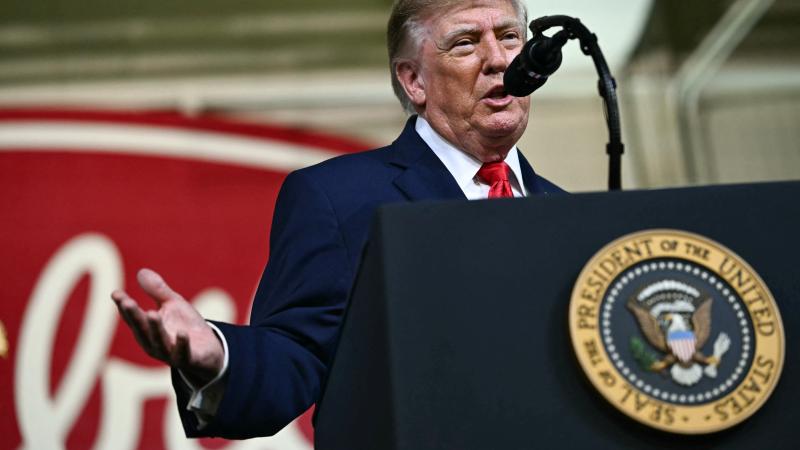
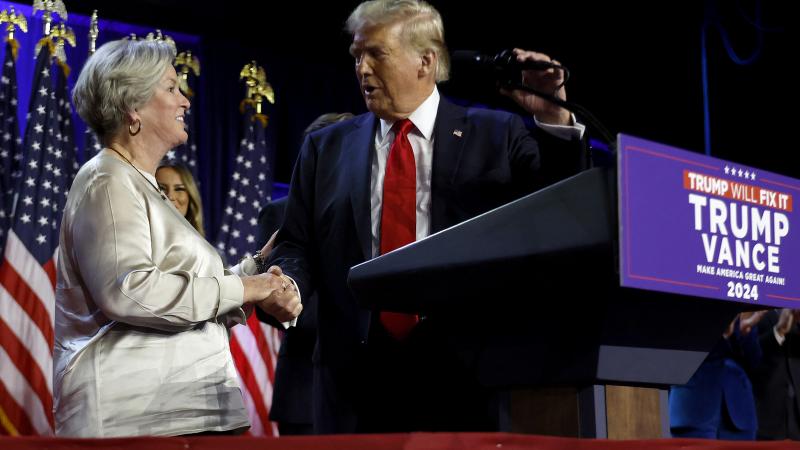
In contrast to previous administrations’ treating prisoner issues with kid gloves, Trump’s hardline produced a successful rescue that happened without the need to negotiate with Iran’s terrorists and without cargo planes loaded with cash being sent to appease terrorists.
On Sunday, President Donald Trump announced that U.S. special operations forces executed a high-risk raid deep into enemy territory, successfully extracting an injured colonel under fire, without payment to the Iranian regime in the form of pallets of cash or lifted sanctions.
The mission, which involved dozens of aircraft and coordinated deception efforts, was hailed by Trump as one of the most extraordinary rescues in military history, adhering to what was once considered a concrete rule to not negotiate with terrorists and to never leave an American war fighter behind.
The rescue was executed after a U.S. military operation involving an American F-15E Strike Eagle fighter jet was shot down over a remote mountainous region in southern Iran on Friday, forcing the pilot and weapons systems officer to eject separately.
The pilot was quickly located and rescued the same day by U.S. forces, but the second crew member—a highly respected Air Force colonel and weapons officer—remained stranded and seriously wounded, evading Iranian Revolutionary Guard (IRGC) and militia forces for more than 24 hours by hiding in rugged terrain and a mountain crevice while climbing thousands of feet to safety.
The extraction was not only militarily successful, but it took place without the negotiations employed by previous administrations.
In January 2016, former President Barack Obama's administration secretly arranged for the delivery of $400 million in cash, infamously loaded onto wooden pallets in foreign currencies, including euros and Swiss francs aboard an unmarked cargo plane, to Iran on the very same day that four American prisoners were released from Iranian custody.
The Obama team insisted the transaction was legally required, conducted separately from hostage talks, and paid in cash only because U.S. sanctions prevented normal bank transfers.
The payment was the first installment of a $1.7 billion settlement resolving a decades-old claim at the International Court of Justice at The Hague over undelivered military equipment that Iran (under the Shah) had purchased from the U.S. before the 1979 Islamic Revolution.
Obama was widely accused of negotiating with terrorists by effectively paying ransom to the Iranian regime, which the U.S. designates as the world's leading state sponsor of terrorism for arming and funding groups like Hamas and Hezbollah, especially given the timing, secrecy, and later revelations that the cash delivery had been held as leverage until the prisoners were freed.
In September 2023, the Biden administration executed a prisoner swap, releasing five Americans detained in Iran (whom the U.S. considered wrongfully held on fabricated charges) in exchange for five Iranians imprisoned in the United States, while also issuing a sanctions waiver that allowed approximately $6 billion in Iranian oil revenues previously frozen in South Korean banks, to be transferred to restricted accounts in Qatar.
The funds were Iran's earnings from oil sales and the administration claimed that strict monitoring would prevent any diversion.
However, the optics again resembled negotiating with terrorists. The sanctions waiver was issued by Antony Blinken, who was Secretary of State at the time, on September 8. The five American prisoners were flown out of Tehran just ten days later on September 18.
As part of the negotiated end to the 444-day Iran Hostage Crisis (52 Americans held at the U.S. Embassy in Tehran), the Carter administration finalized the Algiers Accords, which unfroze and transferred approximately $7.956–$8 billion in Iranian assets (from an original ~$12 billion frozen in 1979).
About $2.9 billion was released immediately to Iran via escrow after hostages were freed (minutes after Reagan's inauguration on Jan. 20, 1981), with the rest used for debt repayments and claims.
Critics, particularly from the incoming Reagan administration and conservative circles, argued that Carter's prolonged negotiations and the Algiers Accords amounted to a dangerous concession to terrorists by rewarding the seizure of the U.S. embassy and incentivizing future hostage-taking through financial settlements and contributing to the rise of a tyrannical regime.
Amanda Head is the White House Correspondent for Just The News. You can follow her here.