Related Articles
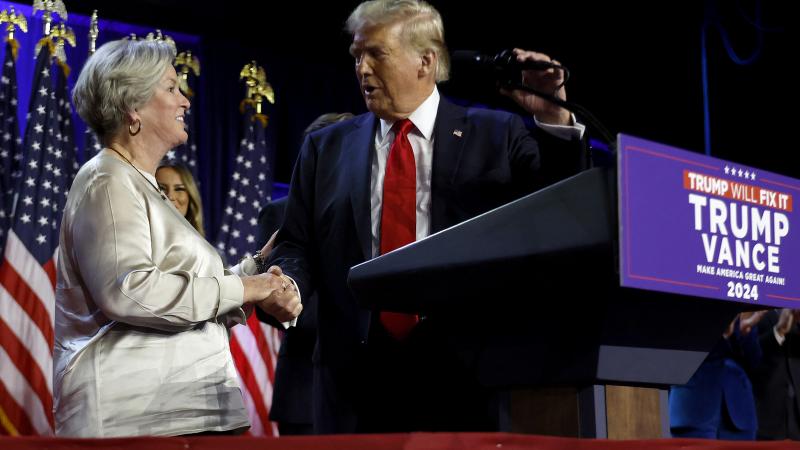

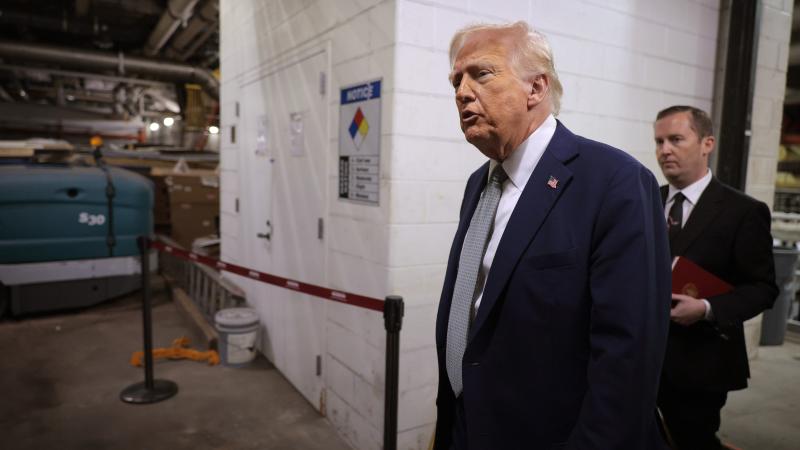
A busy 48 hours: A sweeping economic campaign against Iran, imposing 50% tariffs on Canadian goods after trade talks failed, and ordering a U.S. military strike that destroyed a suspected cartel drug boat.
Within the span of 48 hours, President Donald Trump ramped up pressure on multiple fronts, launching a sweeping economic campaign against Iran, imposing 50% tariffs on Canadian goods after trade talks failed, and ordering a U.S. military strike that destroyed a suspected cartel drug boat in the eastern Pacific.
"I don't think we've ever had a U.S. president with this kind of bandwidth to be able to deliver to the American people, but also make sure that our country is honored and that we are shown as a leader throughout the world that America is winning," former Ambassador to Denmark, Carla Sands, told Just The News.
U.S. Southern Command announced Monday that forces destroyed a low-profile vessel—appearing to be a semi-submersible “narco-sub”—in the eastern Pacific on Sunday, killing two people it described as narco-terrorists. Intelligence confirmed the boat was actively involved in trafficking along established routes, the command said, marking the first such strike in more than two months.
The action continues Operation Southern Spear, launched in September 2025, which has now conducted about 67 strikes on suspected drug boats in the Caribbean and eastern Pacific, killing more than 220 people.
Most targets have been speedboats, with a smaller number of low-profile and semi-submersible craft. These vessels, often linked by the administration to designated terrorist organizations including Mexican cartels and groups operating from Colombia, Venezuela and Ecuador, typically carry cocaine northward from South American producers toward Central America and Mexico.
Iran, according to the administration, will face its hardest economic challenge to date, in an effort to bring the theocratic regime to its knees to precipitate a swift end to the conflict as the issue has weighed negatively on Republican approval ahead of November's midterm elections.
On Monday, Treasury Secretary Scott Bessent announced Operation Economic Outcast, describing it as an “economic D-Day” and the most comprehensive campaign yet to isolate Iran from the global economy. At Trump’s direction, the initiative seeks to sever every financial lifeline sustaining the Iranian regime until Tehran stands alone.
"I know the American people are struggling right now, many of them because of the cost of this Iran War, but Scott Bessent came out today, and he lowered the hammer on this brutal Iranian regime and the IRGC. He's literally choking off all of their economy. There's a lot of pressure on this evil regime to be brought to heel," Sands said.
New sectoral sanctions target five key areas Iran has used to generate revenue and evade restrictions: digital assets, technology, gold, aviation and shipping. The Treasury simultaneously sanctioned more than 60 entities, individuals and vessels worldwide linked to oil smuggling, nuclear and missile procurement, and cyber operations. Countries and companies maintaining ties with Iran face broadened secondary sanctions risk and defined timelines to cut those connections or risk exclusion from the U.S. financial system.
Since last summer's strikes on Iran in Operation Midnight Hammer, the Trump administration has intensified economic pressure through Operation Economic Fury and a naval blockade of Iranian ports. The blockade, enforced since April, has slashed Iran’s seaborne crude exports from roughly 1.8 million barrels per day before the conflict to well under 500,000 barrels and at times far lower, cutting off a primary revenue source.
Sweeping sanctions on oil, shipping, banking and related networks—backed by coordination with allies—have compounded the strain. Iran’s currency has hit record lows, inflation has soared above 70 percent in recent months, and the International Monetary Fund projects a contraction of more than 5 percent this year. These measures have left the economy under severe dual pressure from wartime disruption and tightened external isolation.
Trade talks between the U.S. and Canada collapsed late Friday, triggering the imposition of 50% tariffs on roughly $20 billion in Canadian goods that took effect Saturday. The duties, imposed under the rarely used Section 338 of the 1930 Tariff Act, target products ranging from wine and dairy to hockey equipment and cement in response to what the Trump administration called Canadian discrimination against American alcohol, dairy and vehicles.
Negotiations had intensified for weeks after the tariffs were first threatened in July, and President Trump briefly delayed the deadline earlier in the week, claiming a deal was near. Canadian Prime Minister Mark Carney suspended the talks, citing last-minute U.S. terms he described as unfair and uneconomic. U.S. Trade Representative Jamieson Greer countered that Canada introduced new demands and walked back commitments. Canada has vowed dollar-for-dollar retaliatory tariffs starting after Labor Day, escalating a trade dispute that has simmered since earlier U.S. levies on steel, aluminum, autos and lumber.
Amanda Head is White House Correspondent for Just the News. You can follow her here.