California’s Proposition 50 poised for Supreme Court reckoning
Voters passed the last November as a Democratic countermeasure to Republican-led redistricting efforts in Texas, Florida and other states.
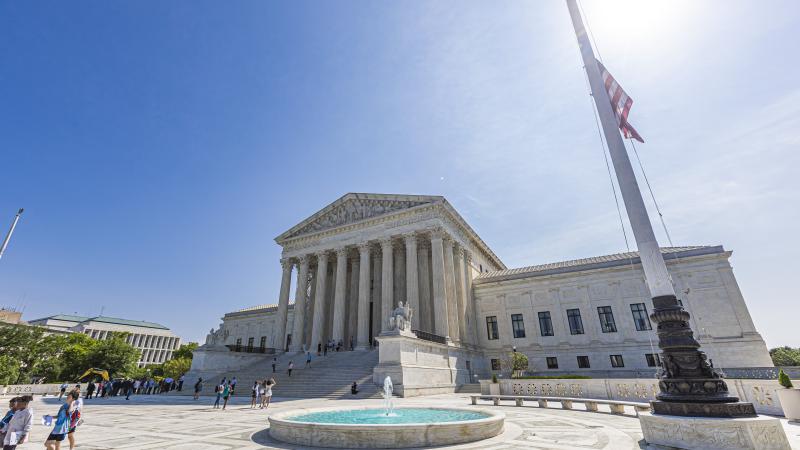
California’s controversial Proposition 50 – passed by voters last November as a Democratic countermeasure to Republican-led redistricting efforts in Texas, Florida and other states – is now on a collision course with the Supreme Court.
The measure empowered California’s Democratic-controlled legislature to sideline the state’s independent Citizens Redistricting Commission and redraw congressional districts mid-decade. That commission, created by voters in 2008, was intended to curb partisan manipulation by placing map making in the hands of an independent 14-member panel focused on transparency and fairness.
Backers of Proposition 50 argued the move was a political necessity: California, they said, could not unilaterally adhere to neutral redistricting standards while Republican-controlled states entrenched their own power through aggressive gerrymandering. Opponents, however, contend the new maps crossed a constitutional boundary by relying too heavily on race in the drawing of districts.
Now, with multiple federal lawsuits moving through the courts, the battle over Proposition 50 has evolved into a high-stakes constitutional fight. Challengers argue that California’s maps violate the Equal Protection Clause because race allegedly eclipsed traditional redistricting principles such as compactness, contiguity and respect for existing political boundaries.
As the litigation moves closer to the Supreme Court, Proposition 50 could become a landmark test of how far states may go in balancing partisan objectives with constitutional limits on racial gerrymandering.
A New Supreme Court Framework
The legal stakes sharpened considerably after the Supreme Court’s April 29 ruling in Louisiana v. Callais – a 6-3 decision that significantly tightened constitutional limits on race-conscious redistricting.
In Callais, the Court struck down Louisiana's congressional map after finding the state had improperly created an additional majority-minority district where Section 2 of the Voting Rights Act did not, in fact, require one.
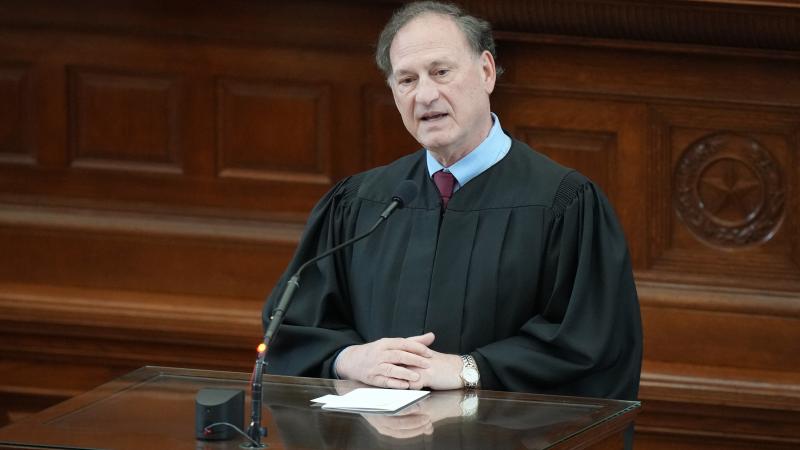
Writing for the majority, Justice Samuel Alito held that race cannot be the “predominant motivating factor” in drawing electoral boundaries unless the state can demonstrate a compelling governmental interest and prove its map is narrowly tailored to serve it.
The decision also reaffirmed that states cannot justify race-based districting by pointing to partisan goals or generalized concerns about Voting Rights Act compliance. Where race predominates, strict scrutiny – the Constitution’s most demanding standard – applies.
Legal analysts immediately recognized that the ruling would have sweeping effects well beyond Louisiana. California, with its mid-decade redistricting and openly partisan ambitions, quickly became the most prominent example.
The Mid-Decade Gambit
Marketed to voters as the “Election Rigging Response Act,” Proposition 50 was framed as a defensive measure against anticipated Republican gains elsewhere in the country. It suspended the authority of California’s independent Citizens Redistricting Commission for congressional maps and returned that power to the legislature.
Democratic lawmakers used it to draw district lines designed to maximize Democratic electoral performance. Independent analysts estimated the new maps could flip as many as five Republican-held congressional seats.
Partisan gerrymandering alone generally cannot be challenged in federal court. But challengers argue California’s maps did something more: They relied so heavily on racial demographics that they crossed into constitutionally prohibited territory.
Internal mapping data, demographic trends, and specific district configurations, opponents say, reveal a pattern of preserving or expanding Latino voting majorities in ways that drove boundary decisions– not merely informed them.
The central legal question is whether race was one factor among many or the overriding criterion behind the lines.
The Tangipa Challenge
That question surfaced sharply in Tangipa v. Newsom, one of the first major federal lawsuits against Proposition 50.
Earlier this year, a three-judge federal panel upheld California’s maps in a 2-1 ruling, finding that Republican plaintiffs had not met the demanding burden required to invalidate them at that stage of litigation. But Judge Kenneth Lee’s dissent was pointed.
“California sullied its hands with this sordid business when it engaged in racial gerrymandering as part of its mid-decade congressional redistricting plan to add five more Democratic House seats,” he wrote.
Lee argued that California’s partisan objectives offered no constitutional shield once race became the predominant force behind district lines.
“The Constitution does not permit states to sort voters primarily by race simply because the effort also advances partisan goals,” his dissent stated– singling out Congressional District 13 as a likely unconstitutional racial gerrymander.
Legal experts have noted that Lee’s dissent closely tracked the reasoning the Supreme Court later adopted in Callais, potentially handing challengers a stronger foundation as appeals proceed.
The Blurry Line
The Proposition 50 litigation crystallizes one of the hardest problems in modern redistricting law: the blurry boundary between partisan gerrymandering, which federal courts largely leave alone, and racial gerrymandering, which the Constitution forbids.
Because race and voting behavior often correlate strongly – particularly in urban, heavily Democratic areas – mapmakers routinely argue that political judgment, not racial classification, drives their decisions.
The Supreme Court has repeatedly acknowledged that overlap while warning that partisan intent cannot serve as cover for race-based redistricting. In Cooper v. Harris, the court made clear that when race predominates over traditional districting principles, strict scrutiny applies even where partisan considerations are also present.
That framework now governs the Proposition 50 fight. Critics argue California deliberately manipulated heavily Latino communities in the Central Valley and Southern California to engineer Democratic advantages while maintaining legally defensible demographic profiles. The state’s defenders counter that legislators simply accounted for political realities and minority voting patterns in a lawful effort to preserve electoral competitiveness.
A Likely Supreme Court Showdown
With appeals expected regardless of how the lower courts ultimately rule, most court watchers now consider a Supreme Court showdown increasingly likely.
If the justices take the case, it could become one of the most consequential redistricting disputes of the decade – testing how far states may go in blending partisan strategy, racial considerations and Voting Rights Act obligations. The high court’s recent jurisprudence suggests deep skepticism toward any redistricting process in which race appears to dominate decision-making absent a clearly demonstrated federal mandate.
That trajectory has alarmed left-learning voting-rights advocates, who argue the court is steadily narrowing states’ flexibility to protect minority representation. On the other side, supporters of stricter constitutional limits insist the Equal Protection Clause means what it says: Governments may not sort citizens by race, whatever the political rationale.
For California, the stakes are concrete. A Supreme Court ruling against the maps could compel the state to redraw its congressional districts yet again, with either Democratic or Republican control of the now GOP-led U.S. House potentially hanging in the balance.
Broader Stakes
For decades, congressional maps were redrawn once a decade, after each census, under the supervision of legislatures or independent commissions. As control of the House has grown more competitive and margins thinner, states have increasingly explored mid-decade remapping as a routine partisan instrument.
California’s initiative was widely understood as a direct response to anticipated Republican remaps, signaling a new and more aggressive phase in the nationalization of redistricting battles. Whether the courts permit that kind of escalation may shape not only California’s political future but also the legal rules governing redistricting across the country.
Proposition 50 passed comfortably at the ballot box. But constitutional protections against racial gerrymandering are not determined by popular vote. And after Louisiana v. Callais, the Supreme Court has made clear it is prepared to closely scrutinize any map where race appears to be the dominant force behind the lines.


Top Stories





Trending
Just the News Spotlight
Just News, No Noise