An ‘October surprise’ from China could spike oil prices ahead of midterm election for Trump
Supply and demand: Beijing has decreased importing oil since the Iran war began, keeping oil prices lower than they otherwise would have been. Analysts say China's restraint could soon end, presenting President Trump with challenging increases in gas prices ahead of the midterms.
After the outbreak of war in Iran, China drastically reduced oil imports. Instead, Beijing relied on its vast oil reserves to fuel its domestic economy amid the disruption. That reliance may be short lived.
Analysts say that soon China will boost imports as its domestic industries recover from the war-induced shock, potentially driving up oil prices on the eve of critical U.S. midterm elections for President Donald Trump and the Republican Party. China is “the largest importer of oil on the planet,” Peter Schweizer, President of the Government Accountability Institute and author, told Just the News.
Chinese importation of oil has plunged
“Well, they are going to, you know, August and September, their reserves are going to start getting pretty low, and so they're going to be in a position where they are going to ramp up oil purchases, suddenly adding the purchase of 5 million barrels a day to the equation,” Schweizer told the Just the News, No Noise TV show.
In 2025, China imported roughly 11.6 million barrels of oil per day. By May of this year, that number plunged to 7.8 million barrels per day, a more than 40% decline in imports in a one-year period, according to Chinese media outlet Caixin.
The rapid decline in Chinese oil imports is widely credited with helping stave off more significant global oil price increases amid the disruption of the Iran war, which has strangled exports from oil-rich Middle Eastern countries through the Strait of Hormuz. So-called "Teapot" refineries in China were the primary customers for Iran’s sanctioned oil industry. “Teapot refineries” are small, privately-owned oil refineries—primarily based in China’s Shandong province—nicknamed for their compact, teapot-like shape.
To avoid ramping up imports from elsewhere, China exploited its massive oil reserves, which it built up with urgency in recent years. The House Select Committee on the Chinese Communist Party recently reported that by early 2026 China had stockpiled about 1.2 billion barrels – about 109 days’ worth of regular seaborne imports – of sanctioned oil at well-below market rates.
But financial industry analysts believe that the Chinese oil slump will likely come to an end this year, spurred by pressure on Chinese authorities to rebuild the country’s strategic stock and as industries impacted by the war, like the chemical sector, recover, especially if Beijing lifts its current ban on the export of refined fuel products.
Fear of a spike in oil prices
Schweizer says that if the Chinese resume imports, there could be a spike in oil prices leading up to the critical election for the president and his party.
“Oil prices […] on the international markets, they ebb and they flow very, very quickly, based on rumors. My fear is that this is going to lead to a spike in oil prices. We're going to see oil above $100, maybe even more than $110 a barrel, and that this is going to be partly by China designed to undermine the prospects of Donald Trump's political party, the Republicans, in the midterm election,” he explained. “So it could amount to an October surprise that could have a very real bite in this election and could influence the outcome of the election,” Schweizer said.
The breakdown of the fragile ceasefire between the United States and Iran is also further complicating the oil markets. After Washington and Tehran signed a preliminary agreement in June, oil shipments through the gulf began to recover, calming the markets.
However, after the Iranian Revolutionary Guard Corps — the regime’s paramilitary security force — attacked several ships in the Strait of Hormuz, the war resumed. President Trump has appeared more reluctant to immediately enter into another ceasefire with Iran and is contemplating ramping up attacks.
Additionally, the Houthis, an Iran-backed militia group and a U.S.-designated terrorist organization in Yemen, attacked two Saudi oil tankers in the Red Sea on Thursday, potentially expanding the regional impacts of the U.S.-Iran war. Those attacks prompted the American oil price benchmark to increase to over $92 a barrel.
While West Texas Intermediate prices were in the low $90s per barrel, the global benchmark, Brent, passed $100 per barrel on Thursday. In the first week of July, following the signing of an interim peace agreement, U.S. prices dropped below $70 per barrel.
Polls show energy costs are part of cost of living concerns
Gas prices and voter perception of the economy are likely to have a major impact on how Americans vote in the upcoming elections. Polling has shown that potential voters are primarily concerned with the cost of living and economic conditions ahead of the elections.
In a Reuters/Ipsos poll last month, respondents said the cost of living was the most important factor in deciding for whom to vote in November at 49%, followed by democratic norms at 22% and immigration at 13%. In that same poll, 14% of respondents overall and 20% of Republican respondents labeled gasoline prices as the issue they most want members of Congress to prioritize.
Nearly 60% of respondents said they believed that gasoline prices would get worse over the next year as a result of the war with Iran. Additionally, a Fox News poll in June found that 68% disapprove of the president’s handling of the economy. For context, the same poll showed a disapproval of 56% last year, before the military operation against Iran.
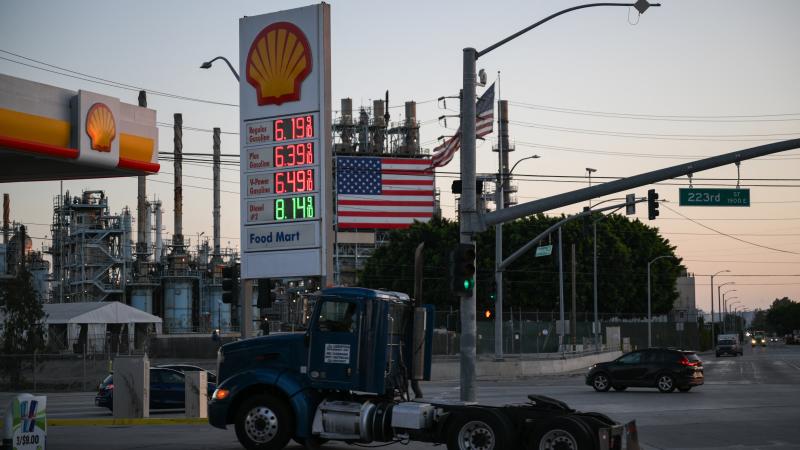
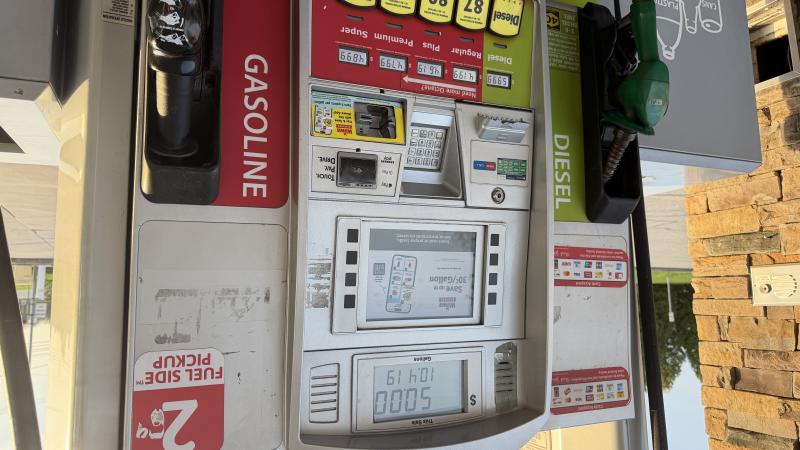
The average gas price was just under $3.00 per gallon before the outbreak of war in late February, according to AAA. Since the war began, prices surged to just over $4.50 before settling at around $4.00 during the ceasefire. After combat operations resumed this month, prices are again climbing.
The Facts Inside Our Reporter's Notebook
Links
- Government Accountability Institute
- more than 40% decline in imports
- the primary customers
- stockpiled about 1.2 billion barrels
- financial industry
- analysts believe
- a U.S.-designated terrorist organization
- attacked two Saudi oil tankers
- U.S. prices dropped below $70 per barrel
- Reuters/Ipsos poll last month
- according to AAA
- 68% disapprove of the presidentâs handling of the economy
Top Stories


Trending
Just the News Spotlight
Just News, No Noise