Trump, Democrats seem open to a healthcare deal, but it faces potentially large roadblocks
So far, no Republican senator has publicly backed a comprehensive healthcare reform plan that aligns with "Medicare-for-all." Part of the problem appears to be defining what the voter-friendly phrase actually means.
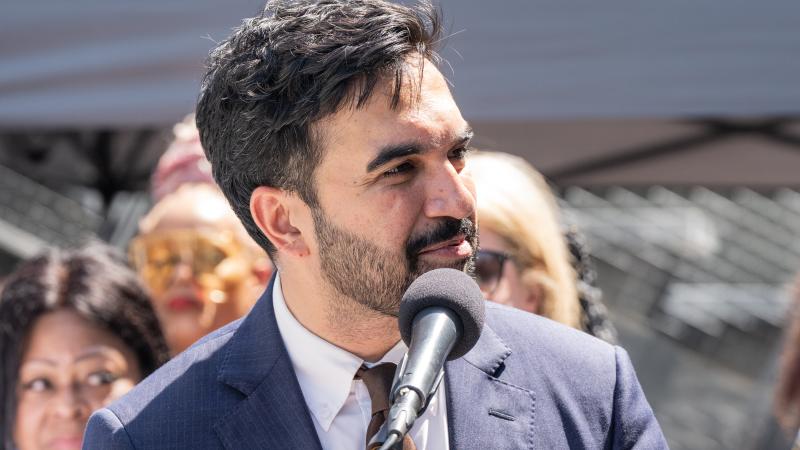
President Donald Trump this month hinted that he might accept a major healthcare reform deal with Senate Democrats after Sen.-elect Abdul El-Sayed, D-Mich., said on Sunday he would pass a single-payer healthcare bill — commonly referred to as “Medicare for All” — with the name “TrumpCare,” adding that he does not “really care what it’s called.” Still, intra-party struggles, Republican opposition, and an ongoing debate about what “Medicare-for-all” actually means, threaten to derail the effort.
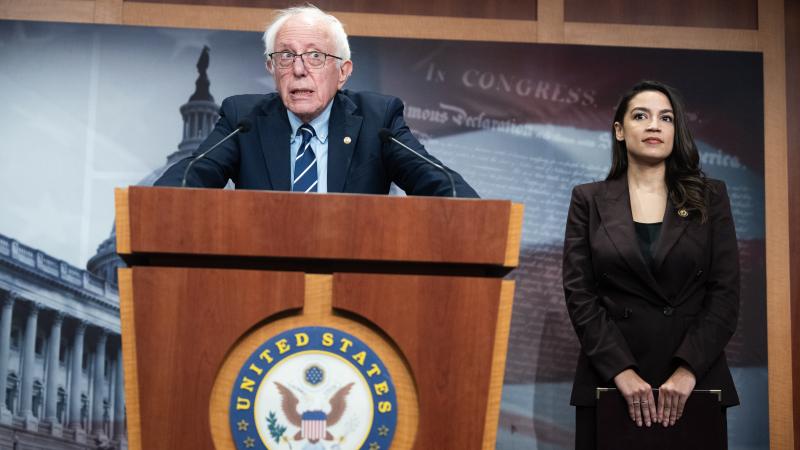
Medicare is a taxpayer-funded healthcare coverage system that currently applies to senior citizens aged 65 or older who meet citizenship or residency requirements. Sen. Bernie Sanders, I-Vt., has long pushed for extending the program to cover every American. Sanders' proposal is that the first year of the revamped law would lower the Medicare eligibility age from 65 to 55, expand coverage to include dental, vision and hearing care, and guarantee healthcare to children through age 18.
The success of Democratic candidates in the midterms means that the party will take 56 seats in the Senate and a clear majority in the House. While they would need 60 votes to overcome a Senate filibuster, they would need more still to overcome Trump’s veto. That requires a two-thirds vote of the members present and voting in both the House of Representatives and the Senate, which comes out to 290 votes in the House and 67 votes in the Senate, if all legislators voted.
Accordingly, some Democrats are eager to win Trump's agreement on the issue.
Winning over Trump with flattery and perhaps a slight appeal to ego
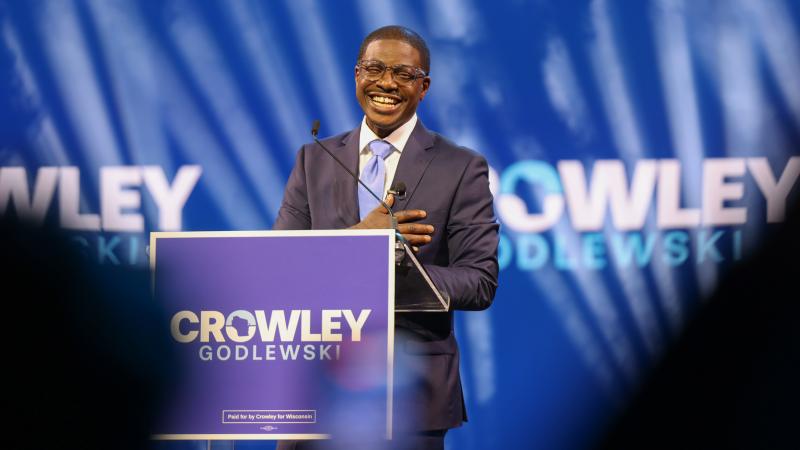
Sen.-elect Abdul El-Sayed, D-Mich., this week, posted an image of a gold healthcare card labeled “TrumpCare” and wrote "Donald, this is on the table. Guarantee healthcare for every American, from cradle to grave." Trump then shared El-Sayed’s post on Truth Social. On Tuesday, Trump stated that he would meet with El-Sayed to discuss the issue, calling him a “smart guy.”
Ironically, Democrats nationwide have railed against Trump's penchant for eponymous projects, ranging from Kennedy Center to his picture on proposed coins, passports, government websites and more.
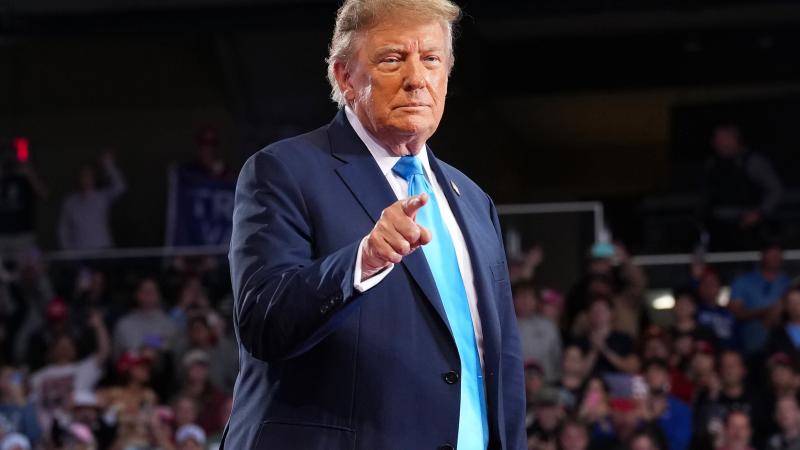
Trump, for his part, expressed a willingness to work with El-Sayed, saying, “[h]e did a good job. He actually did a very good job. I know I’ll be meeting with him. Maybe there’s some place in the middle that we could go,” he added. Trump has separately hinted that he might have an easier time finding common ground with Democrats than he did with Senate Republicans and that his veto would provide him with enough leverage to extract concessions from them.
What are they actually proposing?
“I want everybody to have it. It would be guaranteed. There is no opt out, there is no opt in. It’s just there,” El-Sayed told Politico. He further asserted that his proposal would go beyond a public option and exist for all Americans.
Extending Medicare to all Americans would effectively mean that the government pays for the health insurance of its citizens using taxpayer dollars in what is known as a single-payer system. That model would maintain the existing infrastructure of private medical practices, while displacing the private health insurance industry.
This type of system stands in contrast to the British model, where the National Health Service (NHS) both pays for the cost of medical care and directly operates the lion’s share of hospitals, though it generally relies on private general practitioners.
A public option, meanwhile, is a state-provided health insurance plan that competes with private health insurance providers, with the aim of using that competition to drive down prices. The Affordable Care Act, colloquially called "Obamacare," created state and federal insurance exchanges wherein qualifying persons can purchase a private plan and receive tax credits to offset the cost.
Polling suggests the details haven't been made clear to the public
A recent survey from the Searchlight Institute, a Democratic Party-aligned 501(c)(4) nonprofit advocacy organization, suggests that the public lacks clarity on what “Medicare-for-All” means in practice and that while voters broadly support making healthcare accessible to everyone, they are less keen on a mandatory, uniform public system.
When asked what “Medicare-for-All” means, 48% of likely voters said that it meant “universal coverage,” while 14% said it meant “free or affordable” healthcare, and 12% thought it meant a government-run or single-payer system. At the same time, voters also appeared confused about the definitions of these terms. Only 12% were able to correctly distinguish between Medicare for All, a single–payer system, or a public option.
When pressed on their desired relationship between public and private insurance options in the market, just 24% said they wanted only a national, single-payer system without private insurance. A majority of 56% supported a mix between public and private options, while 26% supported the current balance of private healthcare with limited public options for the poor and elderly. Notably, voters overwhelmingly (70%) prefer keeping their current healthcare plans to switching to Medicare or a similar system.
Trump expresses optimism about a compromise with Democrats
Thus far, no Republican senator has publicly backed a comprehensive healthcare reform plan that aligns with Medicare-for-all. But Trump himself has been optimistic about the prospect and contended that the legislation might be better because of a Democratic majority.
There's a real possibility that we'll get a lot of great things done, especially on health care. I'm open to great health care now. Can it be what they want? No, but it can be a combination,” he told reporters. “We could end up better than dealing with the Republicans.”
Ben Whedon is the Chief Political Correspondent at Just the News. Follow him on X.
The Facts Inside Our Reporter's Notebook


Top Stories



Trending
Just News, No Noise