Related Articles

A bipartisan group of U.S. senators is seeking to unite Democrats and Republicans in a collaborative effort to talk about the nation's unsustainable debt.
A bipartisan group of U.S. senators is seeking to unite Democrats and Republicans in a collaborative effort to talk about the nation's unsustainable debt.
The group proposed the Bipartisan Fiscal Commission Act, which would require a report on how the federal government would stabilize the ratio of public debt to gross domestic product within a 15-year period, and improve the solvency of Federal trust funds over a 75-year period. The measure calls for creating a 16-member bipartisan, bicameral commission composed of 12 elected officials and 4 outside experts. Legislative leaders would pick the elected officials and experts.
If the commission approves a report by May 2027, its proposals would receive expedited consideration in both chambers of Congress.
Concord Action Executive Director Carolyn Bourdeaux said it was a first step.
"Financing our $38 trillion debt is driving up interest costs, crowding out private investment, and increasing the risk of inflation and long-term economic stagnation,” she said in a statement. "A bipartisan fiscal commission with meaningful authority and expedited consideration of its recommendations can help break through the gridlock that has stalled progress for too long."
U.S. Sen. Tim Kaine, D-Va., said the idea is to start a bipartisan discussion.
"We must find a bipartisan path forward to address our nation's debt while preserving vital programs that Americans rely on," he said in a statement.
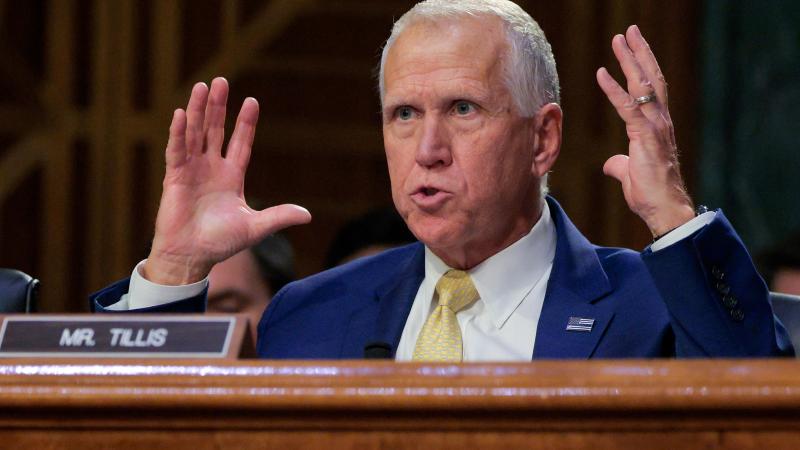
U.S. Sens. John Curtis, R-Utah, and Angus King, I-Maine, signed on to the bill. Additional co-sponsors include Sens. Thom Tillis, R-N.C.; Chris Coons, D-Del.; Todd Young, R-Ind.; Bill Cassidy, R-La.; Jeanne Shaheen, D-N.H.; Kevin Cramer, R-N.D.; and Mark Warner, D-Va.
Maya MacGuineas, president of the Committee for a Responsible Federal Budget, said a commission is a starting point.
"A commission isn't a substitute for policy change or for political will, but rather a tool to support both," she said.
Another bipartisan bill in Congress would cap annual deficits at 3% of gross domestic product, allowing Congress to continue spending more taxpayer money than it collects for years to come as it plans to address the federal debt.
House Resolution 981 would limit yearly deficits to 3% of GDP by 2030 or sooner. Last year's budget deficit was about double that at 6% of GDP. The measure sets a target of reducing the deficit to 3% of GDP or less. After reaching that goal, Congress would then aim for a balanced budget. Congress has not achieved this in more than two decades.
The last budget surplus was in 2001. Since then, spending has outpaced revenues, and annual deficits grew sharply during the COVID-19 pandemic. The fiscal year 2025 deficit was $1.7 trillion, or about 6% of GDP.
A report from the International Monetary Fund last month warned that U.S. debt was likely to remain elevated in the coming years, posing a risk for the U.S. and the global economy. IMF officials said the U.S. needs a plan to address its financial challenges.
The growing national debt, which is nearing $39 trillion, is largely the result of Congress spending more money than it collects, along with rising costs for Medicare and Social Security as the U.S. population ages and healthcare costs continue to increase.
The Congressional Budget Office projects the federal government will borrow $26 trillion from late 2025 to 2036, raising public debt to $56 trillion, or 120% of GDP.