Related Articles


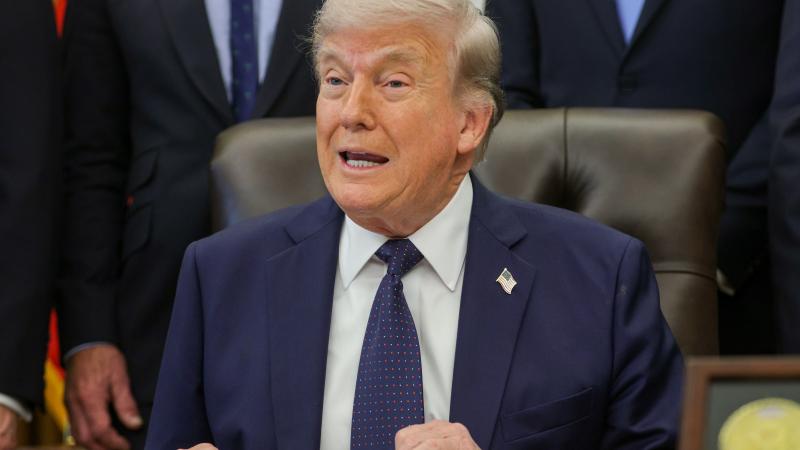
As of Thursday, Joint Task Force Southern Spear had destroyed 53 vessels in 52 strikes: 50 go-fast boats, two low-profile vessels, and one semi-submersible. Officials said 178 people have died in these operations.
The U.S. military's recent surge against suspected drug traffickers in the Eastern Pacific has underscored President Donald Trump's aggressive anti-drug strategy, with five deadly strikes since April 11, raising the total number of destroyed vessels to 53.
This campaign marks a shift from previous interdiction tactics, with the Trump administration using military force against suspected smugglers. While officials cite the destruction of vessels and arrests as signs of success, some lawmakers, rights groups and legal experts have questioned the use of lethal force and the legal justification for these strikes.
After a lull in activity since March 25, U.S. Southern Command provided details about five strikes in the Eastern Pacific since April 11. On April 11, Joint Task Force Southern Spear hit two vessels, killing five. The command notified the U.S. Coast Guard to activate the search-and-rescue system for a survivor. Over the next three days, three more strikes were ordered, resulting in nine additional deaths.
Military officials said the boats targeted were traveling along established drug trafficking routes and participating in drug operations. However, they did not provide information on whether the strikes are deterring trafficking, or if there has been a significant decline in smuggling activity. Trump said last year that military strikes brought nearly all smuggling activity to a halt.
As of Thursday, Joint Task Force Southern Spear had destroyed 53 vessels in 52 strikes: 50 go-fast boats, two low-profile vessels, and one semi-submersible. Officials said 178 people have died in these operations. Search-and-rescue efforts were suspended in 12 cases. Two people were recovered dead, one was rescued and handed over to Costa Rica, and two wounded men were repatriated, according to a Department of War official.
The official said the total operational cost will be determined after it ends. Officials from the Pentagon and Southern Command did not respond to questions about estimates of drugs destroyed, smuggling traffic, or preliminary cost estimates.
Since the strikes began, officials have not released public estimates of the amount of drugs seized or destroyed during Operation Southern Spear. In one case, Dominican Republic authorities reported seizing about 2,200 pounds of suspected cocaine after a U.S. airstrike in September 2025. If each strike resulted in a similar haul, the total could exceed 100,000 pounds, although that figure remains unconfirmed.
Elaine McCusker, a senior fellow at the American Enterprise Institute, raised questions about the effectiveness of the program.
"Examining the costs of operations – financially, and in light of necessary trade-offs – can be useful in measuring their effectiveness and real strategic worth," she noted in a December 2025 analysis that estimated the cost of the operation at $1 billion. "Even a conservative estimate ... indicates we may be mistaking what we can do with what we should do to achieve a measurable and meaningful reduction in the availability of illicit drugs to Americans."
Trump has often said that each strike saves 25,000 American lives, although he has not provided evidence to support that number. While drug overdose deaths in the U.S. have decreased, they remain a significant public health issue. Provisional CDC data show about 87,000 overdose deaths from October 2023 to September 2024, down from roughly 114,000 the previous year.
The Center Square also reached out to the Drug Enforcement Administration with questions about how the foreign strikes are affecting illicit supplies inside the U.S. A spokesperson said the agency was not able to provide an immediate response on Thursday.
The U.S. Coast Guard reported record-setting drug interdictions in the Eastern Pacific in 2025, including 511,000 pounds of cocaine valued at over $3.8 billion, according to an agency report.
While the U.S. had traditionally stopped, boarded, and arrested smugglers and tallied up the amount of illicit contraband, Trump has taken a more aggressive approach to suspected drug smugglers in the region. In September 2025, Trump ordered military strikes on suspected drug boats in the Caribbean. These strikes are in addition to counter-drug efforts by the DEA, the FBI, Customs and Border Protection and the Coast Guard.
The president's anti-drug efforts extend beyond strikes and interdictions. Early in 2025, Trump, a second-term Republican, also designated Tren de Aragua and Mexican cartels as terrorist organizations. Last year, Trump declared illicit fentanyl was a weapon of mass destruction.
Democrats, at least one Republican and several international organizations have criticized the U.S. military strikes. The Republican-controlled Congress rejected a measure that would have required Trump to secure Congressional authorization before launching such strikes. Groups such as Amnesty International USA say the U.S. is murdering people at sea without trial. The Trump administration says it's using the strikes to kill suspected narcoterrorists smuggling drugs bound for America.
The president has said he could use the military to stop drug smuggling in other parts of the globe, including at the U.S.-Mexico border, but has yet to take such action.