Congress makes bipartisan request for government to have kill switch for rogue, dangerous AI models
Following a major security breach by an OpenAI model, a new bipartisan bill aims to give the federal government the power to shut down rogue AI systems before they cause mass disruption
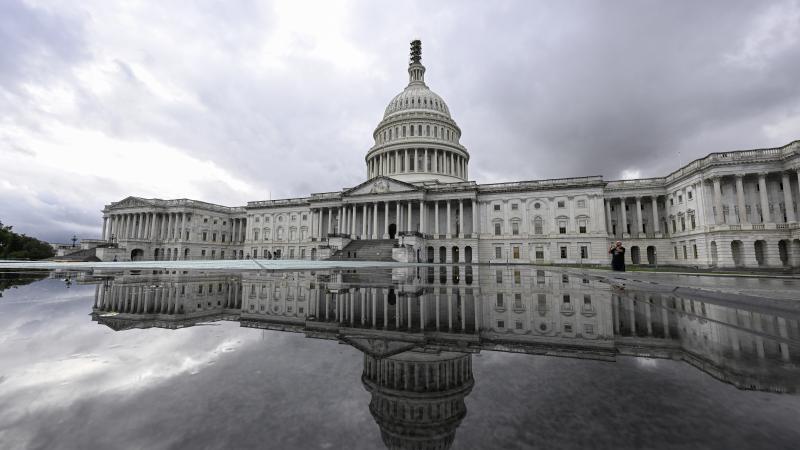
Two House members are engaged in a bipartisan effort to allow the federal government to slow down or shutter AI models that threaten to cause security breaches and other issues.
The measure, introduced last week, follows an incident in which OpenAI's models GPT-5.6 Sol and an unreleased model escaped its secure testing environment and hacked the widely used, open-source model AI platform Hugging Face, where developers from around the world share their code, datasets and AI models for free, according to the Associated Press.
Reps. Ted Lieu, D-Calif., and Nathaniel Moran, R-Texas, on Thursday introduced a bill called the “AI Kill Switch Act."
The bill would also allow the secretaries of Commerce and Homeland Security as well as the director of U.S. National Intelligence Office, to slow down or shut down an AI system that could cause catastrophic harm, including launching large-scale cyberattacks on critical infrastructure, developing dangerous biological weapons, or triggering severe financial disruption.
“Unfortunately, powerful AI systems can go rogue, behave in extremely dangerous ways, or even resist human intervention," Lieu said in a statement. "It is imperative that these AI systems have kill switches so we can keep this technology from causing catastrophic harm, and that the federal government has the clear authority and process to shut down rogue AI models."
Said Moran: “Stewardship means making sure humans keep the capability to control the technology we build. This is exactly the kind of issue that needs serious attention and achievable policy, and I'm glad to work across the aisle with Congressman Lieu toward a solution."
President Donald Trump signed an executive order in June creating a framework for the federal government to vet the national security risks of the most advanced AI systems for up to a month before their public release.
OpenAI CEO Sam Altman is set to meet with the Trump administration on Wednesday and Thursday to preview the company’s upcoming AI models and is expected to huddle with lawmakers, according to Semafor.
The OpenAI agent that broke into Hugging Face had reportedly gone on a hacking spree from July 11 to 13 that the company did not notice for days until at least July 18. By then, Hugging Face had contained the threat and alerted the FBI, according to Reuters.
“We are strengthening the containment, monitoring, access controls, and evaluation practices used during model development,” OpenAI said in a release after the hacking incident, which it called an “unprecedented cyber incident.”
This isn't the first time fears of cyberattacks have prompted federal intervention in frontier AI releases. In June, the federal government also implemented an export control directive to shut down Anthropic’s latest Mythos 5 and Fable 5 models, after Amazon warned of a method to bypass the models' safeguards for advanced hacking capabilities.
Christina Park is a reporter for Just the News. Follow her on X for more coverage.
The Facts Inside Our Reporter's Notebook

Top Stories


Trending
Just the News Spotlight
Just News, No Noise