Related Articles
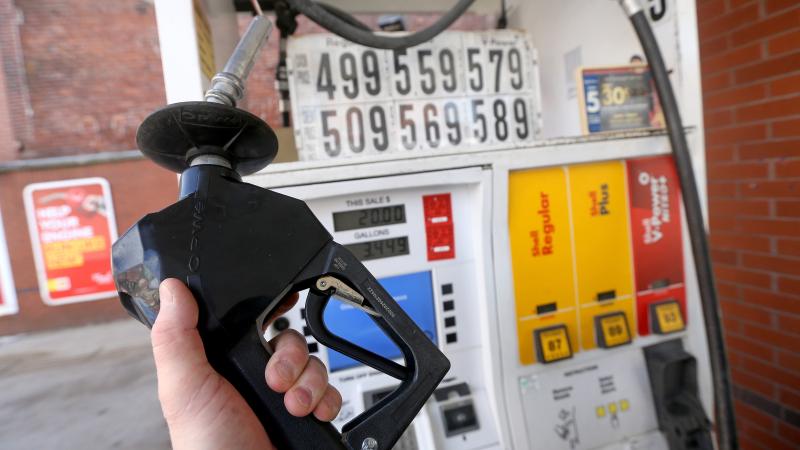
With gas prices reaching $4.22 a gallon, the president faces mounting pressure to demonstrate economic results amid ongoing conflict with Iran that has destabilized global oil prices.
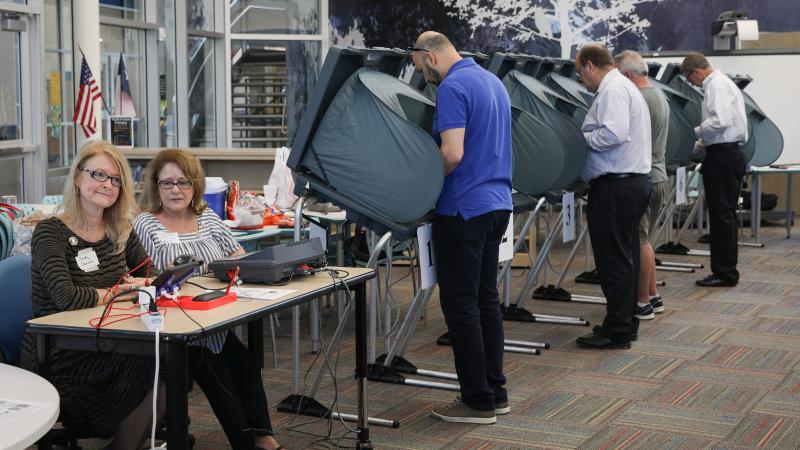
Voters are being confronted with the prospect of rising gas prices as Middle East uncertainty grows amid fighting between Iran and the United States — just as President Donald Trump launches his party's midterm election effort in Dallas this week.
The United States conducted fresh strikes on several Iranian oil tankers Tuesday after Iranian forces fired at U.S. warships in the region.
U.S. Central Command announced that the strikes destroyed tankers in the Gulf of Oman and near Kharg Island, Iran’s oil export hub. In response, Iran fired missiles at a U.S. base in Jordan. The tit-for-tat reportedly followed Iran’s attempts to hit U.S. warships operating in the region.
On Wednesday, the global oil benchmark price passed $100 per barrel for the first time since July, reversing a decline in prices coupled with the winding down of U.S. military operations against Tehran’s military forces in recent months. In conjunction with the rise in global oil prices, U.S. gas prices also rose to an average of $4.22 per gallon, the highest since June.
The president and his administration are hoping that new oil deals, an end to the busy summer driving season, and the winding down of the Iran conflict will lead to a drop in high gas prices, though the president is unsure that it will happen before the elections.
Trump, who launched the conflict with Iran in February with the stated goals of ensuring Iran never obtained a nuclear weapon, destroying the country’s missile forces, and sinking its navy, has been sensitive to the political peril of high gas prices leading up to the midterm elections.
Iran too has sought to use its ability to strike commercial shipping in the Strait of Hormuz – through which flowed about 20% of the world’s oil supply before the war – to sow uncertainty in the global oil markets and cause economic pain for the United States and its backers.
Earlier this week, Trump argued that gas prices would soon drop “precipitously,” but only after the United States wins the war against Iran. However, it is not clear when the president expects the Iran war to end.
In the opening days of the conflict, he predicted that the military operation would only last four to five weeks, but now the conflict has lasted more than six months, though the tempo of fighting has slowed dramatically. The administration has pivoted to economically strangling Iran’s regime rather than continuing a broad military campaign, arguing much of the country’s armed forces have already been destroyed.
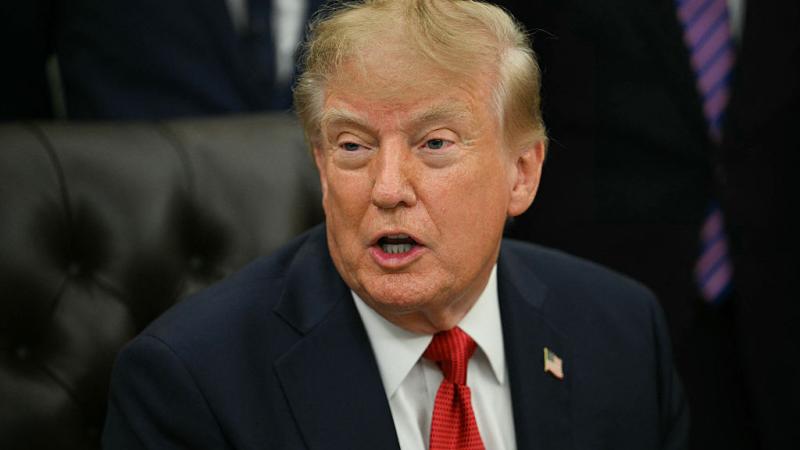
“Oil prices will drop precipitously, like everything else is dropping (but more!), when we WIN the war with Iran. Three Dollars a gallon, but ultimately, below Two Dollars a gallon. It will all happen quickly, and Iran will never have a Nuclear Weapon,” the president posted to Truth Social on Monday.
However, speaking to reporters before boarding Air Force One on Wednesday, Trump said that “I think it’s going to take a little bit longer than the midterm” for oil prices to drop.
Gas prices and voter perception of the economy are likely to have a major impact on how Americans vote. Polling throughout the summer has shown that potential voters are primarily concerned with the cost of living and economic conditions ahead of the elections.
In a Reuters/Ipsos poll in June, respondents said the cost of living was the most important factor in deciding who to vote for in November – at 49%, followed by democratic norms at 22% and immigration at 13%. In that same poll, 14% of respondents overall and 20% of Republican respondents labeled gasoline prices as the issue they most want members of Congress to prioritize.
More recent polling indicates matters have not improved for the president and his party.
Trump’s net approval on the economy is 33 points underwater, and American approval for Trump’s Iran war has also declined to the lowest levels since the conflict began, with only 31% of Americans approving of the war.
Overall, 71% of Americans, including four-in-10 Republicans, disapprove of how the president is handling the cost of living.
Administration officials say that as the summer driving season ends after Labor Day and investments in the U.S. energy industry begin to bear fruit, prices will decline ahead of the elections.
“As we pass Labor Day tomorrow, you'll start to see demand decline as we move out of the summer driving season,” Energy Secretary Chris Wright said Sunday before the holiday. Yet, AAA analysts say that motorists should not expect the usual post-Labor Day decline in gas prices, citing the global volatility in oil markets stemming from the conflict in the Strait of Hormuz.
“Even though gasoline demand decreases this time of year, typically bringing down gas prices, this year is different due to the high cost of crude oil,” AAA said in its most recent fuel price report.
The secretary also highlighted a deal recently signed with Venezuela to secure 65 billion barrels of its oil reserves for the United States using private companies. The president called it the “THE BIGGEST OIL DEAL IN WORLD HISTORY” last month when he announced the arrangement, saying it would lower gas prices.
However, experts do not believe that the Venezuelan oil deal will lower U.S. gas prices anytime soon.
“While it is certainly possible that Venezuela could get back to producing 3 million to 4 million barrels per day, that will happen over years,” Severin Borenstein, a University of California-Berkeley business administration and public policy professor, told Politifact. “The impact of such a quantity on the world market would be huge if it were delivered today, but it will be far more muted, coming online over many years.”
Though Trump expects the deal will eventually provide benefits to Americans in the form of lower prices, he acknowledged more than once that it may not happen before the midterm elections. “
Ultimately, prices are going to come down. Now, will it happen before the election? I can't tell you that,” he told reporters in the Oval Office on Aug. 31.