US intel secretly flagged major 2020 election vulnerabilities, including voter data, memo shows
Memo newly declassified by DNI Gabbard shows concerns about integrity of American voting were far greater than the public was told by previous administrations. Evidence emerged that China had gained access to voter registration data in multiple states and had even sent fake driver's licenses to the United States in a bid to help Joe Biden win the election, officials said.
Months before the 2020 presidential election, U.S. intelligence issued a secret but stark warning that foreign adversaries had the capability to “compromise" America's voting infrastructure and raised specific concerns about the vulnerability of voter registration databases that later would be penetrated by China and Iran, a newly declassified memo obtained by Just the News shows.
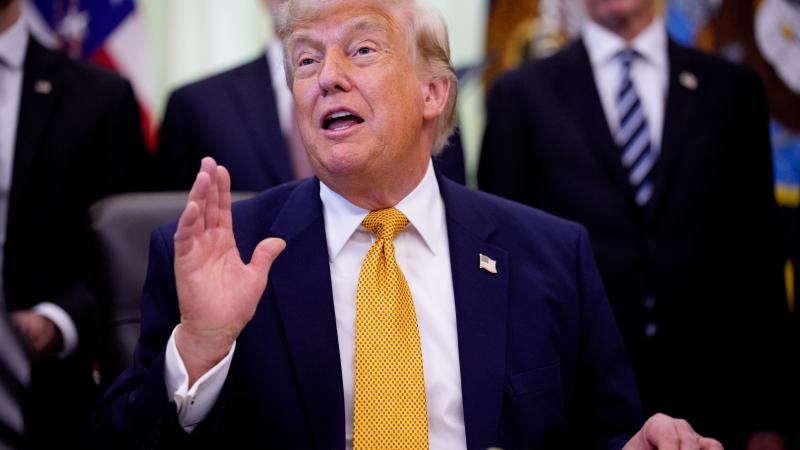
The National Intelligence Council's (NIC) concerns were so extensive that officials personally briefed President Donald Trump at the White House in February 2020, according to photos obtained by Just the News showing top CIA, FBI and Homeland Security officials joining with NIC analysts to inform the president.
But the American public was never fully alerted, even after evidence emerged that China had gained access to voter registration data in multiple states and had even sent fake driver's licenses to the United States in a bid to help Joe Biden win the election, officials said.
"We judge that US adversaries, including, at a minimum, Russia, China, Iran, and North Korea, as well as non-state groups, have the capability to compromise US election infrastructure for the 2020 presidential election," the NIC wrote in the memo dated Jan. 15, 2020.
"Adversaries gaining access to US election-related systems could disrupt the voting process, steal sensitive data, or undermine confidence in the election results, but we do not know whether any of them have specific plans to manipulate election-related systems," the memo added.
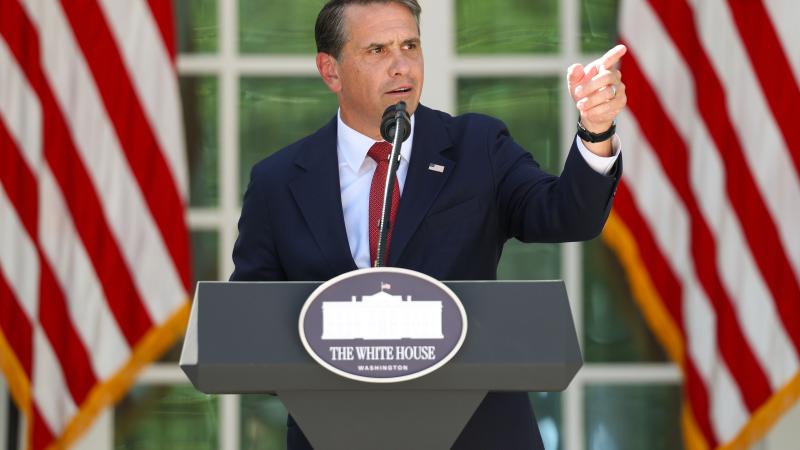
The document was recently declassified by Director of National Intelligence Tulsi Gabbard, who continues to expose examples of the intelligence community suppressing or misusing intelligence.
Though officials say that an ongoing second Trump administration investigation has found no evidence yet that vote-counting machines were directly compromised in the 2020 election, the memo shows how such machines could be vulnerable to intrusions in the future and made clear that the voter registration databases that were breached by China and Iran were easy targets.
You can read that memo here.
American voting system more vulnerable to intrusion than acknowledged
The memo, prepared by then-NationaI Intelligence for Cyber Christopher Porter, has become part of a broader body of evidence showing America's election systems are more vulnerable to hacks, breaches and manipulations than previously acknowledged.
After the 2020 election, many senior Intelligence Community officials insisted on the historical security of the 2020 election and downplayed concerns about such vulnerabilities.
Krebs: "The 2020 election was the most secure in U.S. history.”
For example, the members of the Election Infrastructure Government Coordinating Council Executive Committee released a mid-November 2020 joint statement declaring that “the November 3rd election was the most secure in American history.”
One of the officials who sat on that committee, Chris Krebs, the director of the Cybersecurity and Infrastructure Security Agency, testified to the Senate after the election that he "approved CISA’s publication of a joint statement from the election security community, reflecting that community’s consensus that the 2020 election was the most secure in U.S. history.”
Krebs has been accused by the Trump White House of being "a significant bad-faith actor who weaponized and abused his government authority. Krebs’ misconduct involved the censorship of disfavored speech implicating the 2020 election and COVID-19 pandemic."
Porter: "It is no secret that China and Iran compromise election equipment for a variety of intelligence purposes"
But Porter told Just the News those assurances did not reflect the government's assessment of just how vulnerable America's election infrastructure was. Iran and China did gain access eventually to voter registration data, but those breaches were suppressed until November 2021, when Iranian hackers were indicted, and March 2026 when Just the News obtained the first declassified documents acknowledging Beijing's penetration of voter registration data.
"What is shocking is how uncontroversial some of these findings are to professionals—it is no secret that China and Iran compromise election equipment for a variety of intelligence purposes, nor was it controversial at the time that these systems had technical vulnerabilities," Porter told Just the News. "Every agency concurred on these findings, but because it was seen as potentially aiding the President’s reelection campaign there was an active effort to damage him politically by refusing to share the declassified report with the public."
He continued, "It is important for people to recognize that this is not normal behavior by the Intelligence Community—most officers would never do something like this. In my over 20 years of public service, the politicized efforts by [the] CIA and others to conceal the truth about the threats to the 2020 US Presidential Election are unprecedented and even today shock me when I retrace everything that happened."
Porter said much of this information was ordered declassified by then-President Trump, but that CIA leaders refused to publicly release a report on the suspected Chinese threats to election infrastructure.
"The President of the United States personally ordered this information declassified and shared with the public because he thought election integrity was so important to our country. Despite this, CIA leaders at the time refused to release the declassified report," Porter told Just the News.
Punished for demanding the CIA follow Presidential orders
"Years later, when he was reelected, CIA went so far as to claim that the report had never been declassified. Even the record of its declassification had been removed from the system," he said. "Following the President’s lawful orders is necessary for the proper functioning of our democracy—when I raised these concerns at the time, the CIA, ODNI, other agencies and even the Inspector General retaliated against me and removed my ability to communicate with Congress on election issues."
Porter added, "I am so thankful for DNI Gabbard getting the truth of these matters out which for years have been kept hidden from the public and even from President Trump."
Last week, the Intelligence Community's new inspector general, Christopher Fox, decided to open a full investigation into whether Porter's concerns were internally squashed and whether he was mistreated as a whistleblower.
Well before the China and Iran hacks, the January 2020 NIC assessment warned clearly that voter registration databases—along with poll books that keep a list of authorized voters—were among the most vulnerable to hacking and manipulation by foreign powers. "We assess that centralized election-related data repositories, such as voter registration databases, pollbooks, and official election websites, are most vulnerable to exploitation, and adversaries could use access to these systems to disrupt election processes," it warned.
"States house their voter registration databases predominantly on Internet-connected systems that are designed for easy access because maintaining up-to-date voter registration records is a nearly continuous process. Adversaries could alter data to potentially prevent individual voters or groups of voters from voting, causing delays on election day or forcing voters to use provisional ballots," the officer wrote. "Adversaries could also use the registration data—which in some cases is also available publicly or for purchase—to tailor other interference or influence efforts."
Wouldn't affect election outcome, but harms public confidence in electoral system
Though the intelligence agencies concluded that vote tabulators or systems that displayed results were locally vulnerable, they ultimately assessed that it would be difficult for adversaries to “manipulate on a wide enough scale to alter the election outcome.” However, they warned that such intrusions could undermine public confidence in the election.
The January 2020 memo, which was recently declassified by Gabbard, shortly preceded intelligence reports that spring which showed China successfully gained access to American voter registration data spanning several states, Just the News previously reported.
The intelligence about Chinese intrusions eventually found its way into a few finished intelligence products, including at least one presidential daily brief, current and former U.S. officials told Just the News last month. The January intelligence memo shows how the data gained by China from those reported hacks could be exploited. The agencies focused on the assessed vulnerabilities of voter databases, pollbooks, and local election websites to such foreign intrusions.
Machines that record or count votes, especially those with no paper backups, are "particularly vulnerable” to instructions, the agencies assessed in the memo. “Adversaries who obtained physical access to voting machines could alter how they function, manipulate the data in them, or install malware,” the memo warns, citing the results of both state and academic investigations into such vulnerabilities.
Ultimately, the Intelligence Community did not believe that successful intrusions into these systems would present a threat to certified election results, even if reporting of election results was disrupted. “Tabulated results are stored independently of copies displayed on results websites, although investigations of malicious activity could delay results and introduce public uncertainty about the validity of vote counts,” the council concluded.
Intelligence community had disdain for the “vulgarian” Trump
In January 2021, the Intelligence Community analytic ombudsman — tasked with ensuring objectivity in intelligence products — conducted a review of the spy community’s handling of Russian and Chinese meddling efforts during the 2020 election. He concluded that intelligence analysts downplayed China’s actions because they had disdain for the “vulgarian” Trump and did not want to support the policies and priorities of the Trump administration toward China with which they “personally disagree,” Just the News reported last month.
Other Chinese efforts to influence the 2020 election were buried by intelligence community leaders and Iranian efforts to meddle in that election were also downplayed, Just the News previously reported.
A confidential human source told FBI counter-intelligence in the summer of 2020 that China’s communist government was seeking to meddle in the impending election to help then-candidate Joe Biden, according to a raw intelligence report distributed to federal agencies that was reviewed and made public by Just the News last year. This report was soon recalled, with spy agencies told to delete the information before they had a chance to properly investigate its claims.
But, China was not the only example. The Office of the Director of National Intelligence (ODNI) released a March 2021 assessment where agencies unanimously agreed Russia sought to hurt then-candidate Biden while Iran worked to harm then-President Trump in 2020 — but the agencies did not reach unanimity on China.
The Facts Inside Our Reporter's Notebook
Documents
Links
- National Intelligence Council
- gained access to voter registration data
- sent fake driver's licenses
- released
- Chris Krebs
- testified to the Senate
- accused by the Trump White House
- National Security Institute
- open a full investigation
- showed China successfully gained access to American voter registration data
- told Just the News last month
- downplayed Chinaâs actions
- Just the News previously reported
- reviewed
- made public
- told to delete
- assessment

Top Stories




Trending
Just the News Spotlight
Just News, No Noise