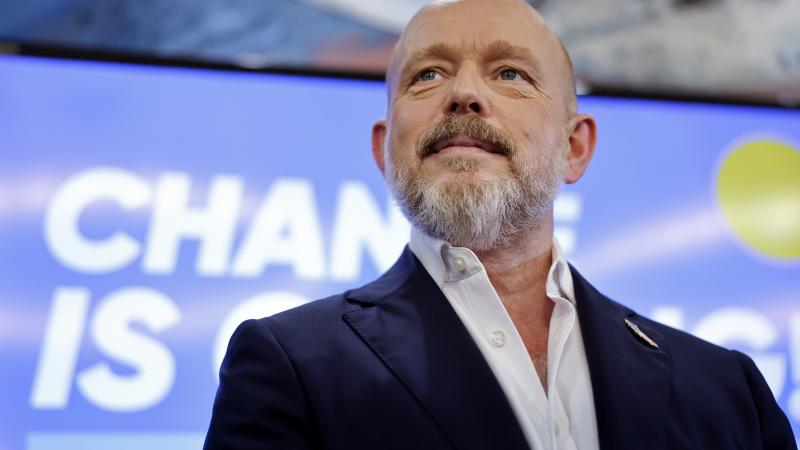
Climate advocacy struggles in the Trump 2.0 era, but opponents warn its only restrategizing
COP30 failed to produce a resurgence of support for climate policies that the Trump administration has rolled back. Some climate groups are facing financial problems and are scaling back operations. Experts say the climate movement still has momentum, and opponents shouldn't get too comfortable.
The world of climate advocacy has faced considerable setbacks since the reelection of President Donald Trump.
The annual global climate change conference, COP30, was reportedly a disappointment for those who’d hoped it would spark support for climate-change policies in opposition to the Trump administration’s rollbacks.
Polls are showing that fewer people across the world view climate change as a major threat, and legacy media outlets who once reported unquestioningly that the world is transitioning away from fossil fuels are much more likely to report on the failures of those policies.
In this backdrop of falling public support, climate advocacy groups are also scaling back operations in the face of financial trouble. Last month, 350.org, which led the movement to successfully kill the Keystone XL pipeline and popularized the anti-fossil fuel slogan “keep it in the ground,” announced it is temporarily suspending its programming in the U.S. due to budgetary issues, Politico reported.
However, with all the money invested in what critics call the climate industrial complex, experts say these developments don’t spell the end of the climate movement. It’s just retreating to a defensive position while it plans to move forward whenever and wherever they find the opportunity.
“I think that the whole climate alarm industry is undergoing a reassessment of their strategic direction,” said David Blackmon, energy analyst and author of “Energy Absurdities.”
Climate advocacy downturn
The announcement from 350.org comes several months after another high-visibility anti-fossil fuel group, "Just Stop Oil," announced it is ceasing the destructive antics it had become famous for. This included tossing cornstarch on Stonehenge, throwing soup on Vincent van Gogh’s painting, “Sunflowers,” and shutting down traffic on a major highway around London, which resulted in some of its members serving jail sentences.
As with Just Stop Oil, 350.org was known early on for generating attention for its cause through spectacular protests. Though, in the case of 350.org, it was about the size of the protests rather than the antics of the protesters. In 2009, the group coordinated 5,200 protests across 181 countries, according to Politico, and then in September 2014, the group organized a march that brought 400,000 people to the streets of New York.
Before public fear of the climate crisis began to wane this year, the group was already facing financial troubles. Other environmental groups are reporting financial trouble, and if there is a trend, it’s possible that trend exacerbated 350’s existing difficulties.
The Sierra Club, which has $173 million in revenues in 2023, announced layoffs in June. Greenpeace is facing a $667 million dollar judgment over its role in the 2016 Dakota Access Pipeline, and should its appeals prove unsuccessful, it may have to close its doors.
Energy expert Robert Bryce told Just the News the impact on the groups’ funding largely stems from the reelection of Trump.
“It was much easier to give money to these activist groups when there were Democrats in control in Washington,” Bryce said.
With minimal traction to be gained with the Trump administration, Bryce said these groups will be focusing their actions on the city and state levels.
Maintaining public perception
Blackmon doesn’t think the climate movement is coming to its end. He said they’re just laying out new strategies and waiting to see what future elections might bring.
“I don't think there's any chance they will go away quietly or give up the game. It's too lucrative for them. You have to be able to perpetuate the conflict for a conflict group to survive, and 350.org and the Sierra Club, they’re conflict groups. They make their money not by solving problems, but by ensuring those problems at least remain perceived as problems,” Blackmon said.
Climate advocates appear to recognize that maintaining the perception that climate change is a dire threat is key to maintaining their funding and their political clout. Among the conclusions of the participants of COP30 was support for the “Declaration on Information Integrity on Climate Change.”
The United Nations first put forth the proposal last spring, and it calls for a war on what it calls “denialism.” The closest the proposal comes to defining exactly what constitutes “denialism” is anything that would “delay urgent action” on climate change. Effectively, this means any perspective that doesn’t conform to the climate activists’ positions is “denialism.”
The proposal, signed by 13 European and South American countries, calls on governments to create policies that “promote information integrity on climate change,” which are “aligned with international human rights law.” It also calls on technology companies, which would presumably include social media companies, to “assess whether and how their platform architecture contributes to” the climate activist agenda.
‘Orwellian’ proposal
As much as the climate movement perceives any challenges to its assessment of the risk of climate change or its desire to rid the world of fossil fuels as misinformation to be stamped out, critics say the climate movement is guilty of spreading its own misinformation.
When the “Declaration on Information Integrity” was first proposed in March, Bjorn Lomborg, president of the Copenhagen Consensus, called it “Orwellian.” While the U.N. views the elimination of fossil fuels in 25 years as the only means to address climate change, Lomborg wrote in the New York Post, it ignores the ongoing debates among climate scientists and economists.
Lomborg also pointed out that in the U.N. literature on climate change are numerous statements that are misleading or completely false. For example, the U.N. regularly claims that small Pacific islands are disappearing as a result of sea level rise driven by global warming. In fact, multiple studies have found that hundreds of Pacific islands are growing.
Bill McKibben, founder of 350.org, recently published “Here Comes the Sun,” which argues that solar energy is the path out of the “climate crisis.” On his Subtack, Bryce calls McKibben an “old-school huckster” and criticizes the author for glossing over China’s forced-labor practices.
In the book, McKibben relies on research by Stanford professor Mark Jacobson. Jacobson filed a failed $10 million defamation suit against a scientific journal and the lead author of a study that criticized his research, claiming it was full of errors that “render it [the study] unreliable as a guide about the likely cost, technical reliability, or feasibility of a 100% wind, solar, and hydroelectric power system.”
Jacobson dropped the suit voluntarily in 2018, and the defendants filed an anti-SLAPP suit against Jacobson, and a federal judge ordered Jacobson to pay the defendants $500,000. He lost his appeal in March 2024.
Despite his record of suing those scrutinizing his research, McKibben cites Jacobson’s research claiming that the footprint of wind and solar in his 100% renewable scenario would be very small — a conclusion that few other researchers support.
As Bryce points out, renewable energy development has led to extensive land-use conflicts at the local level as a consequence of its large footprint, something McKibben blames on the fossil fuel industry spreading misinformation about wind and solar projects in rural areas.
Not going away
McKibben’s view that opposition to the growth of renewable energy is motivated by fossil fuel interests and the proposal by the U.N. to crack down on dissent of the climate agenda speak to a movement that remains convinced that there exists no legitimate dispute of their positions.
Bryce said that, while these years under the Trump administration may be turbulent for these activists, there are billions of dollars flowing through NGOs, private companies, media and academia in support of the climate policies the Biden administration had embraced so widely. This level of support, even if it’s seeing a downturn, will not dry up anytime soon, he said.
“I’m not ready to count them out. They’re not going away,” Bryce said.
The Facts Inside Our Reporter's Notebook
Links
- reportedly a disappointment
- Polls are showing
- transitioning away from fossil fuels
- report on the failures of those policies
- POLITICO reported
- Energy Absurdities
- announced
- tossing cornstarch on Stonehenge
- throwing soup
- some of its members serving jail sentences
- according to POLITICO
- which has $173 million in revenues in 2023
- facing a $667 million dollar judgement
- Robert Bryce
- Declaration on Information Integrity on Climate Change
- Lomborg wrote in the New York Post
- regularly claims
- hundreds of Pacific islands are growing
- Here Comes the Sun
- Bryce calls McKibben
- filed an anti-SLAPP suit against Jacobson
- lost his appeal in March 2024



Top Stories



Trending
Just the News Spotlight
Just News, No Noise