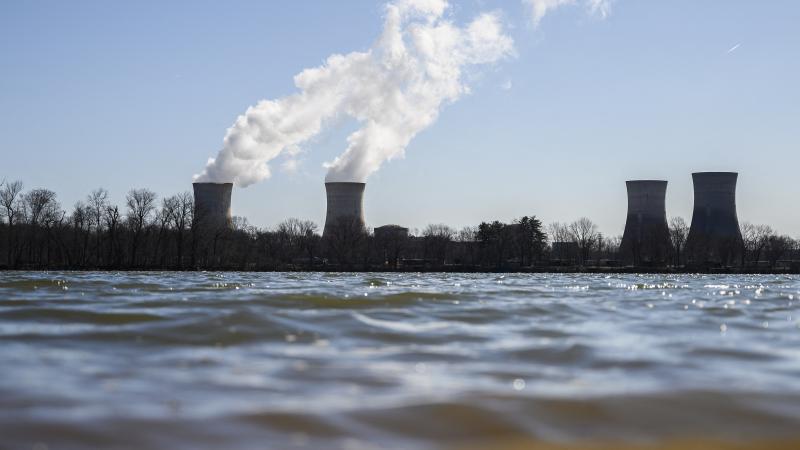
Nuclear energy continues comeback as Energy Department directs loan to restart third shuttered plant
With no reactors under construction, the restarts offer the most immediate options to grow nuclear power in the U.S. Opposition to the restarts, and nuclear power in general continues, but it’s lost the clout it once had to block and delay projects.
The Trump administration has announced it is loaning NextEra Energy as much as $1.9 billion to support the restart of a nuclear power plant in Iowa.
The project is one of three projects underway to restart nuclear power plants that have been shut down. Besides support for two of those restarts, the Trump administration in its announcement last week said it has provided support for the development of new nuclear power plants and advanced reactor technology.
While opponents of nuclear energy had the clout to block or delay nuclear power development and construction of plants, President Donald Trump’s expansion of nuclear energy hasn’t been met with much pushback, and it’s generally enjoyed bipartisan support, suggesting that a decades-long opposition to nuclear energy may be fading into history.
Shift in opinions
The shift in public opinion toward increasing support for nuclear energy began during the Biden administration, according to multiple polls.
Nuclear energy as a share of total U.S. electricity generation grew from 2.4% in 1971 to 20.1% in 1992, and it’s hovered around that figure ever since. Only three commercial reactors have gone into service in the last 30 years, the latest being two new units at the Alvin W. Vogtle Electric Generating Plant in Georgia, which came online in 2023 and 2024.
The 1979 partial nuclear meltdown at Three Mile Island, in Pennsylvania, and the 1986 Chernobyl disaster near Pripyat, Ukraine, eroded public confidence in nuclear energy’s safety.
In 2011, the Fukushima disaster released large amounts of radioactive materia into the atmosphere and the Pacific Ocean. Though it caused no deaths, like the Three Mile Island incident, the accident helped buoy opponents’ arguments that nuclear energy is unsafe.
However, nuclear has seen public opinion growing more favorable in the several years as concerns about climate change make carbon-free electricity attractive, and the intermittency of wind and solar continue to drive up electricity prices and lower grid resilience.
A Gallup poll from April found that the percentage of Americans who think more emphasis should be placed on producing domestic energy from natural gas, wind and solar declined, while the percentage who feel the same about nuclear energy increased.
The 2026 National Nuclear Energy Public Opinion Survey released in May found that 77% of respondents favor nuclear energy, a record high. That was up from 49% in 1983. A 2025 Pew Research Center poll also found growing support for nuclear power.
Reviving older plants
The nuclear industry received a big boost from Trump, who has signed four executive orders supporting development of advanced nuclear reactors, reforming nuclear reactor testing, reinvigorating domestic fuel production and reforming the Nuclear Regulatory Commission.
This is all in addition to supporting the restart of three reactors. The projects are likely to come online and add capacity to the grid before any more new reactors come online. There are currently no new reactors under construction, and the timelines can last decades.
The latest restart, the Duane Arnold Energy Center, in Iowa, was a 615-megawatt boiling-water reactor that ran for 45 years. It was shut down in 2020 after sustaining damage in a storm.
The plant also lost its power purchase agreements, which provided a predictable revenue stream. At the same time, it faced competition from cheap natural gas generation. Combined with the needed repairs from the storm, it was decided it didn’t make economic sense to keep the plant running.
The electricity demands of data centers have changed those economic calculations.
In October, Google partnered with NextEra on the restart to provide power for data centers. Now, the Department of Energy’s $1.9 billion loan provides the last piece needed to restart the plant, which is expected to be complete no later than the first quarter of 2029.
The Duane Arnold restart joins two other efforts to revive shuttered nuclear plants. The 805-megawatt Palisades Nuclear Plant in Covert Township, Michigan, was shut down in May 2022. As with the Duane Arnold plant, Palisades’ power purchase agreement had expired, and it was facing competition from renewables and natural gas.
In late 2023, Holtec Nuclear Corporation began the process of obtaining licensing approvals to revive Palisades. And in September 2024, the Biden administration’s Department of Energy finalized a $1.52 billion loan guarantee to support the effort. Last month, Holtec began loading nuclear fuel into the reactor vessel.
The plant has further testing, inspections and Nuclear Regulatory Commission approvals to get through. But if successful, it will be the first time in U.S. history a shuttered nuclear power plant has been restarted. Holtec hasn’t announced a firm date when the project will be complete.
The Trump administration is also supporting the restart of the Crane Clean Energy Center, which was formerly known as Three Mile Island Unit 1, in Londonderry Township, Pennsylvania. Microsoft signed a 20-year power purchase agreement, aimed at supplying the electricity needed for the company’s data centers. The Department of Energy provided a $1 billion loan for the restart in November 2025. It’s expected to come online next year.
Opposition remains
While public opinion has shifted in favor of nuclear energy, the revival of the shuttered nuclear power plants has its opponents. Though nuclear power provides reliable electricity without carbon dioxide emissions, climate advocacy and environmental organizations are among the opponents of the projects.
The Sierra Club launched a campaign to try to stop the Duane Arnold restart, arguing that it comes with safety risks, the reactor is outdated, and the wind and solar are cheaper. The group also opposed the Palisades and Three Mile Island restarts.
The Sierra Club isn’t alone in opposing the projects. Michigan environmental groups filed a lawsuit in state court to stop the project. After the suit was dismissed in state courts, the groups appealed at the federal level.
While nuclear energy is riding a wave of growing support that’s overcoming the opposition, accidents and mishaps grab headlines and can easily reverse the trends. The restarts provide the most immediate opportunities for growth, while bringing new reactors online exists on time scales lasting decades.
If the industry can maintain a solid safety record over that time, the portion of U.S. electricity produced by nuclear reactors may finally push past 20%.
The Facts Inside Our Reporter's Notebook
Links
- project
- bipartisan support
- Nuclear energy as a share
- drive up electricity prices
- Gallup poll from April found
- released in May
- 2025 Pew Research Center poll
- damage in a storm
- lost its power purchase agreements
- provide power
- expired
- began the process
- restart of the Crane Clean Energy Center
- Sierra Club launched a campaign
- Palisades
- Three Mile Island
- appealed

Top Stories




Trending
Just the News Spotlight
Just News, No Noise