Gov. Newsom’s 'Big Oil' war creates collateral damage as private property values rendered worthless
Unconstitutional "taking"? A law Gov. Gavin Newsom signed in 2022 bans new oil and gas operations within 3,200 feet of homes, businesses, schools, hospitals and any place people gather. The law has effectively rendered many mineral owners' property worthless.
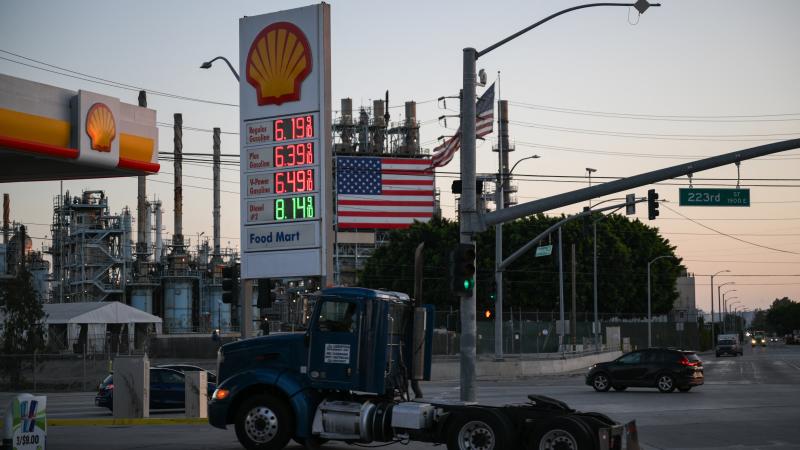
California Gov. Gavin Newsom has made his war on the state’s oil and gas industry a hallmark of his administration. In 2023, he declared that he “took on Big Oil and won,” after passing laws requiring refiners to publicize data as part of an effort to find evidence of price gouging, which turned up none.
After years of passing stringent regulations on the state’s oil and gas industry, refineries closed and Chevron moved its headquarters to Texas.
While “Big Oil” has been Newsom’s primary target, individual mineral owners have been swept up in the governor’s effort to stamp out oil and gas production. A law Newsom signed in 2022 bans new oil and gas operations around “community spaces.” This means California mineral owners that are near one of these areas can no longer use their property.
According to a lawsuit filed in the U.S. District Court for the Central District of California by two mineral owners in the state, this constitutes an unconstitutional taking of their property under the Fifth Amendment.
Creates "Health protection zones"
The law, SB 1137, bans new oil wells within 3,200 feet of “health protection zones,” which are areas around homes, schools, hospitals and just about anywhere people live, work or gather.
Sometimes real estate has what is called split estate, where the surface of the property has one owner and the minerals beneath the surface have a different owner.
Mineral rights owners can engage in the development of resources beneath the surface, such as mining or oil and gas production, and surface owners can build, rent, live on, or farm the land.
Not big oil companies
According to their complaint, the Morgans’ grandmother passed some of Hancock’s mineral rights to the siblings via a trust. The complaint adds that the Morgans were in talks with operators about drilling new wells or turning idle wells into producing wells. Both activities are now banned under SB 1137.
Since the siblings don’t own the surface rights, their property has now been rendered worthless, they say.
The Pacific Legal Foundation is representing the siblings pro bono. Jeff Jennings, an attorney with the foundation, told Just the News that the siblings are just ordinary people, as are most mineral owners.
“They're not big oil companies. They had hoped to use these minerals to create wealth, to pass on a legacy. That's really at the heart of the American dream, using natural resources on your property, developing them and benefiting society by creating energy for society — but also enjoying the fruits and passing that on to your posterity. I think that's at the heart of this lawsuit,” Jennings said.
Many mineral rights owners impacted
While SB 1137 prohibits new wells near the zones, it doesn’t work both ways. Someone can, for example, place a mobile home on a piece of property, and all mineral property within 3,200 feet of the structure becomes worthless.
“They have a right under their zoning to put up that fruit stand or that mobile home or house, and I wake up, and my mineral rights are gone. There's nothing I can do about it under the law other than to sue the state,” Ed Hazard, president of the National Association of Royalty Owners-California (NARO-CA), told Just the News.
Hazard said the law has impacted many mineral owners. The Morgans are members of NARO-CA, which brought their legal issues related to SB 1137 to the attention of the Pacific Legal Foundation in June 2024. Ever since, the association has been working with the foundation to challenge the constitutionality of the law.
“There’s a lot of oil in California,” Hazard said, who is himself also a mineral owner impacted by the law.
The law doesn’t require anyone building a home, business or other structure to notify mineral owners that the new construction will impact their mineral rights. They never find out until they attempt to get a permit for drilling or other oil and gas activities.
“I can just be sitting in my house while someone's putting up a fruit stand or a mobile home within 3,200 feet of my mineral rights, I don't know about it. I don't get access to due process. I don't have equal protection,” Hazard said.
Jennings said that the lack of a two-way restriction in the law makes its claims to protecting health dubious. “It's okay to build a house next to an oil well, but not vice versa. That doesn't make sense,” Jennings said.
National impacts of California laws
The law also impacts federally overseen authorized oil and gas leases in California. The Trump administration filed a lawsuit last month in the U.S. District Court for the Eastern District of California, arguing that federal law preempts the state law.
“This is yet another unconstitutional and radical policy from Gavin Newsom that threatens our country’s energy independence and makes energy more expensive for the American people,” U.S. Attorney General Pamela Bondi said in a statement announcing the lawsuit.
Hazard argues the law is threatening America’s security and economic wellbeing. Agriculture, military bases, and the ports in Long Beach and Los Angeles — two of the largest in the country — depend on petroleum, he said.
“We might have $8 or $10 a gallon gas, and that's a tragedy. And that will cripple us economically. But what happens if we can't get the gas that's needed for the military? That is a huge threat that most people aren't recognizing,” Hazard said.
Worse for the environment, rights owners say
Newsom recently began working with the refining companies that are shutting down facilities to secure imports of needed gasoline supplies for Californians. Imports, Hazard pointed out, run counter to the stated environmental goals of the stringent regulations that are making the state more reliant on imports.
The United States is the largest producer of oil and gas in the world, and it also rates highly on measurements of environmental quality.
Yet, California’s regulations have forced it to import ever increasing amounts of crude oil and gasoline, much of which comes from countries with fewer environmental regulations and lax enforcement.
For the Morgans, regardless of SB 1137’s goals, it’s taking their property without just compensation, and they want the courts to stop the law from doing that.
“California is free to pursue whatever climate policy it wants. It just has to pay just compensation when its means of doing that takes away 100% of a property owners’ property. It's just not fair to ask a small group of individuals to bear the burden of stopping this broader societal issue of global warming,” Jennings said.
Kevin Killough is the energy reporter for Just The News. You can follow him on X for more coverage.
The Facts Inside Our Reporter's Notebook

Top Stories





Trending
Just the News Spotlight
Just News, No Noise