New legislation seeks to shield energy sector from climate lawsuits
The "Stop Climate Shakedowns Act" aims to preemptively block state-led environmental lawsuits, affirming federal authority against local climate accountability efforts
Rep. Harriet Hageman (R-Wyo.) is moving to halt a wave of climate-related lawsuits against energy companies, announcing new legislation designed to preemptively block states and communities from seeking damages related to what she referred to as “so-called” climate change.
“You've got states and local communities who are trying to tax our energy companies out of existence. So I've got the Stop Climate Shakedowns Act, the very purpose of which is just to block these types of lawsuits from going forward,” Hageman told the Just the News, No Noise TV show on Monday.
The Stop Climate Shakedown Act of 2026 was introduced on April 17, with a release saying its goal is to “protect American energy from leftist legal crusades punishing lawful activity” by shielding American energy producers from fines and lawsuits by state legislators and environmentalists.
Contrary to the Climate Superfund laws passed in Vermont and New York that inflict multi-billion dollar penalties for past emissions that allegedly contribute to climate change, Hageman's bill would prohibit "retroactive lawsuits,” dismiss pending lawsuits and proceedings when the bill is enacted, and void state energy penalty laws, affirming the federal government as the sole authority to regulate interstate environmental standards.
“First of all, these are ex post facto laws,” said Hageman regarding climate lawsuits, saying that energy, oil, and coal companies already had received “all of the permits that are necessary, both at the state and federal level, to be able to operate.”
She referred to the ongoing litigation in Suncor Energy (U.S.A.) Inc. v. County Commissioners of Boulder County, a case in which the City and County of Boulder are seeking damages from energy companies for climate-related harms.
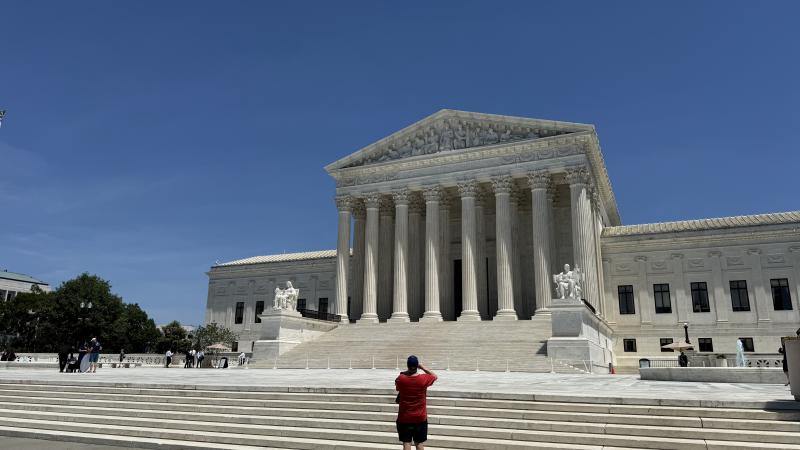
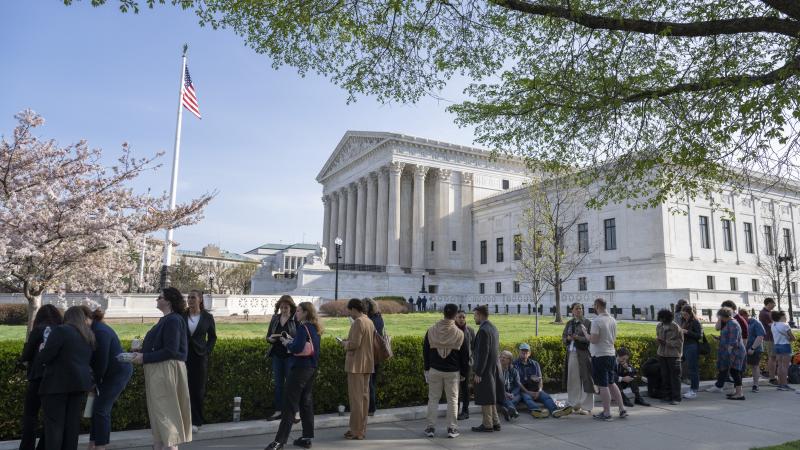
Yet in February 2026, the Supreme Court agreed to review last year’s Colorado Supreme Court ruling that allowed the climate accountability lawsuit against oil companies ExxonMobil and Suncor to proceed.
The Supreme Court will now consider the oil companies' petition bidding for immunity, as they claim federal law shields them from state-level accountability.
“What our bill would do is make it so that those kinds of lawsuits cannot be filed. We would prevent the states and the communities from being able to do a climate shakedown,” said Hageman.
Hageman also said that UN’s report in 2021 had demonstrated that much of their modeling and predictions on climate change had been “debunked years ago.”
President Trump had also posted on May 16 on his Truth Social platform that the “United Nations TOP Climate Committee just admitted that its own projections (RCP8.5) were WRONG! WRONG! WRONG!”
Representative Concentration Pathway, RCP8.5 is a hypothetical emissions scenario developed in 2011 for climate modeling experiments, which said that large swaths of the Middle East, South Asia, and Central Africa would become unlivable without continuous air conditioning due to a continuous global expansion of coal usage.
The international scientific community and researchers drafting the next scenarios for the UN's Intergovernmental Panel on Climate Change now consider that RCP8.5 is "implausible, based on trends in the costs of renewables."
While many scientists maintain that climate change remains a significant risk even under less extreme scenarios, Hageman dismissed the connection between climate change and extreme weather events, instead pointing to the “cyclical nature of weather.”
She referred to the heat waves in Europe, which many climate scientists continue to argue would not be possible without climate change.
“They have it every year. It's called summer,” Hageman said. Some years are hotter than others, and some years are colder than others, but that's just the cyclical nature of weather,” she said. On the other hand, she said, radical environmental policies were causing Americans to “suffer.”
“They're bringing these lawsuits because they want Americans to suffer, if not as much, maybe perhaps even more, so that they can pursue their radical environmental agenda. My bill would stop that,” Hageman said.
The Facts Inside Our Reporter's Notebook
Top Stories


Trending
Just the News Spotlight
Just News, No Noise