Secretary Wright sends message to International Energy Agency: 'Clean up your act, or U.S. is out'
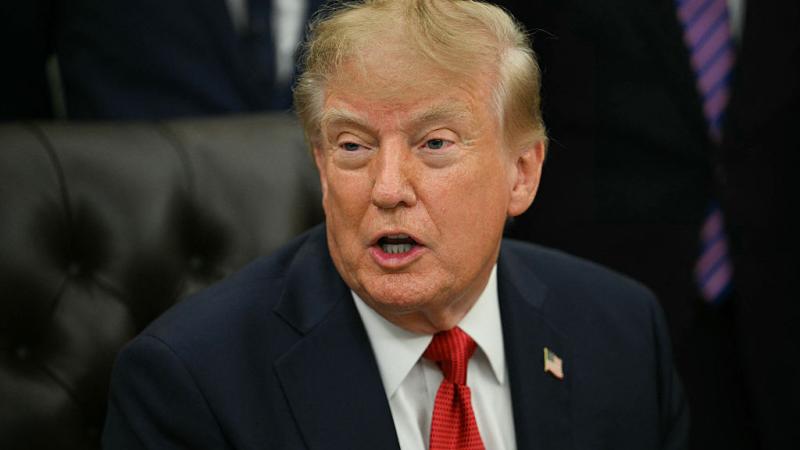
Energy Secretary Chris Wright didn't mince words at a talk at the International Energy Agency ministerial meeting in Paris Wednesday. Wright criticized the agency's net-zero emissions advocacy and again warned if the IEA doesn't reform its practices, the U.S. will withdraw its support.
At the International Energy Agency ministerial meeting in Paris Wednesday, Energy Secretary Chris Wright blasted the agency for forecasting future oil demand in line with aspirations for net-zero global emissions by 2050.
The agency has come under increasing criticism for its forecasts. Its latest “World Energy Outlook” included future demand scenarios that don’t assume policies aiming for "net-zero" will be implemented as promised, but Wright’s remarks this week suggest the move hadn’t satisfied all its critics’ concerns.
On Tuesday, Wright said that the U.S. is “definitely not satisfied” and again threatened to withdraw if the IEA didn’t reform its practices, according to Bloomberg News.
The IEA’s forecasts are influential reports, impacting policymakers and the oil and gas industry alike. A report published earlier this year by the National Center for Energy Analytics noted that, influenced in part by IEA forecasts, investment in oil and gas dropped 30% a decade ago and has remained low ever since. As a result, future oil-supply crunches are possible, the report warned.
Wright: IEA ‘pushed off course’
Wright’s comments on Wednesday were made with Fatih Birol, the IEA’s executive director, sitting on the same panel. The former oil executive has a history of voicing defenses of the industry.
When Wright was CEO of Liberty Energy, the company produced a report that year called “Bettering Human Lives,” which argued that, while oil and gas have negative impacts, these impacts should be considered in the context of a full assessment of their benefits. Fossil fuels, the report argues, are linked to multiple areas of human flourishing, including rising standards of living, sanitation and health outcomes.
At Wednesday’s IEA meeting, Wright criticized the agency for abandoning policy neutrality.
“This organization has been pushed off course, and for five years, published energy scenarios going forward, none of which had any relevance to reality. They were all just based on climate ambitions, politics, local domestic politics, do whatever you want,” Wright said.
Wright said that if Europe wants to continue to deindustrialize, Europe can make that choice. He said such a path is “not relevant to the global energy system or to better people’s lives.”
Over the last few years, Europe’s energy-intensive industries have been shutting down, and one of the primary reasons is the high cost of energy in European countries. According to energy expert Robert Bryce, who cited figures from the IEA, the aluminum industry in Europe used 12% less electricity in 2022. The crude steel industry used 10% less that year, and chemicals were down 5%. Industrial output in the Euro area fell 5.8% in the 12 months ending November 2023, according to the European Commission.
"Reality": Zero chance of net-zero by 2050
Wright said there is no chance that the world will hit net-zero emissions by 2050. The 2015 Paris Agreement had set the target as a means by which, it was argued, global average temperatures wouldn’t go over 1.5 degrees Celsius from where they were before the world was using a lot of fossil fuels.
“The attempt to do it has only had one impact. We've spent over $10 trillion to add 2.6% of global energy from wind, solar, batteries and all the extra transmission infrastructure combined. And everywhere it's deployed in unreasonable penetration rates is developed higher electricity prices,” Wright said.
The energy secretary added that states with Renewable Portfolio Standards, which require utilities to generate a certain amount of power from wind and solar, have 50% higher electricity rates than those who don’t.
Wright commended Birol for including in the IEA’s latest “World Energy Outlook” the policy scenario that doesn’t assume net-zero aspirations will be kept.
“That is a step in the right direction. That's just an approach towards reality again,” Wright said.
"Appeasing a climate cult": Rubio
David Blackmon, author of the “Energy Additions” Substack and an analyst with more than 40 years of experience in the oil and gas industry, told Just the News that people shouldn’t underestimate what it means for a cabinet-level official to make such statements, especially with Birol sitting right behind him.
“It's not an easy thing to do for any public official. And of course, we've seen in past administrations, our leaders in the energy space weren't willing to challenge the globalist line on climate change and energy transition,” Blackmon said.
Wright isn’t the only public official challenging the status quo. At the Munich Conference last weekend, Secretary of State Marco Rubio also criticized their impact on the economy.
“To appease a climate cult, we have imposed energy policies on ourselves that are impoverishing our people, even as our competitors exploit oil and coal and natural gas and anything else — not just to power their economies, but to use as leverage against our own,” Rubio said.
Wright doesn’t dispute climate change, but disputes solutions
Blackmon pointed out that Wright doesn’t dispute that temperatures are rising, and carbon dioxide emissions are contributing to it. Instead, Wright argues that lifting people out of energy poverty with oil and gas has far more benefits than net-zero emissions policies. As it states in the “Bettering Human Lives” report, “Climate change is a global challenge but is far from the world’s greatest threat to human life.”
Criticism of the IEA has been growing over the past few years. In December 2024, Sen. John Barrasso, R-Wyo., published a report arguing the agency had strayed from its original mission of producing neutral, objective energy forecasts. Over the past decade, the report argued, it’s become an advocate for net-zero policies.
“The IEA has long been off on the wrong track, long strayed from its original mission to become a cheerleader for the energy transition and the climate alarm movement, and it's been very gratifying to see Secretary Wright make these efforts to put it back on track,” Blackmon said.
The Facts Inside Our Reporter's Notebook
Top Stories



Trending
Just the News Spotlight
Just News, No Noise