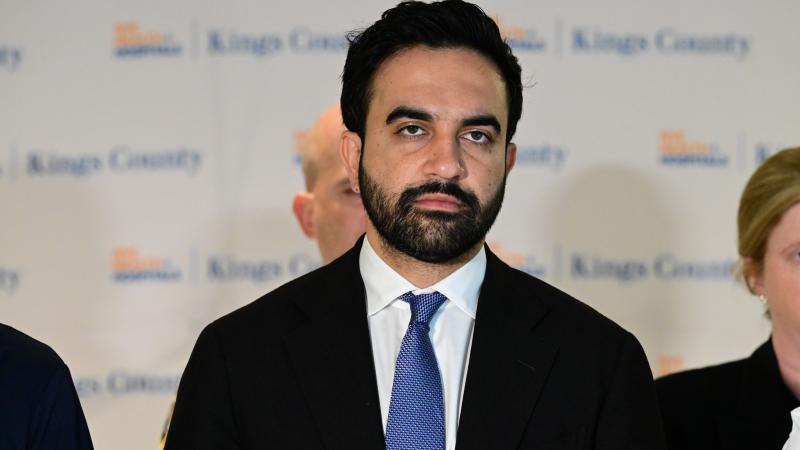
Supreme Court may soon decide whether to take up oil companies' petition in Boulder climate lawsuit
Energy companies are hoping the Supreme Court will settle the dispute over what laws apply to climate litigation. While the high court declined last year to take up a case filed by Honolulu, legal experts say it might consider another petition in the Boulder, Colorado, lawsuit.
The U.S. Supreme Court will hold a conference Friday to determine whether to grant certiorari to an important climate lawsuit, and a decision could come as early as Monday.
Certiorari is the writ that the Supreme Court of the United States issues to review a lower court's judgment. As such, a party seeking to appeal to the Supreme Court from a lower court decision must file a writ of certiorari.
In 2018, the city and county of Boulder filed a lawsuit seeking damages from weather events, which they allege are caused by burning fossil fuels. They also accuse the oil companies of deceiving the public about the dangers of climate change.
The case is one of dozens of similar cases winding their way through the courts.
Applying state law to global problem
The lawsuits use public nuisance laws, which have traditionally dealt with local problems, such as a lawsuit against the company that makes Sriracha hot sauce. That suit alleged that the factory was causing physical harm and discomfort from the fumes it emitted. In May 2014, the city dropped its lawsuit and nuisance declaration after the manufacturer agreed to implement solutions, including better air filtration systems, The Los Angeles Times reported.
The plaintiffs in these cases attempt to apply state laws to global carbon dioxide emissions. The companies had asked the Colorado Supreme Court to dismiss the case. But in May, the state court ruled the lawsuit could proceed.
Oil companies argue for federal preemption
In their petition to the U.S. Supreme Court, Sunoco Energy Inc. and ExxonMobil Corporation argue that the Constitution doesn’t allow for government entities to sue under state laws regarding public nuisance and consumer fraud for injuries alleged to have been caused by pollution coming from sources outside the state.
The Clean Air Act, they argue, preempts state law, and they’re asking the Supreme Court to clarify if state law can be used to seek damages from the global issue of climate change.
“This case presents whether that longstanding principle precludes the state-law claims in the nationwide climate-change litigation. The answer to that question is surely yes,” the companies argue in their petition.
Legislating through the courts
Prof. John Yoo, Heller Professor of Law at the University of California – Berkeley, told Just the News that the plaintiffs are trying to create national energy policy through state courts.
“Nearly three dozen leftwing states and localities have adopted this strategy in recent years, trying to accomplish through litigation what progressive politicians have failed to accomplish in Congress,” Yoo said.
David Bookbinder, who was once part of the legal team representing the plaintiffs in the case, was on a panel of experts for a Federalist Society discussion in October asking if state courts can set global climate policy. In the course of the discussion, Bookbinder explained that the courts offer a better option for passing a carbon tax.
“I prefer an actual carbon tax, but if we can’t get one of those — and I don’t think anyone on this panel would agree that Congress is likely to take on climate change anytime soon. So this is a rather, somewhat convoluted way to achieve the goals of the carbon tax,” Bookbinder explained.
In the course of the discussion, Bookbinder also stated that he’s still “privy” to the communications and deliberations of the legal team handling the Boulder case.
Yoo said it’s critical for the Supreme Court to take up the Boulder case and reaffirm basic Constitutional principles. “The founders vested in Congress the authority to determine best policies for the nation, not state courts pursuing ideological causes that voters and legislators have so far declined to adopt,” Yoo said.
On the heels of the Honolulu case
This is not the first time, however, that the Supreme Court has been asked to review a climate case filed by a local government. In 2020, Honolulu filed its own climate lawsuit against Sunoco, Exxon and other energy companies, arguing the same points in the Boulder suit.
In 2023, the Supreme Court of Hawaii rejected the oil companies’ request to dismiss the suit, and they petitioned the high court to review the decision. As Suncor and Exxon do in the Boulder lawsuit, they argued in their petition that the federal Clean Air Act preempts state law.
In the summer of 2024, the Supreme Court asked the Justice Department to weigh in on the matter. Then-Solicitor General Elizabeth Prelogar submitted briefs the following December, arguing that the justices should reject the appeal from energy companies and allow the cases to play out in state courts before the high court reviews them. In January, the court declined to hear the case.
John Shu, a legal scholar who served in both Bush administrations, told Just the News that the court might decide to take up the Boulder case.
“The current makeup of this court is more likely to be amenable to the idea that, with greenhouse gasses which move and float and are not static, that it's an issue that Congress should regulate using its interstate commerce clause power and not the individual state tort systems,” Shu said.
State court decisions
There’s also been more movement with cases on the state level. Judges have dismissed climate lawsuits filed by Bucks County, Pennsylvania, the state of New Jersey, the state of Delaware, and in Anne Arundle County and the city of Annapolis, in Maryland. A case filed by the city of Baltimore, Maryland, was also tossed.
New Jersey Superior Court Judge Douglas Hurd concurred with the oil companies’ arguments that the state’s complaint is is preempted by federal law.
Maryland's Anne Arundel Circuit Court Judge Steve Platt reached a similar conclusion with the case filed by the county and Annapolis. In his ruling, he cited the ruling by Maryland Senior Judge Videtta Brown, who dismissed the climate lawsuit filed by Baltimore, concluding that state law cannot address a global issue like climate change.
“I think that a majority of this court would have some deep concerns about any individual state court system controlling what any other state did with respect to its energy production policies or climate control policies or any policy in general. This court is much more comfortable with legislatures handling policy issues and not the courts,” Shu said.
Preferring dollars over bans
While Boulder claims to be suffering damages that oil companies are allegedly causing, it’s unwilling to ban the same products it claims are destructive.
Last year, Rep. Harriet Hageman, R-Wyoming, proposed Boulder become a model of fossil fuel-free living by taking out all their gas stations, banning natural gas appliances, and removing all asphalt, which is made from petroleum, from its roads.
Boulder City Councilman Mark Wallach told Wyofile, a left-leaning nonprofit publication in Wyoming, that the suggestion was “ridiculous” because “nobody on the Boulder Council suggested we can do without all the fossil fuels at this point.”
The city has a recent history of anti-fossil fuel activism. The Boulder City Council has considered bans on natural gas hookups in new construction and it passed aggressive emissions reduction targets.
Back to the future
Boulder plans to reduce emissions by 70% from where they were in 2018, and it plans to reach net-zero by 2035. Part of that goal is moving to 100% renewable electricity by 2030. The city in fact plans to be carbon positive – meaning it reduces more emissions than it emits – by 2040.
It’s not clear how a demonstration project that Wallach considers “ridiculous” today will become feasible in the next five to 10 years. When Just the News asked the council last year about Hageman’s proposal, none of the officials responded.
For now, Boulder is hoping the courts will provide a settlement from those companies for the products its residents use every day.
Kevin is the energy reporter for Just The News. You can follow him on X for more coverage.
The Facts Inside Our Reporter's Notebook
Links
- filed a lawsuit
- factory was causing physical harm
- state court ruled
- In their petition
- Prof. John Yoo
- panel of experts for a Federalist Society
- Honolulu filed its own climate lawsuit
- Supreme Court asked the Justice Department
- submitted briefs
- declined to hear the case
- John Shu
- Bucks County, Pennsylvania
- state of New Jersey
- state of Delaware
- Anne Arundle County and the city of Annapolis
- Baltimore, Maryland, was also tossed
- concurred with the oil companiesâ arguments
- dismissed the climate lawsuit
- Mark Wallach told Wyofile
- considered bans on natural gas hookups
- passed aggressive emissions reduction targets
- none of the officials responded

Top Stories



Trending
Just the News Spotlight
Just News, No Noise