Trump admin’s support of coal has U.S. industry ‘excited’ about the future after years of doubt
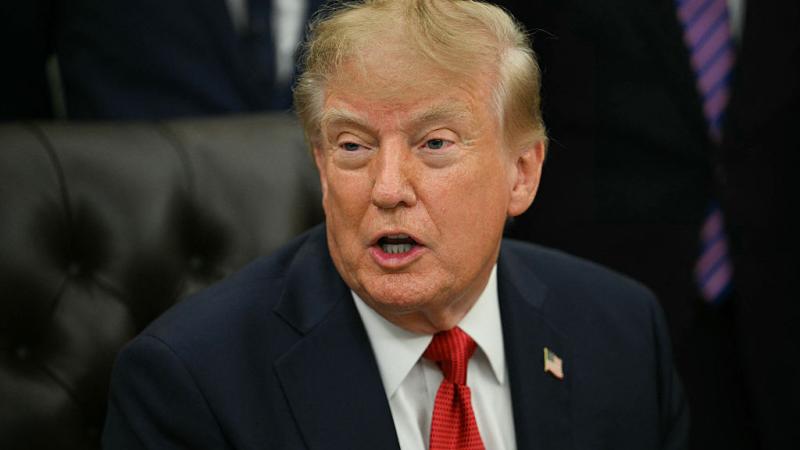
In 2026, Trump called it "beautiful, clean coal." He has signed executive orders, authorized millions to support projects that extend the life of coal plants, and reversed decades of regulatory hostility. Industry experts say American coal is more optimistic than ever about its future.
The Trump administration this week continued reversing more than a decade of anti-coal policies in the U.S. President Donald Trump on Wednesday, signed an executive order directing the Department of War to prioritize long-term power purchase agreements with coal plants.
Also on Wednesday, the Department of Energy announced $175 million in funding for six projects that will modernize, retrofit and extend the life of coal plants in Ohio, West Virginia, North Carolina and Kentucky. The authorization was part of a broader, $525 million effort to reinvigorate the U.S. coal armada.
‘So much excitement’ from the industry
The American Coal Council wrapped up its Miami Coal Forum on Friday. Emily Arthun, CEO of the council, said she’s hearing more optimism from the industry than she’s heard in the four years she’s held the position. “I've never seen so much excitement and energy in a room about coal,” Arthun told Just the News.
The U.S. coal industry has faced two hostile administrations since 2009. During former President Barack Obama’s first term in office alone, the coal industry lost more than 49,000 jobs, according to a 2015 study. During the 2016 presidential election, Democratic Party nominee Hillary Clinton pandered to "green new deal" supporters by boasting that "We're going to put a lot of coal miners and coal companies out of business." When she realized that such statements may cost her votes in the "rust belt" regions of Pennsylvannia and West Virginia, she backtracked, "calling her prior remarks a misstatement."
The current coal fleet in the U.S. currently stands at 187 gigawatts of capacity, and 171 gigawatts of capacity have been retired since 2000, according to the Global Energy Monitor.
For context, China has 1.24 terawatts of capacity in operation, and it’s retired 135 megawatts since 2000. Another 206 gigawatts is under construction, and 294 gigawatts has been announced or permitted. That means that at the present time, the U.S. has only 15.08% of China's capacity.
Rising risks of blackouts as plants shut down
The concern for the Trump administration is how America’s decline in baseload electricity generation impacts the grid when demand is high. The latest long-term assessment from the North American Electric Reliability Corporation (NERC) warned that half the U.S. is at risk for blackouts during high-demand periods when cold weather hits. The problem is further exacerbated by the projected demands that data centers are expected to place on the grid in the coming years.
NERC is an international regulatory authority responsible for assuring the effective and efficient reduction of risks to the reliability and security of the bulk power system in North America, covering the U.S., Canada, and parts of Mexico.
The Trump administration issued 20 emergency orders and extensions aimed at keeping reliable power online and mitigating the risk of blackouts. This included delaying the retirements of five coal plants this month.
The impact of February’s Winter Storm Fern was more extensive than Winter Storm Uri in 2021. Uri mainly hit Texas and resulted in widespread and lengthy blackouts, as well as hundreds of deaths. During Winter Storm Fern, according to the Department of Energy, the five coal plants kept online ahead of the weather system provided the Midwest with nearly 1 gigawatt of power. According to the U.S. Energy Information Administration, coal generation jumped 31% that week.
“Without coal, there would have been some blackouts and some brownouts. And that’s not a good thing,” Arthun said.
Impacts of executive order uncertain
How much Trump’s executive order will impact the actual demand for American coal isn’t certain. While the Department of War consumes a large part of U.S. energy, most of that is in liquid fuels, as opposed to coal-generated electricity.
Power purchase agreements are contracts between power generator owners and buyers. They provide assurances that the electricity produced will have a buyer, and owners won’t retire plants that have a buyer for the electricity they produce. The American Coal Council's Arthun said there was a lot of discussion at the coal forum this past week about the order, but it’s too early to tell exactly how it will impact the industry.
“We did have panels all day on Thursday, and there's lots of discussion around it. But it's so new that we don’t have a good understanding of any of the impacts at this point. We do know that President Trump and his administration continue to support coal, and we're excited about that,” Arthun said.
Whether that support can reverse the trend toward coal-plant retirements isn’t certain. Coal faces competition from natural gas, which is maintaining low prices. Coal competes with natural gas by being easier to ship and store. It’s transported in rail cars and stored in silos or in open-air piles.
Natural gas burns much cleaner than coal, which makes it attractive to utilities under pressure from state and federal regulations to lower their emissions. Many coal-fired units are being converted to natural gas, but the long lead times — as much as seven years — on turbines is making the conversions, as well as construction of new gas-fired plants, more difficult.
Choosing between "all of the above" over "all that works"
At the very least, there are signs that coal has a future in the U.S. In October, Basin Electric, which serves 3 million customers throughout the West, received $4 million from the Wyoming Energy Authority to study the feasibility of a second unit at the Dry Fork Station in Gillette, Wyoming.
If that unit is constructed, it will be the first coal plant built in the U.S. since the construction of the Sandy Creek Energy Station, about 20 miles north of Waco, Texas. The 932 megawatt plant entered service in May 2013.
More than 40% of the coal mined in the U.S. comes out of Wyoming. Travis Deti, executive director of the Wyoming Mining Association, told Just the News that the experience of Wyoming’s coal industry under Trump compared to the previous administration is like night and day.
“We have an administration that has changed the narrative 180 degrees. This administration is serious about our energy policy in this country. We have gone from kind of an all-of-the-above — including non reliable wind and solar — to all that works. And that includes coal, nuclear and gas,” Deti said.
Kevin Killough is the energy reporter for Just The News. You can follow him on X for more coverage.
The Facts Inside Our Reporter's Notebook
Links
- Trump signed an executive order
- Energy Department announced $175 million
- Miami Coal Forum
- according to a 2015 study
- according to the Global Energy Monitor
- warned that half the U.S. is at risk for blackouts
- 20 emergency orders
- delaying the retirements
- coal generation jumped 31%
- which is maintaining low prices
- as much as seven years
- received $4 million
- Sandy Creek Energy Station
- 40% of the coal mined
Top Stories




Trending
Just the News Spotlight
Just News, No Noise