Trump deals with Russia in hopes of bringing down diesel prices, but experts question the plan
Trump is hoping that increasing Russian exports of diesel will address fuel prices, but experts say the globe needs a lot more than Russia can supply. Until conflicts in Ukraine and Iran are resolved, the market will be under supplied, they say.
President Donald Trump announced on Friday that he is suspending sanctions against Russian diesel exports, which he said would allow the country to put more diesel on the global market.
With the midterm elections approaching, the pressure from voters dissatisfied with high fuel prices is growing, and Trump is hoping the release of Russian diesel will help bring down prices — or at the very least give voters a sense that the issue is getting attention.
Experts, however, say that the amount will provide only a small, temporary relief to fuel costs, and it won’t address the long-term causes of the problem.
“I think there will be some impact, but it's not going to be any kind of panacea for the problem,” energy analyst David Blackmon told Just the News.
Tons of diesel
Trump announced the agreement on Truth Social, saying that he had concluded a “highly successful” discussion with Russian President Vladimir Putin. Under the agreement, Russia would send 2.25 million barrels of diesel to U.S. and global markets. Another 500,000 tons would be supplied in November, and a further 1 million tons would come “immediately thereafter.”
Based on the condition of Russian refineries, Trump continued, they will supply “within a short period of time” 3,000,000 tons of diesel.
“Between our TOTAL CONTROL of the Strait of Hormuz, and this great announcement on Russian Energy, Diesel Prices for Americans and, indeed, the World, will be COMING DOWN, IN RECORD NUMBERS, AND FAST! Lower prices for Americans, especially our Great Farmers, Ranchers, and Truckers, is my Greatest Priority. ” Trump said.
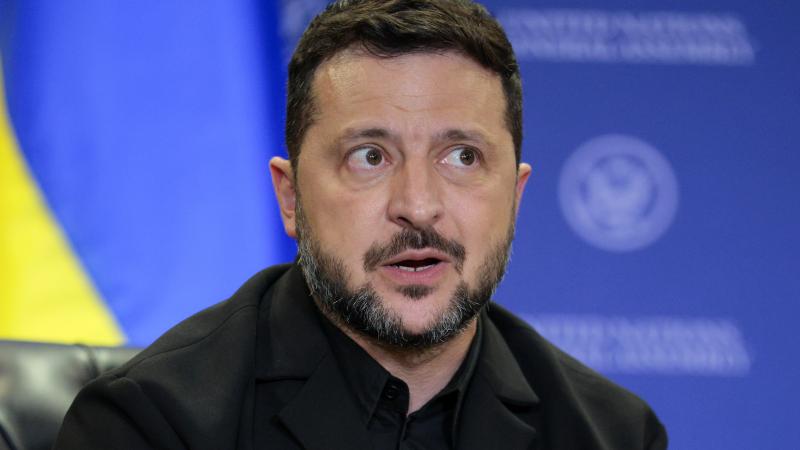
Trump also recently brokered an “energy ceasefire” between Russia and Ukraine, but since then, Ukrainian President Volodymyr Zelensky accused Russia of violating the agreement by attacking Ukraine’s energy grid, and Ukraine resumed attacks on Russia’s refineries.
Market and Congressional response
Diesel futures after Trump announced the lifting of sanctions against Russia suggest that markets are doubting the impact of the deal. U.S. diesel futures were up 5% by midday Tuesday following the announcement, and European futures increased approximately 3.8%, NBC News reported.
U.S. diesel prices were at $6.32 per gallon Thursday, up from $6.29 per gallon a week earlier and up from $3.66 per gallon the previous year, according to AAA.
Trump's plan has also received bipartisan criticism from lawmakers. The same day Trump announced the deal, several Republican and Democratic senators warned that the plan violates the 2022 Ending Importation of Russian Oil Act, which banned imports of Russian energy products, ABC News reported.
The law allows the president to lift the ban under certain conditions, but only with congressional review of the justifications. Trump had not presented the plan to Congress prior to the announcement.
Trump has nevertheless stood by the plan, pointing out that Europe has previously purchased energy products from Russia.
“The European Union paid Russia 250 Billion Dollars for Energy, and the Fake News Media doesn’t want to get near that story. I made the right choice for the American People — ALWAYS, AMERICA FIRST!” Trump said in a post on Truth Social.
A dozen senators on Wednesday sent a letter to the White House, Treasury Secretary Scott Bessent and Secretary of State Marco Rubio arguing that the deal struck with Russia will not achieve “just ends, nor will it benefit Americans.”
They warned that the deal would help Putin finance his war against Ukraine and will undermine American security interests.
Energy Secretary Chris Wright said Sunday the deal with Russia is an “incentive” for Moscow to “reduce” its war in Ukraine, amid failed efforts thus far to end its 4-plus year-long conflict with Ukraine.
“This is a carrot to try to end a war. It’s not an economic lifeline for Russia,” Wright said on ABC’s “This Week.”
Fixed global market
In a video on X, energy expert Robert Bryce outlined reasons why he doubts the deal will not produce the outcomes Trump is expecting. Purchasing diesel from Russia, Bryce argued, doesn’t increase the overall supply. To increase the supply, Bryce explained, the globe must increase refining capacity. Russia’s capacity is being impacted by drone strikes from Ukraine.
“The amount of diesel fuel on the global market is fixed,” Bryce said.
He also said that the amount Russia can supply won’t be enough to have a major impact. Should the total expected diesel be delivered from Russia, it amounts to a single day of global diesel consumption, he said.
Bryce also pointed out the geopolitical implications of the deal. The fuel is worth about $7 billion, which means an American company would have to be comfortable providing those revenues to Russia, which would then fund its war against Ukraine. Russia is also a supporter of Iran in its conflict with the U.S. and Israel.
“The bottom line is there’s no art to this deal,” he said.
When a reporter asked Trump on Tuesday about the possibility of the revenues from the diesel sale going to support Russia’s conflicts, including it latest with Ukraine that stared in February with Ukraine, Trump said that the diesel released will go to the world market and not just the U.S.
“That's not being released to us," he said, referring to the Ukrainian attacks on Russia’s refining infrastructure. The most recent was a massive drone attack overnight Sunday on a major oil terminal in St. Petersburg and a data center, knocking out power to thousands of residents, killing five and causing fires.
That's a diesel deal that’s going to be released into the world for the world market, because the world market suffers from high prices. And when you knock down diesel refineries, that’s not a great thing.”
Longer-term addresses
Blackmon argues in his “Energy Additions” Substack that until the causes of the high prices are addressed, prices won’t come down. These include the refining shortage from the strikes on Russian refineries, the disruptions to oil supply stemming from the conflict in Iran, and the inability to expand refining capacity in the U.S.
John Hardie, deputy director of the Russia Program at the Foundation for Defense of Democracies, a foreign-policy think tank, told Just the News that Ukraine is willing to end its attacks on Russian refineries. It just requires Moscow to agree to end attacks on Ukraine’s energy infrastructure.
“If Trump really wants to get significant volumes of Russian diesel back on the market, he needs to get Putin to agree to the energy truce,” Hardie said.
Blackmon said in an interview that it can take over a decade to permit and build a new refinery in the U.S., and it requires tens of billions of dollars in capital. "The regulatory uncertainty involved in permitting fossil fuel projects makes any investment highly risky,” he said.
“Are investors going to be willing to risk billions of dollars to build a refinery in such an unstable world?," he asked. "That's questionable. And even if they do decide to finance them, it's years down the road. So my belief is we're stuck in a higher price paradigm for diesel going forward for quite some time."
The Facts Inside Our Reporter's Notebook

Top Stories





Trending
Just the News Spotlight
Just News, No Noise