Trump's withdrawal of U.S. from key climate orgs angers some activists but draws praise from others
Among the groups from which the U.S. withdrew are two prominent climate organizations — the Intergovernmental Panel on Climate Change (IPCC) and U.N. Framework Convention on Climate Change (UNFCCC).
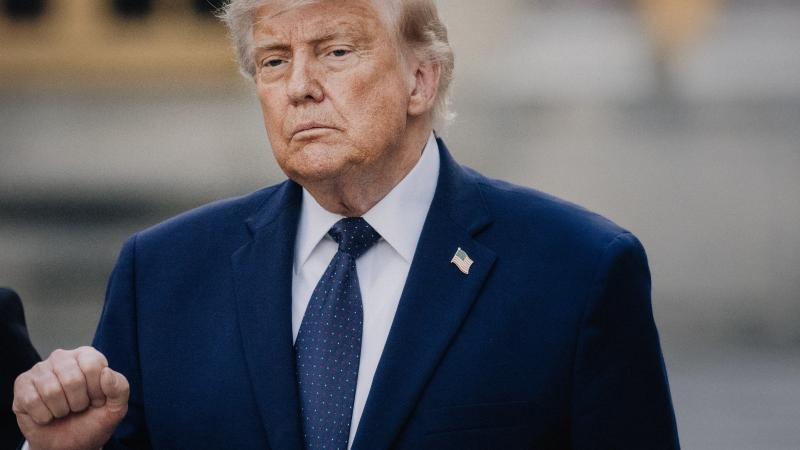
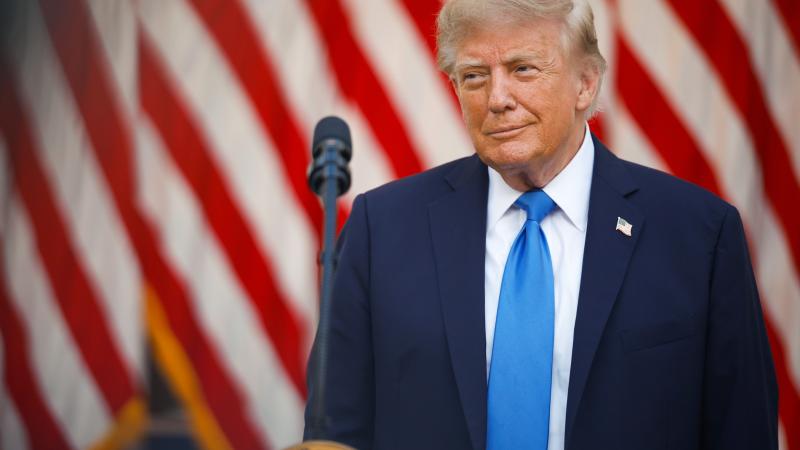
President Donald Trump Wednesday signed an executive order pulling the U.S. out of 66 international organizations, which the order says are “contrary to the interests of the United States.”
Among those organizations Trump targeted are two prominent climate organizations — the Intergovernmental Panel on Climate Change (IPCC) and U.N. Framework Convention on Climate Change (UNFCCC).
Trump accused of "denying climate science"
The decision set off alarms among climate and renewable energy advocacy groups. Jason Walsh, executive director of the Blue Green Alliance, said Trump had ceded climate leadership with “ignorant statements denying climate science.”
“Trump is hell bent on destroying not only any meaningful climate action for our country but for the entire planet,” Walsh said in the statement.
Max Frankel, executive director of Sustainable Energy and Environment Institute, said Trump’s actions won’t halt global climate action.
“Far from protecting America’s interests, leaving these agreements gives up our seat at the international decision-making table,” Max Frankel, executive director of Sustainable Energy and Environment Institute, said in a statement.
Others say withdrawal was "long overdue"
While climate advocates are upset, other experts see the order as a positive development in rolling back disadvantageous climate policies.
The UNFCCC is an international agreement under the umbrella of the U.N., which was adopted at the 1992 Earth Summit in Rio de Janeiro, and 198 countries signed onto it. Its goal was to address the concentrations of greenhouse gas emissions in the atmosphere out of concern over their impact on the climate system, and to do so in a sufficient time frame.
The signatories of the agreement meet annually in the “Conference of Parties” events, known as COP. This year’s COP30 took place in Belém, Brazil, and the United States had no formal participation in the conference.
A key agreement that came out of the UNFCCC was the 2015 Paris Agreement — signed at COP21 — in which signing nations, including the U.S., agreed to reduce emissions so that temperatures wouldn’t rise over 1.5 degrees Celsius (34.7 degrees Farenheit) above pre-industrial levels, which was about the level they were at in 1850. Trump pulled the U.S. out of the agreement at the start of both his terms.
The UNFCCC was a key part of a wave of global climate policies over the last decade that sought to rapidly eliminate fossil fuels. Critics have long blamed net-zero emissions policies for, among other things, driving up energy costs, pursuing impractical alternative technologies, and undermining economic development.
Steve Milloy, senior legal fellow with the Energy and Environmental Legal Institute and publisher of “JunkScience.com,” told Just the News that Trump’s withdrawal was “long past due.” Milloy added that “Trump has taken us out of the international climate hoax, which is fantastic.” Milloy.
Pielke: Withdrawal not the best approach
The IPCC is a scientific body that synthesizes existing climate research and produces reports for policymakers. Three working groups compose the panel. Working Group 1 deals with the physical science of climate research, and Working Group 2 addresses impacts, adaptation and vulnerability. Working Group 3 examines mitigation of climate change.
Dr. Roger Pielke Jr., Senior Fellow at the American Enterprise Institute, has argued that Working Group 1 does a good job of remaining neutral and provides a good framework for the attribution of extreme weather events to climate change. The group’s reports are often a sober contrast to media reports blaming climate change for every recent extreme-weather event across the globe. The IPCC examination of trends in extreme weather is much more nuanced and uncertain.
Pielke is a retired professor of environmental science from the University of Colorado-Boulder, and he spent 30 years specializing in the intersection of science, technology and public policy. When it comes to the other two Working Groups of the IPCC, he has been much more critical, arguing that Working Group 2 veers much more into climate advocacy and Working Group 3 is “captured by a narrow group of experts.”
However, Pielke said, the withdrawal wasn’t the best approach to dealing with the panel’s shortcomings. Without formal participation, he explained on his “The Honest Broker” Substack, the IPCC’s work is much more likely to be fully captured as an instrument of political advocacy.
“It is easy to imagine the IPCC becoming weaponized against the interests of the U.S., grounded in flawed but seeming authoritative science — This is not speculative, it is already happening,” Pielke wrote.
Ceding moral high ground
The IPCC, Pielke explained in the article, was originally intended to blunt the impact of activist scientists who were more interested in controlling the agenda than making an objective assessment of the existing literature on climate science.
Pielke told Just the News that reforming the IPCC to bring it back in line with that original purpose would be a challenge, as politics always are. “But any government arguing for upholding scientific integrity has the high moral ground. If the [Trump] administration wanted to, it could lead the world here,” Pielke said.
Working Group 2 often relies on implausible and outdated scenarios, and this direction has a lot of momentum, Pielke said. But with dedicated attention from objective researchers, he said it would be possible to overcome it.
Diversity of participation
If a policy of reform rather than withdrawal had been pursued, Pielke said, the IPCC would benefit from a greater diversity of participation and a diminished role in the assessments of political advocates.
Last summer, the Department of Energy produced a report, “A critical review of impacts of greenhouse gas emissions,” which sought to diversify perspectives in an authoritative assessment on climate change. It was authored by five climate researchers who had been leading voices disputing the “climate crisis” narratives. Two of them had previously participated in IPCC assessments.
Daniel Turner, executive director of Power the Future, an energy advocacy group, told Just the News that the Trump administration exercised some restraint in waiting a year before executing the withdrawal from the 66 organizations.
“This was not a knee-jerk reaction on day one,” Turner said.
The Biden administration, on the other hand, pushed out executive actions in the first week, and the negative impacts of the policies were felt more and more over time, he said.
Trump’s order will initially produce savings for taxpayers, as the U.S. won’t be funding these organizations anymore, Turner said, and it will be good for American energy, as these organizations are “deeply anti-energy.”
“There's no reason for Americans to continue to support organizations that don't further our national interests or our economic interests,” he said.
Administration ping-pong
With regard to the UNFCCC, Pielke points out in his Substack that Trump’s order may not withdraw the U.S. from the agreement. The order states that “withdrawal means ceasing participation in or funding to those entities to the extent permitted by law.”
The UNFCCC provides no formal obligations unless Congress and the president implement their obligations into law. Congress has avoided passing any laws that would, under participation in the UNFCCC, create legal obligations for emissions reductions. Instead, Pielke wrote, climate policy has been a game of ping-pong between Democratic and Republican administrations.
Milloy with the Energy and Environmental Legal Institute also pointed out the tenuous nature of Trump’s order.
“If there's ever a Democrat president again, they'll probably just get us back in. They won't even need the Senate to ratify it, because they'll just do it by executive agreement,” he said.
Kevin Killough is the energy reporter for Just The News. You can follow him on X for more coverage.
The Facts Inside Our Reporter's Notebook
Links
- signed an executive order
- said in a statement
- had no formal participation in the conference
- 2015 Paris Agreement
- driving up energy costs
- pursuing impractical alternative technologies
- undermining economic development
- Energy and Environmental Legal Institute
- JunkScience.com
- provides a good framework
- nuanced and uncertain
- working group 2 veers
- captured by a narrow group of experts
- The Honest Broker
- already happening
- Department of Energy produced a report
- Power the Future
- follow him on X

Top Stories


Trending
Just the News Spotlight
Just News, No Noise