West Virginia lawmakers press Flock on new privacy concerns: do employees access camera footage?
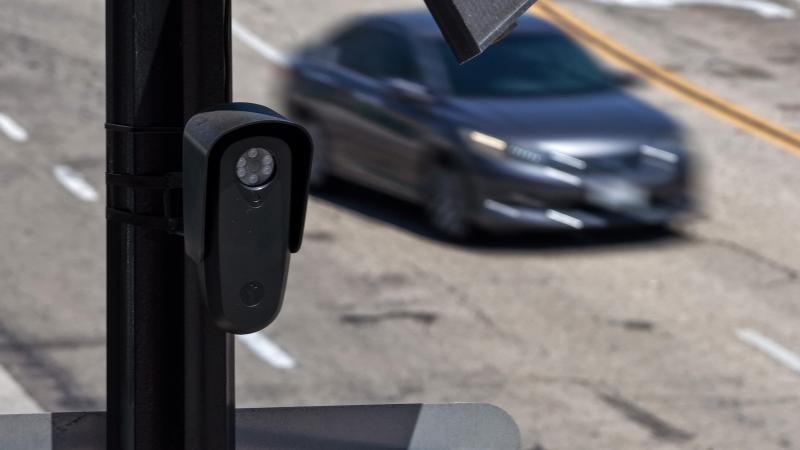
Lawmakers, judges and privacy advocates have raised bipartisan concerns about the reliability, legality, and privacy of license reader cameras. It's not clear who has access, what specific restrictions may apply to the footage, along with other questions.
West Virginia state legislators are pressing the firm Flock Safety on new concerns about the privacy of their license reader cameras in an increasingly contentious inquiry into whether company employees have ever accessed footage illicitly.
Correspondence between the West Virginia House of Delegates and Flock reviewed by Just the News show the Committee on Government Organization has summoned company executives to testify Nov. 9 after the firm repeatedly sought private meetings to try to address pointed written questions such as the identity of the foreign vendor the company uses to analyze data and whether Flock cameras used by law enforcement in the past have made erroneous matches.
“Given that you have still failed to provide in your letters information such as how many employees have ever been found to have improperly accessed customer data, what ‘non-U.S. vendor’ Flock Safety sends customer images to, and false positive data prior to July 2026 for license plate readers, please forgive our strong impression that Flock Safety was avoiding putting this information on the record,” Committee Chairman Chris Phillips and three colleagues wrote the company in a letter last week.
You can read the letter here:
"Flock Safety still hasn’t told us things..." lawmakers say
One of the lawmakers signing that letter, Delegate Tristan Leavitt, told Just the News that lawmakers are frustrated Flock has not given clear answers to pointed questions.
“Even after exchanging several letters, Flock Safety still hasn’t told us things like what contractor they use outside of the U.S. to analyze images or whether they’ve ever had to discipline any of their own employees for improperly accessing data,” Leavitt said. “Americans are concerned about this much data being centralized in one place. Those concerns aren’t resolved by Flock’s contradictory answers about who can access their data and why, what precisely is done with that data, and what breaches have occurred."
Leavitt said the goal of the Nov. 9 hearing is to get “some concrete answers to our specific questions.”
The love affair between law enforcement and Flock has cooled
Flock’s cameras have for years been the darling of law enforcement, spreading across the country as they help municipalities capture traffic and fractions with automated technology that does not require a police stop.
But in the last year, that love affair has cooled as lawmakers, judges and privacy advocates raised bipartisan concerns about the reliability, the legality, and the potential invasion of privacy issues with the cameras.
Earlier this month, a federal judge in Oklahoma ruled that a law enforcement officer violated a woman's Fourth Amendment rights by searching her vehicle's history through Flock Safety's license-plate reader network without obtaining a warrant first. The New Civil Liberties Alliance says that "It is the first time a federal court has held that warrantless ALPR location tracking violates the Fourth Amendment.” The case, United States v. Kyle, is still ripe for appeal, and docket listings do not indicate whether any appeal has been filed.
“I just don't like where we're going with Flock cameras, Indiana lawmaker says
"Many municipalities and some states are talking about scaling back or ending the use of the cameras. And the concerns have even reached Congress, which controls the purse strings to much federal funding for local police.
Rep. Marlin Stutzman, R-Ind., recently told Just the News that he will pursue legislation in Congress to rein in the proliferation of Flock cameras by law enforcement after he experienced his own traffic stop aided by the controversial license plate readers.
“I just don't like where we're going with Flock cameras. I think that it's invasive, as you said. It's too big government,” Stutzman told the Just the News, No Noise television show. “You know the law enforcement folks would argue that they can use these as a tool. You know they (cameras) can be where you can't have a human.”
“I think that this is a step too far. There has to be boundaries,” he added. “There have to be controls in place. You know, of course, you can always argue. Well, we're able to catch the bad guys, but you know what? There's 95% good people out there doing the right thing. We would have taken care of that registration one way or the other. We didn't need a police officer following us to our house we to remind us.”
Flock's response: Implmenting updates
Flock announced in August it would implement several updates to improve privacy protections and prevent misuse of its cameras. To provide more local control, the company said it would allow individual police departments to restrict what other law enforcement agencies can see. For example, an agency could allow access to data on stolen vehicles but not immigration violations.
The company also said it would reduce the data retention time to a week, down from 30 days, but departments would have the option to change those settings.
But since then, more troubling incidents have emerged. Last month, an arrest warrant was issued against an Indiana sheriff's deputy. He was accused of wrongly using his access to Flock data technology to stalk his girlfriend over a period of a year.
In a letter this month to the West Virginia legislators, Flock did not disclose whether its own employees ever improperly accessed footage but said there has only been one instance nationally of improper external access.
“Flock’s central cloud database housing customer data has never been breached or accessed by an unauthorized external party,” the company wrote. “In a distinct, previously disclosed incident, a vendor configuration error temporarily exposed a limited number of video (not ALPR) camera streams to the public internet.
“Access to these streams required specific IP knowledge. To be clear, what was viewable during that brief period, for a small number of cameras, was live streams of public places, no different from what thousands of communities (including some in West Virginia) make available online deliberately, as a public service,” it added.
You can read that letter here:
The lawmakers followed up, making clear they wouldn’t relent until they get answers about any illicit access by Flock employees and the identity of the foreign vendor. They cited recent revelations by reporters and activists raising concerns about possible vulnerabilities and breaches.
“The question in our initial letter focused on video footage being accessed by unauthorized users because Mr. Kane repeatedly told our legislature that Flock Safety had ‘never been hacked’ before being forced to acknowledge that unauthorized users had been able to access Flock devices, with both their live streams and their archived data,” they wrote.
The Facts Inside Our Reporter's Notebook
Documents
Links

Top Stories




Trending
Just the News Spotlight
Just News, No Noise