Nearly 90% of midterm races were not competitive: Analysis
To be sure, both the House and Senate are still in play, but the total number of competitive contests that could decide control is at an all time low.
A combination of redistricting and increased political polarization has rendered the overwhelming majority of House and Senate races uncompetitive. And 2026 is shaping up to be the least competitive midterm cycle in recent history, according to an analysis from Unite America.
To be sure, the competition between Democrats and Republicans to control the House and Senate is still in play in November. But the total number of competitive contests that could decide control is at an all-time low. All 435 House seats are up for reelection, but Unite America’s analysis suggests that 383 (88%) will be so uncompetitive that they were effectively decided by the party primary.
On the Senate side, however, only 35 seats are up for reelection. The math is somewhat less of a shutout, with only 26 (74%) of races deemed uncompetitive.
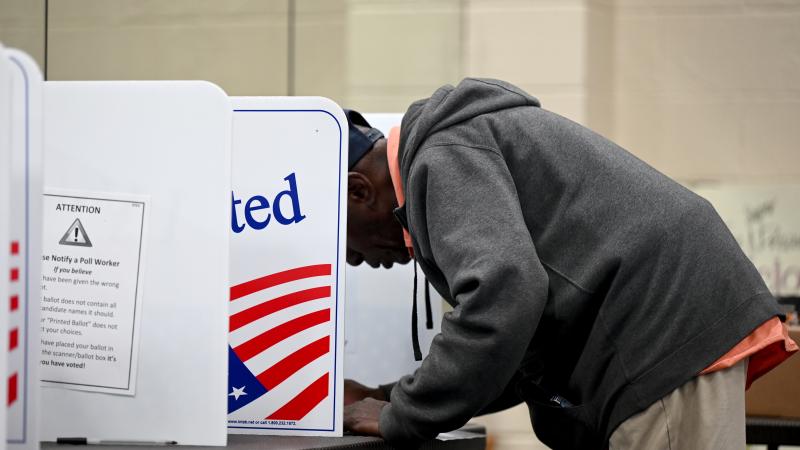
The vast majority of races being decided in the primaries effectively shuts out many voters from having a meaningful say, the analysis found.
Overall, just 10.2% of voters cast ballots in Senate primaries for either major political party this cycle. That figure stood at 9.4% in House races. Perhaps best illustrating the lack of substantive choice in elections, Unite America suggested, were the 150 House races in which the nominee for a safe seat ran unopposed in the primary.
Some of this disparity is due to a combination of low primary turnout, voter satisfaction with their own, specific representative, and, of course, apathy. But the recent redistricting push from Republicans, and the counterefforts from Democrats, have effectively eliminated many formerly competitive districts.
After the Supreme Court narrowed its interpretation of part of the Voting Rights Act to disallow race-based congressional districts, states across the South redrew their maps in ways that favored the Republicans.
Among the states whose redraws favored Republicans were Alabama, Florida, Louisiana, North Carolina, Ohio, Tennessee and Texas. Missouri attempted to redraw its districts, but has faced legal challenges. Only California and Utah altered their maps in ways that benefited Democrats.
Virginia also attempted to redraw its maps via a constitutional amendment, but the state Supreme Court found the process unconstitutional after voters had already backed the Democratic proposal. Accordingly, the state’s maps will sit at 6 Democratic and 5 Republican-leaning districts in November.
The result was to render less than 5% of House races as true toss-ups.
The Cook Political Report’s Partisan Voting Index (PVI), currently regards only 21 of 435 districts as “toss ups.” A further 208 at least lean Republican, while 206 at least lean Democratic. But redistricting did not affect the Senate at all, and seven of the 35 races are “toss-ups” in the PVI.
Sabato’s Crystal Ball at the Center for Politics, meanwhile, paints a similar picture, with 203 seats leaning Republican and 210 leaning Democratic, with only 22 toss-ups. Sabato, however, views only five Senate contests as competitive.
The RealClearPolitics polling average does not currently feature a House breakdown, but regards nine Senate races as competitive.
Ben Whedon is the Chief Political Correspondent for Just the News. Follow him on X.
The Facts Inside Our Reporter's Notebook


Top Stories

Trending
Just the News Spotlight
Just News, No Noise