Voter attitudes on Israel, Iran among the top eye-openers in Harvard CAPS-Harris poll
The questions addressed a range of issues, including voting intention, economic sentiment, foreign policy, and the media’s coverage of the Trump administration.
Seventy percent of likely U.S. voters support Israel in its war to defeat Hamas, according to a new survey whose findings challenge some of the country’s most prevailing narratives on key midterm election issues.
Other key voter concerns in the Harvard CAPS-Harris Poll, ahead of the Nov. 3 Election Day, also include the United States' now roughly eight-month-long war with Iran that has drawn in other Middle East countries.
Israel
In the Gaza conflict with Hamas, 70% of respondents said they support Israel more, while 30% backed Hamas over Israel. Palestinian-backed Hamas, which rules Gaza, is also a designated terrorist group.
The findings follow the latest Economist/YouGov Poll that found Americans land almost evenly on where their sympathies lie in the Israeli-Palestinian conflict: 26% say more with the Israelis, 25% more with the Palestinians, and 21% say they are equally sympathetic to both sides.
The pollsters said the gap is the narrowest between the two sides since they first started asking the question in 2011 and recording the answers.
The online Harvard CAPS-Harris survey was conducted Sept. 26–28 among 2,200 registered voters in the U.S., with a +/- 2.1 point margin of error.
Survey respondents also largely backed a U.S.-Lebanon plan to disarm Hezbollah. The group's military wing has been recognized by previous governments as a parallel security structure to Lebanon’s armed forces, and the agreement, to be completed by the end of the year, would be in return for Israel's withdrawal and cessation of hostilities, according to PBS.com.
Iran
Respondents expressed pessimism about the Iran conflict, with nearly two-in-three saying the Trump administration's war effort has not achieved its objectives.
Sixty-three percent agreed with that sentiment, while 37% said the war effort had accomplished its goals. Respondents remained skeptical of diplomatic negotiations with Iran, with 64% saying that Tehran was using talks to buy time and just 36% saying the Iranian government was sincere.
Respondents are also skeptical of the possibility of a deal to end the war. Overall, 61% expressed the belief that Iran was becoming more defiant, while 39% said the country was moving toward a deal to end the war.
Midterms
Perhaps the most surprising finding was the 50/50 split between Democrats and Republicans in the so-called "generic congressional ballot," which essentially asks for which political party (Democrat, Republican or Independent) a respondent would vote – not for which candidate – if the election were held today.
Democratic and GOP respondents broke 96% to 4% for their own party, with independents splitting 53% to 47% for the Democrats.
The responses compare to other previous polls that have shown Democrats increasingly likely to retake control of the House, and to a lesser extent, the Senate. The most recent RealClearPolitics polling average, for example, shows Democrats leading Republicans by 8.3% in the generic ballot.
2028 Nominees
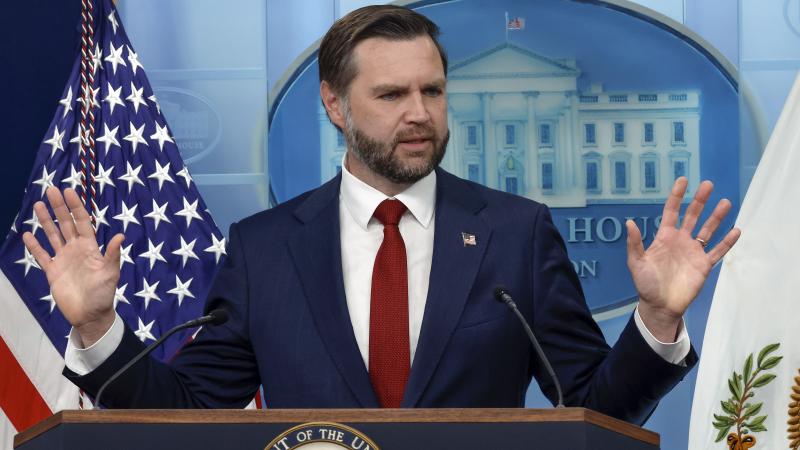
Republican Vice President JD Vance and Kamala Harris, a former Democratic vice president and 2024 presidential nominee, remained the strongest presumptive favorites to win in their respective party's 2028 presidential nomination, though both lost ground compared to previous Harvard CAPS/Harris surveys.
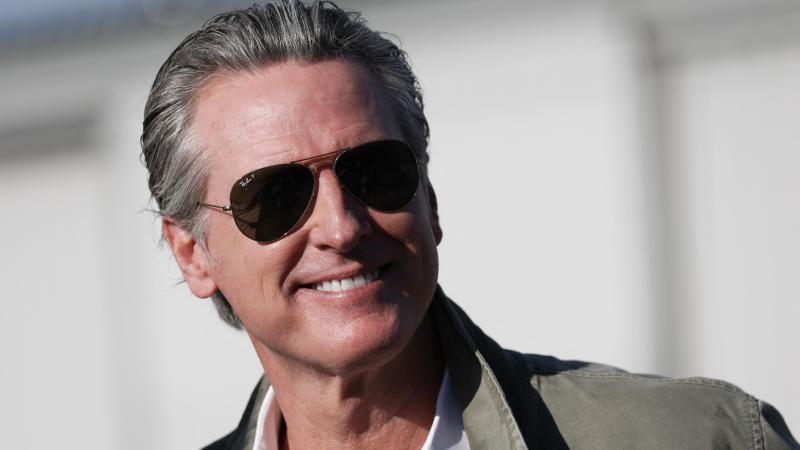
Among Democrats, Harris took 38% support, down 4% from the last survey. California Gov. Gavin Newsom remained unchanged at 17%, while New York Rep. Alexandria Ocasio-Cortez gained 3% to place third with 12% support.
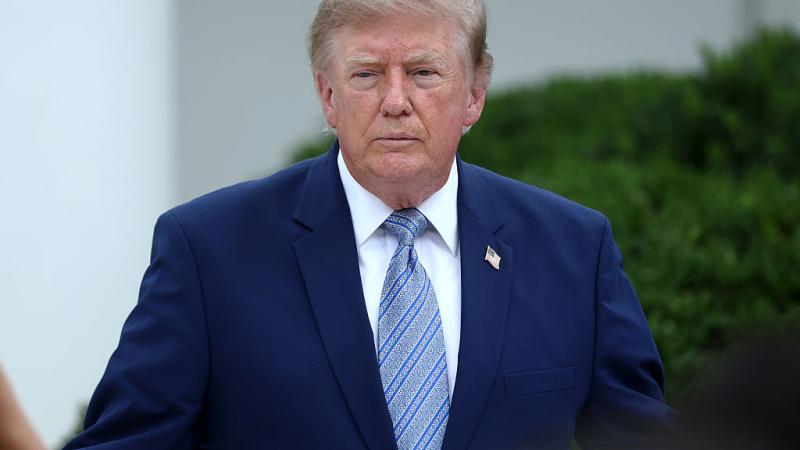
On the Republican side, Vance dropped 5% to claim 39% support, while Secretary of State Marco Rubio dropped 4% to third place with 17%. Donald Trump Jr., somewhat surprisingly, gained 6% to place second with 24%. He has openly declared he will not run and that he supports a Vance candidacy.
Voter fraud
Republicans seem to have gained some ground in convincing voters of the prevalence of voter fraud. While a near-super-majority of respondents, 59%, said it was “difficult” for illegal immigrants to vote, 41% said it was “easy,” and a larger margin conceded there was at least some voter fraud in U.S. elections.
Of those, 28% said there was a lot of voter fraud, while 35% said there was “some.” A further 21% said there was “not too much” while 16% said there was no voter fraud. Nevertheless, the publicly broadly supported voter ID and requiring proof of citizenship to vote.
Eighty-two percent backed photo ID, compared to 18% who opposed it. 79% supported proof of citizenship requirements compared to 21% who did not.
Inflation
On inflation and the economy, respondents were almost evenly divided. A majority of 51% said they trusted Trump and the Republicans more than Democrats to handle the economy, while 49% backed the Democrats.
Notably, they were divided in their perception of facts on inflation.
When asked whether inflation reached 8% per year under Biden while standing at 3% under Trump, only 50% said that statement was true, while 50% disagreed. Inflation cleared 9% under Biden and inflation stood at 3.4% for August.
Split on Ukraine
The public is divided about Ukraine’s prospects for ending the war militarily. While 52% of voters said Ukraine would need to concede territory to secure peace with Russia, 48% believed that Kyiv could win back all of its land.
Approval of Trump’s handling of the issue is also sharply divided, with 48% backing his approach and 52% opposing it.
Support for Xi visit
Respondents were generally on board with Trump’s invitation of Chinese President Xi Jinping to Washington, D.C., for a diplomatic visit. Overall, 62% said it was the right decision, while 37% said the opposite.
The majority also saw the visit as appropriate and successful for the United States. Fifty-nine percent believed Trump showed the appropriate level of respect to Xi, while 41% thought he was too generous. The public split 55% to 45% in favor of the trip being a success.
UN
Public opinion about the United Nations remains sharply divided, with 51% saying the organization was no longer helpful, compared to 49% who said the opposite. Respondents were split by the same margin over whether Iran should be put on a United Nations Human Rights Commission, with a slim majority opposing it.
Public sentiment was moderately higher with respect to the UN’s focus on Israel and Iran. A clear majority of 57% said the body was equally focused on scrutinizing Iran and Israel, while 43% said the organization was only focused on Israel.
Media
Respondents were skeptical of Trump’s recent efforts to restrict access to the White House for several media outlets he believed were biased against him.
Overall, 56% said the media covered Trump fairly, while 44% said they were unfair to him. By the same margins, a majority said Trump’s efforts undermined the free press rather than respected it.
A supermajority of 60% said the decision to ban CNN, MSNOW, and Politico from the White House was the wrong decision, compared to 40% who said it was the right move.
AI
Respondents were cautiously optimistic about AI, with 58% saying they use it personally. Fifty-five percent said it mostly helped society, while 45% said it was mostly damaging. By the same margins, respondents expected it to increase economic growth, but 60% also said it would lead to the unemployment of tens of millions.
Overall, 66% supported a slow-down on AI development, while 34% favored a rapid approach to expand the industry. Trump has opposed a slowdown.
Ben Whedon is the Chief Political Correspondent at Just the News. Follow him on X.
The Facts Inside Our Reporter's Notebook
Top Stories


Trending
Just the News Spotlight
Just News, No Noise