Congress brings key figures to Hill over federal exemption allowing NFL to reap billions in TV deals
NFL Commissioner Roger Goodell, perhaps the most central figure in deals that are resulting to football fans having to spend hundreds more a season to watch games on TV, declined to testify.
Congressional Republicans and Democrats grilled key figures related to lucrative NFL television contracts and whether Congress should end the exemptions to the federal communications laws that allow for such deals.
“When beneficiaries of an exemption begin using it to restrict access, increase prices and strengthen their own market power beyond what Congress intended, lawmakers, Congress, have an obligation to reconsider whether that exemption remains justified," Rep. Scott Fitzgerald, chairman of the House Judiciary Subcommittee on the Administrative State, Regulatory Reform, and Antitrust, said at the beginning of the hearing.
At issue is the Sports Broadcasting Act of 1961 – which allows professional sports leagues to pool and collectively sell television rights without violating federal antitrust laws – and whether the National Football League's decades-old antitrust exemption to it still benefits consumers, who are now paying hundreds a season, some as much as $1000, to watch games over a complicated and expensive mix of cable and streaming TV services.
Fitzgerald, a Wisconsin Republican, said the bill was "enacted in a very different time in American history," when fans were watching games on a few networks with a TV set and an antenna.
NFL Commissioner Roger Goodell, a key figure in the matter, was absent from the hearing, citing "ongoing litigation related to the topic of the hearing," as Just the News reported last week.
Lawmakers instead heard testimony from Federal Communications Commission Commissioner Anna Gomez, National Association of Broadcasters President and CEO Curtis LeGeyt, Fox News contributor and OutKick founder Clay Travis, and Founder and Manager of Citizens Grill Jim Hallers.
"You guys have an important responsibility and an opportunity to apply the law fairly, freely, and help fans everywhere across the entire nation pay less and get more." Travis, a former lawyer, told lawmakers.
Travis also argued he can clearly see the NFL is "violating the plain intent of the law.”
Committee Republicans pointed to the rising cost and complexity of watching NFL games, arguing that fans are paying more for fewer viewing options.
Ohio GOP Rep. Jim Jordan, chairman of the House Judiciary Committee, which has aegis over the subcommittee, said lawmakers are asking a fundamental question: "Does this still work for consumers?"
Democrats broadened the discussion to media consolidation, arguing lawmakers should examine the shrinking number of companies controlling the media landscape.
“For years I have been warning this committee about the dangers of unchecked consolidation in the American media industry,” said N.Y. Rep, Jerry Nadler, the committee's top Democrat.
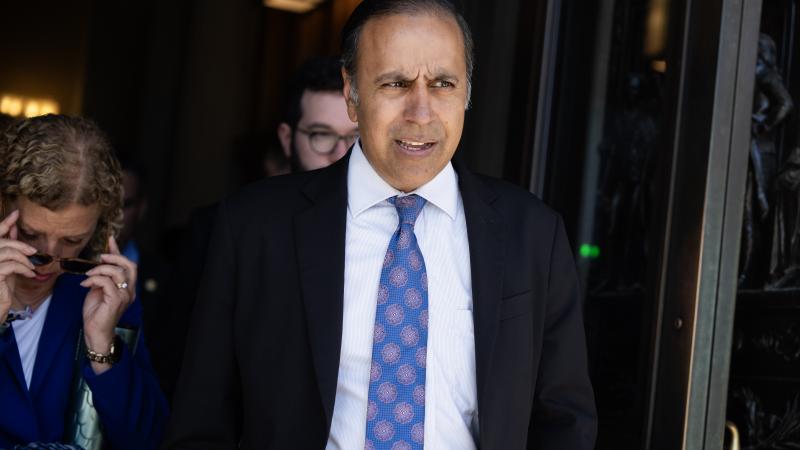
Maryland Democratic Rep. Jamie Raskin echoed Nadler's sentiment, asking why Republicans are focusing on the NFL, when other media consolidation is reducing the competition for other programming.
The hearing came two days after the GOP-led committee released a 26-page report that said it had "uncovered evidence that the National Football League (NFL) has harmed consumers and misled Congress regarding its television agreement and league rules."
The NFL currently distributes its games across several platforms, including ESPN/ABC, NBC Sports, CBS Sports, Amazon Prime Video, Netflix, and the NFL Network. This makes watching games on television or streaming too expensive for the average football fan. These current media contracts run until the 2033 season and are reportedly worth over $110 billion.
The committee in its report also cites survey data obtained from YouTube, the current distributor of Sunday Ticket, which provides access to all out-of-market games. The data shows that over 70% of respondents subscribed to the service primarily to watch teams playing outside their broadcast area. Roughly 70% of former subscribers who canceled the service said it was too expensive.
The findings appear to contradict the NFL's argument that Sunday Ticket is primarily a premium product designed for avid fans who want access to every NFL game.
Travis argued that the vast majority of NFL fans subscribe to the NFL Sunday Ticket to view their favorite team that is out of market. And that the NFL is doing a disservice to fans by not allowing an option to buy such a service.
The hearing follows the Justice Department's opening an investigation in April into whether the National Football League has engaged in anticompetitive tactics that hurt consumers in its deals with media companies to broadcast its games.
Although no legislation emerged from the hearing, lawmakers from both parties showed interest in further review of the law.
The Facts Inside Our Reporter's Notebook
Top Stories
Trending
Just the News Spotlight
Just News, No Noise