House to vote on bipartisan resolution to limit Trump's war power authority in Iran conflict
“This administration can’t even give us a straight answer as to why we launched this preemptive war,” Rep. Thomas Massie said
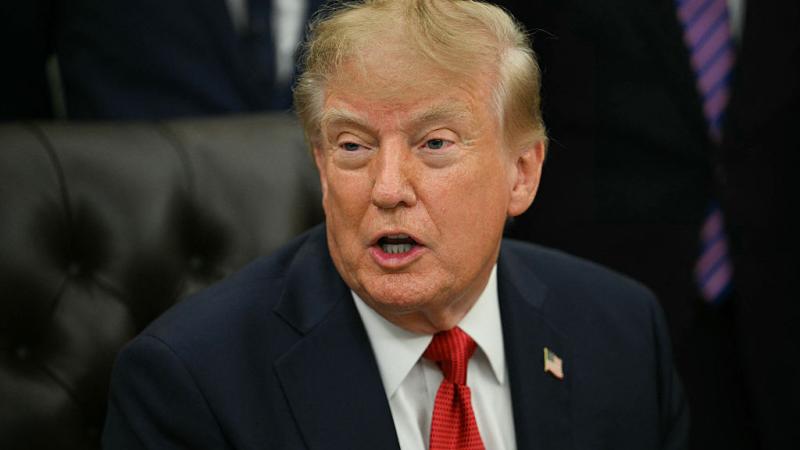
The House will vote Thursday on a bipartisan war powers resolution that attempts to stop President Trump's attack on Iran.
Reps. Thomas Massie, a Kentucky Republican, and Ro Khanna, a California Democrat, forced a full House vote, over the objection of Speaker Mike Johnson.
“This administration can’t even give us a straight answer as to why we launched this preemptive war,” Massie said.
Johnson warned that it would be “dangerous” to limit Trump's authority while the U.S. military is already in conflict.
The Senate on Wednesday failed to pass its own war powers resolution.
The House vote is expected to be close, but will show political support, or opposition, to the U.S.-Israel military operation and Trump’s reasoning for bypassing Congress, which is the only government branch granted the constitutional power to declare war, according to the Associated Press.
“Donald Trump is not a king, and if he believes the war with Iran is in our national interest, then he must come to Congress and make the case,” New York Rep. Gregory Meeks said, the top Democrat on the House Foreign Affairs Committee.
Florida Rep. Brian Mast, chairman of the GOP-led House Foreign Affairs Committee, publicly thanked Trump for striking Iran, saying the president is using his constitutional authority to defend the U.S. against the “imminent threat” the country posed.
Mast, an Army veteran who served in Afghanistan, said the war powers resolution was effectively asking “that the president do nothing.”
If the resolution is passed and signed into law, then it would immediately halt Trump’s ability to conduct the war unless Congress approved it. However, even if the resolution passed, Trump would likely veto it.
Over the weekend, six U.S. military members were killed in a drone strike in Kuwait, and Trump has said more Americans could die in the conflict.
Defense Secretary Pete Hegseth said that the war could last eight weeks, after Trump first estimated that it would be four or five weeks. Trump has left open the possibility of sending U.S. troops on the ground in what has largely been an air strike campaign.
The Facts Inside Our Reporter's Notebook
Top Stories




Trending
Just the News Spotlight
Just News, No Noise