Supreme Court sets October and November argument calendar
The October sitting begins Monday, Oct. 5, with Suncor Energy (U.S.A.) Inc. v. Commissioners of Boulder County
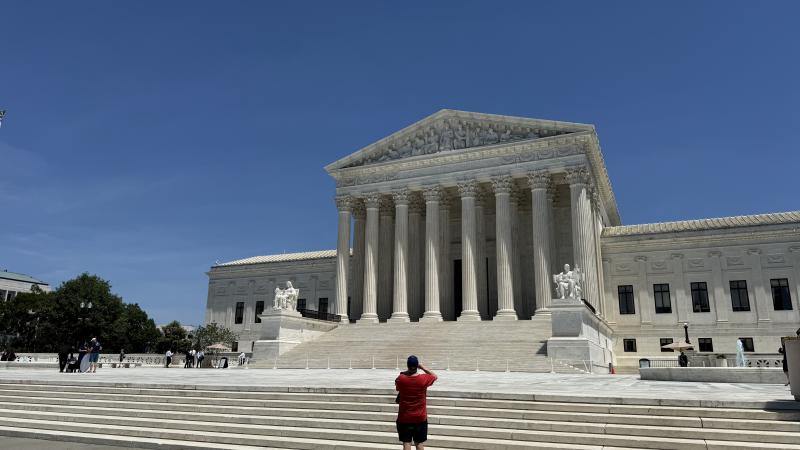
The Supreme Court has released its calendar for the October and November 2026 argument sessions, setting the stage for the opening weeks of the Court’s new term.
The October sitting begins Monday, Oct. 5, with Suncor Energy (U.S.A.) Inc. v. Commissioners of Boulder County, a closely watched climate case. Boulder County in Colorado is seeking millions of dollars from oil and gas companies, alleging that their conduct contributed to climate change and caused local harms.
The same day, the justices will hear Johnson v. United States Congress, a case concerning the Veterans' Judicial Review Act.
The remainder of the October calendar includes:
- Anderson v. Intel Corp. Investment Policy Committee (Oct. 6) – an ERISA dispute concerning fiduciary duties in employer-sponsored retirement plans.
- Department of the Air Force v. Prutehi Guahan (Oct. 7) – a case involving the scope of federal agency authority.
- Beaird v. United States and Genalo v. Black (Oct. 13) – Genalo is among the term’s most significant cases. It asks whether prolonged civil immigration detention without a bond hearing violates due process. The case involves a legal immigrant from the Dominican Republic who was detained for 21 months during deportation proceedings following an assault conviction. The Court will consider whether detention can become so prolonged that due process requires a bond hearing and, if so, whether the government must justify continued detention by clear and convincing evidence.
- Salazar v. Paramount Global (Oct. 14) – a civil litigation dispute that will conclude the October sitting.
The court’s November calendar also features several significant cases, including St. Mary Catholic Parish v. Roy and Nielsen v. Watanabe.
In St. Mary Catholic Parish v. Roy, the justices will consider whether Colorado discriminated against a Catholic preschool by excluding it from the state’s universal preschool program. The preschool sought an exemption from program rules requiring participating schools to admit any applicant, including LGBTQ children and children of LGBTQ parents. A federal appeals court ruled for the state, concluding that under Employment Division v. Smith (1990), laws that are neutral and generally applicable do not violate the Constitution merely because they burden religious exercise.
Nielsen v. Watanabe concerns a federal inmate who alleges that prison officials ignored his fractured coccyx and repeatedly denied his requests for medical treatment. Watanabe’s lawsuit relies on Bivens v. Six Unknown Named Agents (1971), which recognized a damages remedy against federal officials for certain constitutional violations even absent a statute expressly authorizing such a claim.
The Supreme Court has substantially narrowed Bivens in the decades since, and the federal government argues that Watanabe’s claim should not be permitted to proceed.
The court has granted review in several other high-profile cases that do not yet have scheduled argument dates. Those cases will be added to future argument calendars as the term progresses.


Top Stories




Trending
Just the News Spotlight
Just News, No Noise