Related Articles
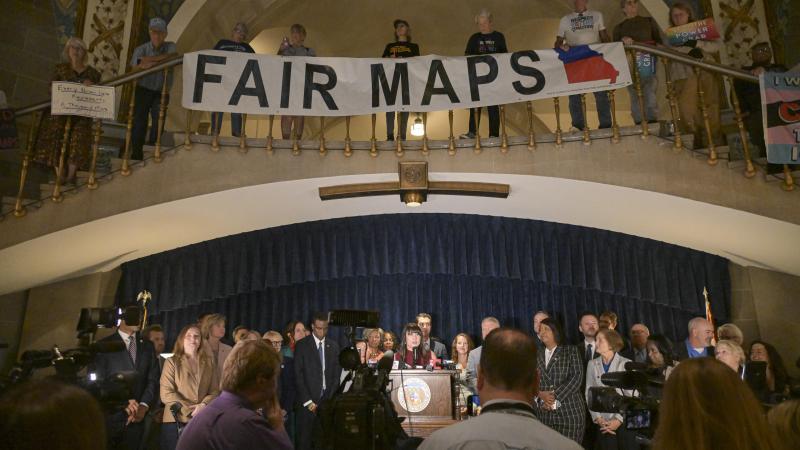

A recent new report analyzing thousands of immigration detention cases found that 373 federal district judges have ruled against the administration’s interpretation of a 1996 federal immigration law, affecting at least 3,500 cases.
President Donald Trump’s aggressive push for immigration reform has largely stalled in federal district courts, where judges across the country have blocked key elements of his agenda.
As those legal battles intensify, however, the administration is finding greater success at the appellate level – particularly in conservative-leaning circuits such as the Fifth. A recent ruling there has revived the president’s mass detention strategy, underscoring the uneven legal terrain facing the White House as the Supreme Court looms as the ultimate arbiter.
District courts push back on mandatory detention
At the federal district court level, where nearly all cases begin, the Trump administration’s immigration agenda has faced sustained judicial resistance. This pattern is especially evident in litigation challenging the administration’s mandatory detention protocols.
Last summer, Immigration and Customs Enforcement (ICE) announced a sweeping new policy requiring the detention without bond of all illegal aliens who enter the United States unlawfully. The policy marked a sharp departure from prior administrations, which limited mandatory detention to far narrower categories of illegal immigrants.
The administration justified the policy shift by proposing a new interpretation of a 1996 immigration law, which requires that certain “applicants for admission” be detained without a bond hearing. Under its new reading, the government contended, individuals who enter the country without inspection, regardless of when and where, qualify as such applicants.
A recent report by Politico, which analyzed thousands of immigration detention cases, found that 373 federal district judges have ruled against the administration’s interpretation of the law, affecting at least 3,500 cases.
Those decisions have resulted in detainees being released or granted bond hearings, significantly constraining ICE’s enforcement efforts. By contrast, just 28 district judges have sided with the administration in roughly 150 cases. Even Trump’s own nominees have ruled against him. Forty-four of his appointees have ruled against the policy, compared with just 20 who have upheld it.
Courts of appeals offer path forward
The administration’s fortunes shift markedly at the appellate level, where its arguments have found a more receptive audience.
The most consequential win came Feb. 6, when a divided panel of the U.S. Court of Appeals for the Fifth Circuit, based in New Orleans, upheld the mass detention policy in a 2–1 decision.
Writing for the majority, Judge Edith H. Jones, a Reagan appointee, concluded that the 1996 statute unambiguously permits the government to treat certain immigrants already inside the United States as “applicants for admission,” thereby subjecting them to mandatory detention without bond hearings.
Joined by Judge Kyle D. Duncan, a Trump appointee, Jones characterized earlier administrations’ narrower interpretations as policy preferences rather than legal constraints. The ruling overturned dozens of district court decisions in Texas and Louisiana, clearing the way for ICE to detain thousands more immigrants without the possibility of release.
In dissent, Judge Dana L. Douglas, a Biden appointee, sharply criticized the majority’s reasoning, calling it a radical and an historical interpretation of federal immigration law.
The administration’s judicial successes are not confined to disputes over mandatory detention. As The New York Times reported last month, “President Trump has found a powerful but obscure bulwark in the appeals court judges he appointed during his first term.”
The Times examined every judicial ruling addressing Trump’s second-term agenda from Jan. 20 through Dec. 31 of last year – more than 500 orders issued across 900 cases. At the appellate level, roughly half of those rulings favored Trump, a markedly stronger showing than at the district court level.
The pattern was even more pronounced among the president’s own appointees. According to the Times, those judges voted to allow the administration’s policies to take effect 133 times, while voting against them only 12 times. In total, 92% of their votes supported the administration.
All Roads lead to the Supreme Court
The Supreme Court has the final authority on questions of federal law.
While district court decisions can influence individual cases, they do not create nationwide precedent, allowing conflicting interpretations to arise across jurisdictions. Appellate rulings can resolve some of these conflicts within the roughly one dozen federal circuits, but only the Supreme Court can establish a uniform legal standard that binds every court in the country.
The justices are expected to rule by summer on several challenges to Trump’s immigration policies, including a case involving expedited removals. With a 6-3 majority, including three justices nominated by Trump himself, the president may have the upper hand at the high court.