Related Articles
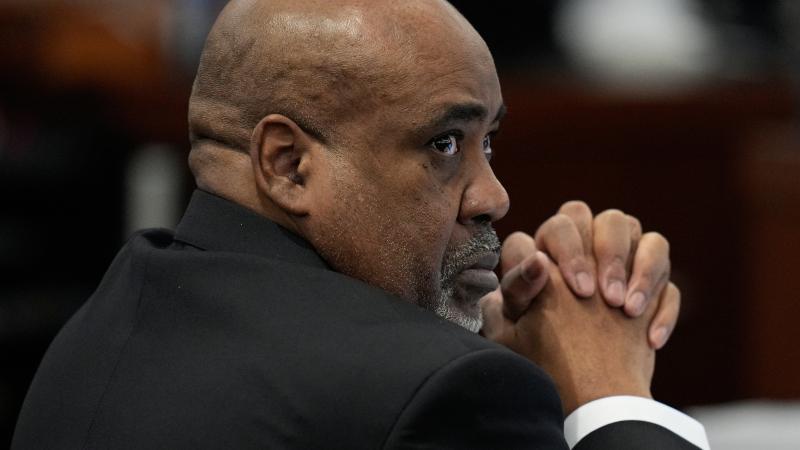
Biden allowed a Cuban Air Force pilot to stay here and apply for permanent residency. It turns out that the pilot, Luis Raul Gonzalez-Pardo Rodriguez, served in the Cuban military at the same time that Fidel and Raul Castro ordered them to shoot down humanitarian rescue planes searching for people fleeing the communist regime.
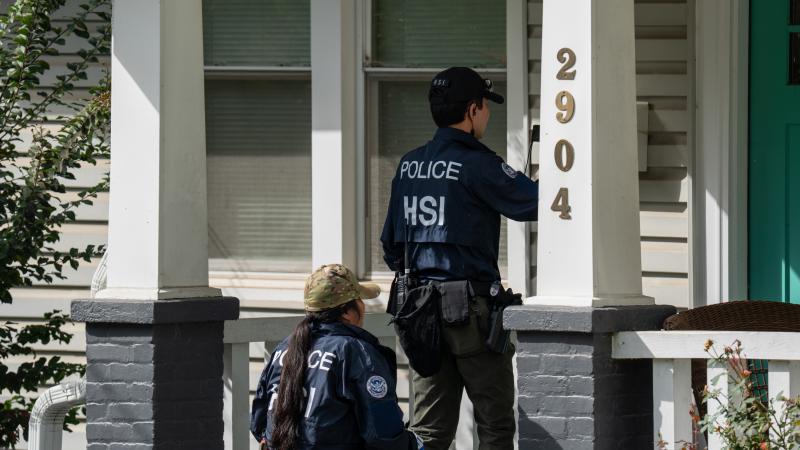
A few weeks into President Donald Trump's second term, his crackdown on illegal immigration netted an unexpected yield: a former Cuban fighter pilot who had been allowed into the United States under President Joe Biden and was trying to get permanent residency.
The 2025 arrest of Luis Raul Gonzalez-Pardo Rodriguez, officials told Just the News, set in motion an extraordinary set of events inside the U.S. intelligence community, the FBI, and the U.S. Attorney's Office in Miami that could yield the unveiling of an indictment as early as Wednesday of former Cuban President Raul Castro on murder, conspiracy, and other charges in the 1996 downing of two American humanitarian supply and rescue planes in the skies near Cuba.
For 30 years, Cuban exiles in America and their representatives in Congress, like Reps. Mario Diaz-Balart and Carlos Gimenez, R-Fla., have pressured DOJ to seek charges such as conspiracy to kill Americans, destruction of aircraft, and murder against the 94-year-old Castro, his late brother Fidel, and others in connection with the shooting down of the Hermanos a la Rescate ("Brothers to the Rescue") humanitarian aircraft in 1996, which killed three American citizens and one legal permanent U.S. resident.
Prosecutors and FBI agents for years demurred because they lacked key evidence or access to conspirators, and eventually, Fidel Castro, the island’s communist revolutionary leader who was given a great deal of leeway by Obama and Biden, died.
But the stalemate seems to have changed with the 2025 arrest of Gonzalez-Pardo, which gave U.S. authorities access to a Cuban Air Force insider who served during the same time of the shootdown. The November 2025 indictment against Gonzalez-Pardo for visa fraud and for lying to U.S. federal authorities even included a photo of him in the sort of Air Force jet used to shoot down the Cuban-American activist planes three decades ago,
Gonzalez-Pardo's defense lawyer did not immediately respond to a request for comment.
Months of investigation led the U.S. attorney's office in Miami last fall to pursue an indictment in the case. Early this year, the prosecution team led by Jason Reding Quinones escalated its efforts with the creation of a Cuban crimes task force, according to memos reviewed by Just the News.
“This Working Group will focus on identifying and developing prosecutable violations of U.S. law connected to the Cuban regime or Communist Party apparatus,” the February 2026 memo said, pointing to “recent historic events in our hemisphere” and noting the Southern District of Florida’s “unique nexus to Cuba.”
The U.S. Attorney's Office in the Southern District of Florida issued a press release last November to “announce the unsealing of an indictment charging Luis Raul Gonzalez-Pardo Rodriguez with fraud and misuse of visa, permits, and other documents, and making a false statement to a federal agency.”
And last month, prosecutors began presenting the evidence necessary to secure a grand jury indictment against Raul Castro and the pilots who shot down the two Brothers to the Rescue planes. The aircraft were part of an organization which delivers humanitarian supplies and conducts searches for life rafts making their way from Cuba to Florida. That indictment is expected to be announced Wednesday when prosecutors have set a press conference.
Four activists from the Brothers to the Rescue organization were killed when Cuban MiG fighters shot down their two civilian planes in international skies and over international waters on February 24, 1996. The victims were Carlos Costa, Pablo Morales, Mario Manuel de la Peña, and Armando Alejandre, three of whom were American citizens and one of whom was a permanent resident of the U.S. A third Brothers aircraft managed to successfully evade the Cuban MiG fighters and land safely in Florida.
Raul Castro Ruz is the brother of the deceased longtime Cuban dictator Fidel Castro. Raul is also a former president of Cuba himself, having succeeded his brother in the role for a decade in the wake of his brother’s 2008 death, and he is also the former Director of the Cuban Secret Services, the former Commander-in-Chief of the Cuban Air Force, and the former President of the Ministry of the Cuban Revolutionary Armed Forces.
He stepped down as Cuba’s president in 2018, where he was succeeded by Miguel Diaz-Canel, and Raul Castro also stepped down as first secretary of the Communist Party of Cuba in 2021.
Two decades ago, El Nuevo Herald and The Miami Herald published a 2006 tape in which Raul Castro allegedly acknowledged giving the shootdown order of the Brothers to the Rescue planes.
“I told them [the Cuban fighter pilots] to try to knock them down over [Cuban] territory,” Raul Castro allegedly said in the recording. “Knock them down into the sea when they reappear.”
Fidel Castro himself admitted to TIME in 1996 that “I take responsibility for what happened” but also confirmed that his brother, Raul, had been in the chain of command as the leader of the Cuban Air Defense Forces.
“We discussed it with Raul and the Joint Chiefs of Staff,” Fidel said, adding, “We gave the order to the head of the air force. On Saturday, [the Brothers to the Rescue planes] came twice. ... On the third pass, they scrambled and did their job. They shot the planes down. They are professionals. They did what they believe is the right thing.”
Gonzalez-Pardo was reportedly a Cuban MiG pilot who carried out an aerial pursuit of a third Brothers to the Rescue plane the day that the other two planes were shot down. He was allowed into the U.S. during the Biden Administration.
Marco Rubio — then a U.S. senator from Florida and now the U.S. Secretary of State — sent a letter with Sen. Rick Scott, R-Fla., to then-Secretary of State Antony Blinken and then-DHS Secretary Alejandro Mayorkas in 2024 condemning the Biden Administration for allowing him into the country.
“We write with serious concern about the Biden-Harris Administration’s decision to grant parole to Cuban Revolutionary Air Force Colonel Luis Raul Gonzalez-Pardo Rodríguez,” Rubio and Scott wrote. “As you are no doubt aware, Gonzalez-Pardo is notoriously linked to the international incident of February 24, 1996, when two planes belonging to the humanitarian organization, Brothers to the Rescue, were unconscionably shot down by Cuban MiG-29 fighter jets under orders of Raul Castro. This incident tragically resulted in the deaths of four innocent Cuban-American pilots.”
Rubio and Scott added: “The current process, by virtue of the unacceptable results annotated above, has demonstrated its woeful inadequateness to properly vet applicants and to protect U.S. national security.”
A number of Republican members of Congress also sent Blinken and Mayorkas a 2024 letter noting that “reports, as well as a letter from survivors, contend that Gonzalez-Pardo participated in the Brothers to the Rescue shootdown of 1996.”
“The families of these victims deserve justice. It was an insult to them and a disgraceful travesty of justice that the Obama Administration released the one person who had been held accountable for their murders, Gerardo Hernandez, in a concession to the regime in Cuba,” the congressmen wrote. “Now, the possibility that another person who may have participated in that heinous act was granted the extraordinary privilege of U.S. entry is yet another affront.”
Telemundo 51 in Miami reported that Gonzalez-Pardo called the accusations of involvement with the Brothers to the Rescue shootdown "absolutely false.”
The DOJ’s press release on Gonzalez-Pardo late last year stated that, in April 2025, the Cuban pilot had submitted paperwork to the Department of Homeland Security as he pursued permanent residency inside the U.S., with the DOJ saying the Cuban “falsely stated he had never received any weapons or military training, never participated in any group of any kind that used weapons or threatened to use weapons, and never served in a military or police unit, when in reality, he received such training and served in the Cuban military as part of the Air Defense Force.”
The indictment even included a photograph depicting Gonzalez-Pardo in the Air Defense Force.
“This man’s past as a longtime military pilot for the evil Castro regime — which has wrought untold suffering on the Cuban people — should have been front and center in his immigration file,” then-Attorney General Pamela Bondi said last year. “This Department of Justice will vigorously prosecute anyone who lies about their past to take advantage of America’s immigration system.”
The indictment, filed in the U.S. District Court for the Middle District of Florida but led by the prosecutors in Miami, hit Gonzalez-Pardo with two counts. The first was for “fraud and misuse of visa, permits, and other documents” while the second was for a “false statement to a federal agency.”
The arrest warrant shows he was arrested in early November 2025 in Jacksonville, Florida. Gonzalez-Pardo filed a notice of intent to plead guilty in early February 2026.
The plea agreement filed in early February 2026 showed he had pleaded guilty to the first count and the DOJ agreed to drop the second count.
The court docket in early February said that the criminal sentencing was originally set for Monday in front of a federal judge, but in late April the sentencing hearing was pushed back into late May.
The Miami Herald reported in 2024 that “activists and survivors of the incident suspect Gonzalez-Pardo was one of the pilots of two Cuban MiGs that chased three small civilian aircraft belonging to the Cuban exile organization Brothers to the Rescue.
A Biden State Department spokesperson told the outlet at the time that “visa records are confidential under U.S. law; therefore, we cannot discuss the details of individual visa cases.”
The outlet reported that Luis Dominguez — described as “a researcher who regularly tracks the whereabouts of former members of the Cuban government” — said that he “believes González-Pardo chased the aircraft piloted by Jose Basulto, the leader of Brothers to the Rescue, the only plane that escaped that day.”
It was also reported by the outlet that Orestes Lorenzo, a former Cuban military pilot, told the outlet that Gonzalez-Pardo was “a former classmate” and had “told him on a WhatsApp message earlier this month that he was one of the Cuban pilots involved in the incident.”
“I asked him if he was the one chasing Basulto, and he replied yes, that he was the one who had chased him that day,” Lorenzo told the outlet.
The Miami Herald also previously reported that “in 1998, two years after the attack, federal authorities arrested several members of a Cuban spy network operating in the U.S. The network’s leader, Gerardo Hernandez, was convicted of conspiring to kill the Brothers to the Rescue pilots. He was returned to Cuba in 2014 as part of a prisoner swap.”
“In 2003, a U.S. grand jury indicted Gen. Ruben Martínez Puente — who headed the Cuban air force at the time of the incident — and the two pilots of one of the Cuban MiGs, Lorenzo Alberto Perez-Perez and Francisco Perez-Perez, for the murder of the four men,” the outlet added.
Then-President Bill Clinton quickly condemned the attack at the time.
“Saturday’s attack is further evidence that Havana has become more desperate in its efforts to deny freedom to the people of Cuba,” Clinton said in February 1996, adding that “Saturday’s attack was an appalling reminder of the nature of the Cuban regime, repressive, violent, scornful of international law.”
The Council of the International Civil Aviation Organization conducted an investigation in 1996 which included a “condemnation of the use of weapons against civil aircraft in flight as being incompatible with elementary considerations of humanity and the rules of customary international law.”
The U.S. Congress quickly condemned the Cuban attack in 1996.
“The Congress strongly condemns the act of terrorism by the Castro regime in shooting down the Brothers to the Rescue aircraft on February 24, 1996,” the resolution stated. “The Congress extends its condolences to the families of Pablo Morales, Carlos Costa, Mario de la Pena, and Armando Alejandre, the victims of the attack. The Congress urges the President to seek, in the International Court of Justice, an indictment for this act of terrorism by Fidel Castro.”
While Fidel Castro died before facing justice for his role in the attack, it now seems quite likely that, three decades after that dark day, Raul Castro and other co-conspirators will soon be indicted for their own roles in the shootdown.