DOJ is suing both red and blue states to force them to clean voter rolls for 2026 midterms
"There had been no prior lawsuits to enforce states’ requirement to keep their voter rolls clean for all federal election rolls," Assistant Attorney General Harmeet Dhillon said
Harmeet Dhillon, the assistant attorney general for the Justice Department’s Civil Rights Division, says the lawsuits she is bringing against both red and blue states over voter list maintenance will help clean voter rolls for the 2026 midterm elections.
With the congressional elections coming up next year, the DOJ said it is trying to ensure that only eligible voters are on states’ voter rolls. While some states have voluntarily complied with the DOJ’s requests for voter registration data or are cleaning the voter rolls themselves, others are refusing to hand over the information, citing privacy concerns.
In a Just the News and Real America's Voice special report Wednesday with the Association for Mature American Citizens titled “Top Priorities for 2026,” Dhillon said this Trump administration marks the first time that states have been sued to ensure their voter rolls are maintained.
“There had been no prior lawsuits to enforce states’ requirement to keep their voter rolls clean for all federal election rolls, which is basically they keep the same rolls for state and federal elections for the most part,” Dhillon said.
She explained that the DOJ brought the lawsuits after requesting the states turn over their voter registration lists.
“Six states did voluntarily comply with our data requests and have shared their information with us,” Dhillon said. “Some states are voluntarily – now that the president has lifted a fee that was associated with cleaning their data through the federal SAVE database – some are doing that on their own, and we're helping, in coordination with other agencies, make sure that they have the data they need to take dead people off the voter rolls, people who are not citizens off the voter rolls, etc.”
She added that she believes she is close to “reaching an agreement” with 10 states.
“I've had discussions with a couple of other secretaries of state in my office just this week about whether they're going to comply, or whether I'm going to sue them. Georgia has told us they're not going to comply – I'll be suing Georgia in the immediate future,” the assistant attorney general said.
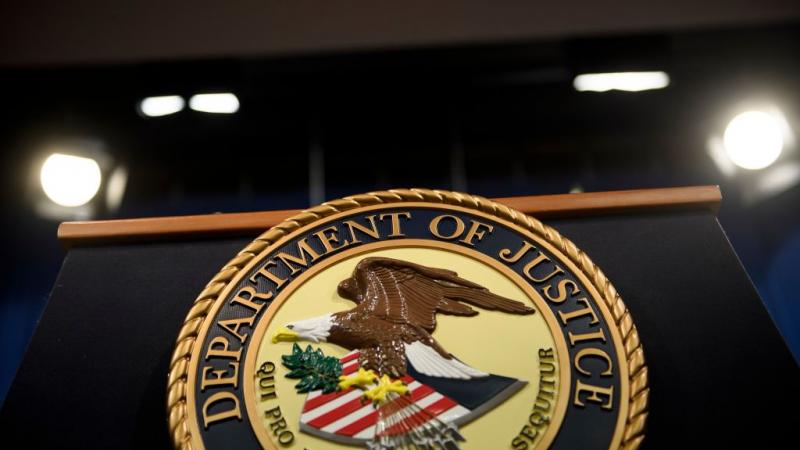
On Thursday, the DOJ’s Civil Rights Division announced that it filed lawsuits against Georgia, Illinois, Wisconsin and Washington, D.C., for failing “to produce their full voter registration lists upon request.” Including those lawsuits, the DOJ has now sued 22 states over failing to provide their voter roll information.
Louisiana, Mississippi, and Tennessee also told the DOJ on Thursday that they intend to turn over their voter registration lists, bringing “the number of states that are either in full compliance or in the process of compliance to 10,” the department said.
The DOJ cited the National Voter Registration Act of 1993, the Help America Vote Act of 2002, and the Civil Rights Act of 1960 for its authority in ensuring that states are maintaining their voter rolls.
While states have cited privacy concerns as reason not to turn over their voter rolls, Dhillon says she is asking only for "stuff like the last four [digits] of somebody's [Social Security Number], whether someone's in the country legally or not, or is a citizen or not,” which “is obviously a matter of federal records.
“So the concept that that's some kind of a privacy issue is total nonsense. So they have no right to be on the voter rolls. And so we expect to win these cases, but it may take us going up to the Supreme Court to do that.”
Dhillon also laid out states’ arguments over privacy, noting that “they're saying, ‘our state law doesn't allow this.’ But federal law regarding elections and this data trumps state law, and we're talking about federal elections and people who vote for president, Senate, Congress. We have a right at the federal government level to ensure that only American citizens are voting at only one time in one state when they vote. And so this is a no-brainer.”
She also said that when states tried to clean their voter rolls before, they would get sued, which happened under the Biden administration.
“You're going to see hundreds of thousands of people in some states being removed from the voter rolls correctly,” Dhillon said. “And by the way, why did they hesitate to do that in the past? Because the DOJ and some left-wing organizations would sue them when they did their jobs. So it's like, damned if you do, damned if you don't.
“For the rest of this administration, we're going to be supporting states cleaning their voter rolls as required by federal law, and we're just getting started.”
Shortly after President Trump took office in January, the DOJ dropped a lawsuit brought by the Biden administration against Virginia for removing about 1,600 non-citizens from the commonwealth's voter rolls.
When asked about Georgia being sued despite having Republican leadership, including Secretary of State Brad Raffensperger, Dhillon said, “I don't think the average Georgia voter thinks it's a great idea to get into a beef with the federal government over this issue.
“It's a losing issue, and I don't know what he's doing, other than flexing, and I don't know what,” she said about Raffensperger, “but I feel pretty good about that lawsuit. And Georgia was one of the problematic states, as we all know, who followed the 2020 election, with respect to ballot harvesting in the mail-in balloting, and really a lack of control over that, and particularly some counties.”
After the lawsuit against Georgia was filed, Raffensperger said in a statement, “We shared our nation-leading list maintenance practices and public voter roll data with the DOJ [on] December 8 at their request, and we look forward to working together to eliminate the federal barriers that prevent even cleaner voter rolls,” The Associated Press reported.
“Hardworking Georgians can rest easy knowing this data was shared strictly in accordance with state law that protect voters’ privacy,” he also said.
Raffensperger also said: "Georgia has the cleanest voter rolls in the country because we verify citizenship through the federal SAVE database, use [Social Security Administration] data to remove dead voters, and share data with other states to identify and remove voters who have moved.
"We look forward to working together to eliminate the federal barriers that prevent even cleaner voter rolls. Hardworking Georgians can rest easy knowing this data was shared strictly in accordance with state law that protect voters’ privacy."
In the lawsuit, the DOJ asked the court to cite Raffensperger under the Civil Rights Act of 1960 and order him to provide all the requested voter registration information within five days of the judge’s ruling.
Earlier this month, the DOJ also accused Fulton County Clerk of Court Che Alexander of failing to produce voter rolls. The clerk's office told The Center Square that it cannot comment on pending legislation.
The Facts Inside Our Reporter's Notebook
Top Stories


Trending
Just the News Spotlight
Just News, No Noise