Related Articles

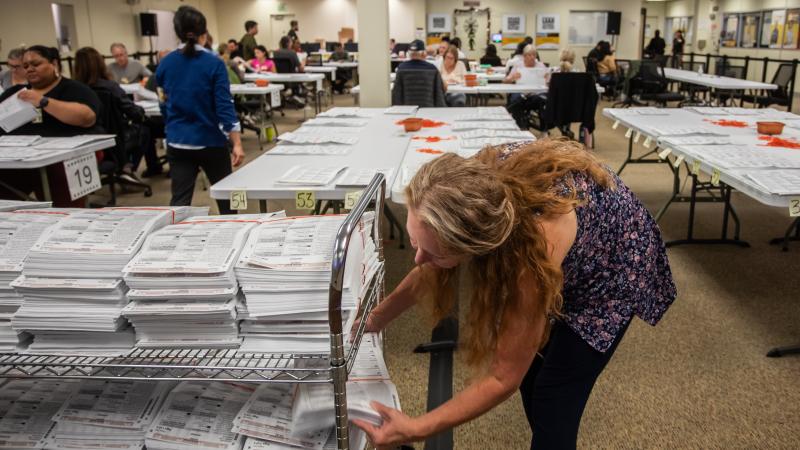
In a new report released last week, the GAO found that the agency’s backlog of unexamined patent applications reached about 838,000 in January 2025.
The U.S. Government Accountability Office is sounding the alarm about problems plaguing the U.S. Patent and Trademark Office.
The GAO warned that the agency might not meet its goal of reducing the major patent application backlog before 2031, citing rising examiner departures, increased workloads and concerns that efforts to speed up reviews could compromise examination quality.
In a new report released last week, the GAO found that the agency’s backlog of unexamined patent applications reached approximately 838,000 in January 2025.
Although the backlog declined to about 756,000 by August 2026, the watchdog said the agency is unlikely to reach its goal of 599,000 before 2031 without reducing the number of examiners leaving their jobs.
“Even with examiners doing more work, the USPTO is unlikely to reduce the backlog to under 599,000 patent applications before 2031 without lowering examiner attrition,” the report states.
The findings raise questions about the agency’s strategy of increasing examiner productivity while reducing training time and expanding the use of artificial intelligence tools.
GAO found that examiner attrition increased from 2.9% in fiscal 2020 to 7.6% in fiscal 2025. The 12-month attrition rate remained at 7.6% as of August 2026.
The agency hired 1,054 examiners from August 2025 to June 2026. However, 1,209 left the USPTO between February 2025 and June 2026, according to agency data cited in the report.
The watchdog said the agency’s efforts to reduce the backlog “may not be sustainable and could contribute to high attrition.”
One significant concern involves the elimination of annual subject-matter training. Previously, examiners received 25 hours each year to stay current with scientific and technological developments. That time was eliminated in March 2025, with examiners expected to use it for reviewing applications instead.
GAO noted that three former agency officials warned that emphasizing productivity over training and keeping up with scientific research could result in lower-quality examinations.
The report found that initial training for new examiners was reduced from 16 weeks to eight weeks in 2025. USPTO officials later said in a March 2026 webinar that initial training was scheduled to last 10 weeks.
Workload pressures have also become a concern. The Patent Office Professional Association, the examiners’ union, told GAO that new productivity requirements added more than two weeks of work annually for each examiner.
Union members also told investigators that examiners were working unpaid overtime to meet the requirements.
The report said the union warned that higher output expectations had left examiners without enough time to fully analyze evidence before making decisions on patent applications, potentially reducing the quality of examinations.
Artificial intelligence has also failed to deliver some of the expected benefits, according to stakeholders interviewed by GAO.
The report said examiners using the USPTO’s Similarity Search tool sometimes received incomplete results, forcing them to conduct full searches without the tool. One applicant who participated in an AI search pilot said the results were irrelevant to the patent application.
“While the USPTO has expanded the use of AI tools, stakeholders told GAO these tools are not yet effective,” the report said.
The report recommended that the USPTO director assess and address the risks that its backlog reduction efforts pose to examiner retention and the quality of their reports.
GAO raised concerns about the agency’s decision to pause or eliminate several mechanisms used to monitor examination quality. The USPTO had not published results from its internal and external quality surveys since 2024 and paused its external survey before administering it in 2026.
The watchdog said that without those mechanisms, the agency “may be missing opportunities to obtain information on potential risks to examination quality.”
GAO noted that the USPTO declined to provide requested information during the review, arguing that the watchdog lacked the statutory authority to conduct the audit. GAO rejected that argument, saying it had the authority to conduct the review.