Related Articles

Similar laws in California, New York, New Jersey and Maryland are now directly vulnerable and likely unconstitutional under the Wolford ruling.
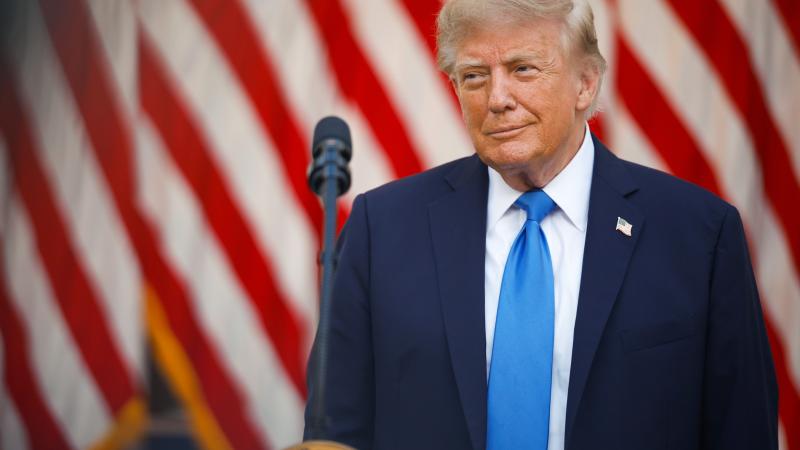
Just days after President Donald Trump told a Pennsylvania crowd that his administration is “working on” national right-to-carry legislation, the Supreme Court delivered a major Second Amendment victory to enhance Trump's record on protecting gun rights.
“Yeah, we’re working on it,” Trump said in response to cheers from the crowd on expanded gun rights, an issue that advocates have been pushing for decades.
In a 6-3 decision in Wolford v. Lopez on Thursday, the highest court in the nation ruled that Hawaii’s law requiring express property-owner permission for licensed concealed carry on private land open to the public violates the Constitution. The gun ban, a blue state tactic to skirt a previous Supreme Court decision, applied to venues like gas stations, restaurants, malls, and other highly frequented places of business.
After the 2022 Bruen decision (which required gun regulations to be consistent with the nation’s historical tradition of firearm regulation, and invalidated New York’s discretionary “proper cause” permitting system), several other states enacted new restrictions on licensed concealed carry that mirrored Hawaii's.
Similar laws in California, New York, New Jersey and Maryland are now directly vulnerable and likely unconstitutional under Wolford. Courts in ongoing or new challenges will almost certainly enjoin or strike them down, following this latest Supreme Court precedent.
National carry (more precisely, national concealed carry reciprocity) refers to federal legislation that would require states to recognize valid concealed carry permits or licenses issued by other states, much like how driver’s licenses are honored across state lines.
For licensed gun owners, this would mean that if one holds a valid concealed carry permit (or, in some proposals, qualify to carry in your home state under constitutional/permitless carry), you could legally carry a concealed handgun in other states that permit their own residents to carry concealed—without needing a separate non-resident permit, reciprocity agreement, or additional training/background check specific to the destination state.
Gun owners would still have to follow the specific rules of the state in which they reside (e.g., prohibited places like schools, courthouses, bars, or government buildings; rules on open vs. concealed carry; magazine capacity limits if any; or sensitive locations). Identification and permit verification would typically be required if asked by law enforcement.
Travel would become far simpler and less risky legally. Gun owners could drive or fly across state lines (subject to federal transport rules like the Firearm Owners’ Protection Act) with greater confidence that their home-state qualification travels with them. This is especially useful for frequent travelers, commuters across state borders, or those moving temporarily.
In the roughly 29 states with constitutional/permitless carry laws, non-residents from similar states could often carry without any permit at all (if not federally prohibited), further expanding options. National concealed carry reciprocity would treat the Second Amendment as a national right rather than one that “stops at the state line.”
Bills like the Constitutional Concealed Carry Reciprocity Act (H.R. 38 in the 119th Congress) have sought to codify this, but such measures remain under discussion with expressions of support from the Trump administration.
During his first term, Trump signed legislation revoking an Obama-era Social Security Administration rule that would have automatically reported certain disability beneficiaries with mental health conditions to the NICS background check system as prohibited persons, thereby preserving their ability to purchase firearms.
Additionally, he signed the Fix NICS Act in 2018 to improve federal agency reporting to the background check system with accountability measures but without imposing new restrictions on law-abiding owners.
His administration settled a lawsuit allowing Defense Distributed to publish 3D-printed firearm files, and directed agencies during the COVID-19 pandemic to treat gun stores, ranges and permitting offices as essential businesses.
Trump also appointed three Supreme Court justices whose later rulings (notably New York State Rifle & Pistol Association v. Bruen in 2022) significantly strengthened individual Second Amendment protections.
In his second term, Trump issued an executive order on February 7, 2025, titled “Protecting Second Amendment Rights,” directing the Attorney General to review and develop a plan to reverse Biden-era actions deemed to infringe on gun rights, including regulations on firearms classifications, dealer enforcement and litigation positions.
Furthermore, Trump established a Second Amendment Enforcement Task Force, his administration rolled back the ATF’s “zero tolerance”/enhanced regulatory enforcement policy on gun dealers, replacing it with a more measured approach focused on public safety violations. It permitted the sale of forced-reset triggers; and the president has publicly discussed and expressed support for advancing national concealed carry reciprocity legislation.
Amanda Head is White House Correspondent for Just The News. You can follow her here.