America’s competitive spirit: USA’s 250 celebration merges civics, history and culture
President Trump has been closely tied to the initiative, with the administration promoting it as a way to strengthen patriotic education and civic knowledge among youth.
The Trump administration has thus far made a quiet but deliberate effort to make civic and American history a larger part of the U.S. education system. The effort went to primetime Tuesday night with a nationally televised spelling-bee-like student civics and history event.
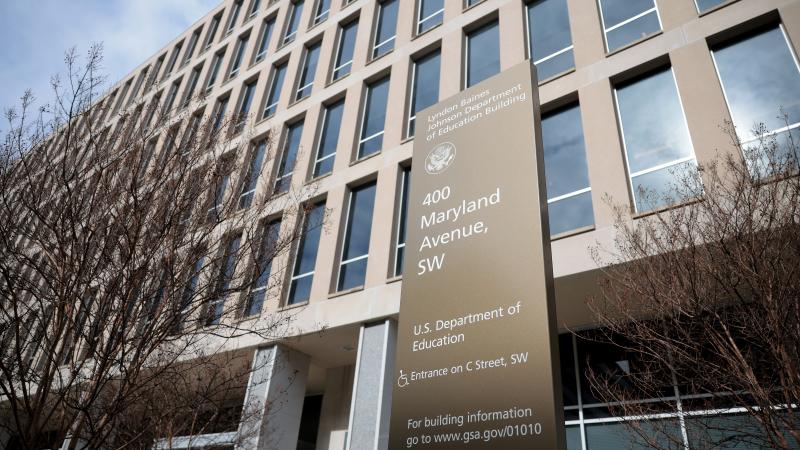
The Presidential 1776 Award, which was launched by the U.S. Department of Education under Secretary Linda McMahon and aired on CBS, focused on American founding history, the Declaration of Independence, the Constitution, the Revolutionary War, and core civics principles.
With more than 8,000 entrants, from every state, students first took the “Impossible Civics Test” (an online, timed, proctored multiple-choice exam). Top scorers advanced through regional semifinals, and the best reached the national finals in Washington, D.C. with the top two finalists competing head-to-head in verbal/short-answer rounds.
The official questions for the Impossible Civics Test are not publicly published as a static list or PDF because the exam uses a randomized, security-proctored digital pool developed by the James Madison Memorial Fellowship Foundation. Readers, however, can take the interactive exam directly on the Presidential 1776 Award Welcome Page.
Top prizes include scholarships totaling up to $250,000 (one winner up to $150,000), plus White House visits for the top three.
Competition from a more patriotic, less divided era
Events like this echo a tradition of large-scale, patriotic civic education during America’s milestone anniversaries, especially the 1976 Bicentennial celebrating the 200th anniversary of independence.
That era—amid post-Vietnam and Watergate recovery—saw widespread efforts to reconnect citizens, especially youth, with founding ideals through contests, pageants, debates, and educational programs.
The American Revolution Bicentennial Administration (ARBA) coordinated tens of thousands of local events, including school pageants, history quizzes, reenactments, youth debates (such as Bicentennial Youth Debates), and knowledge competitions on the Constitution and American history.
Programs like We the People (which grew from Bicentennial roots) engaged millions of students in simulated congressional hearings and civics competitions testing knowledge of the Constitution and Bill of Rights.
Schoolhouse Rock!’s “America Rock” series taught history and civics through catchy songs, while coin design contests, essay competitions, and community history projects proliferated. These fostered national unity, pride, and hands-on learning—often with parades, tall ships, wagon trains, and fireworks reinforcing the message.
Operation Sail (OpSail '76), featured a parade of over 200 vessels and 16 majestic tall ships that sailed into New York and Boston harbors, drawing record-breaking crowds.
Making patriotism cool again
The nation's 250th is evocative of the 1976 celebrations that blended education, competition, and spectacle in ways that, at least then, felt unabashedly patriotic, and blended them all with culture. The competition finals were hosted by television star and Hollywood icon Mario Lopez, who brought his own spirit and love of America to the screen.
In the United States, Gallup’s 2025 poll found that only 58% of adults describe themselves as extremely or very proud to be American—a record low, down from peaks above 85-90% in the early 2000s.
Pride levels show sharp partisan divides, with about 92% of Republicans expressing high pride compared to just 36% of Democrats. Younger generations also report lower levels, with Gen Z averaging around 40% in recent years versus over 70% for older cohorts.
The Trump administration has worked to restore patriotic civics education, emphasizing America’s founding principles, Constitution, and history.
In January 2025, President Trump signed an executive order directing federal support for Constitution Day programs and prioritizing funding for American History and Civics Academies.
On September 17, 2025 (Constitution Day), the Department of Education launched the America 250 Civics Education Coalition with partners including Hillsdale College, Turning Point USA, and the America First Policy Institute. The initiative aims to strengthen civic knowledge ahead of the nation’s 250th anniversary, backed by over $153 million in new grants for seminars and educational programs.
The Facts Inside Our Reporter's Notebook
Top Stories

Trending
Just the News Spotlight
Just News, No Noise