U.S. spy chiefs equate China’s targeting of American voter files to ‘election interference’
Revelation from President Donald Trump earlier this month reverberates in Washington.
The White House on Thursday released a statement from its spy agency chiefs making clear that China's targeting of Americans' voter registration files that began during the 2020 election likely meets the intelligence community's definition for "election interference."
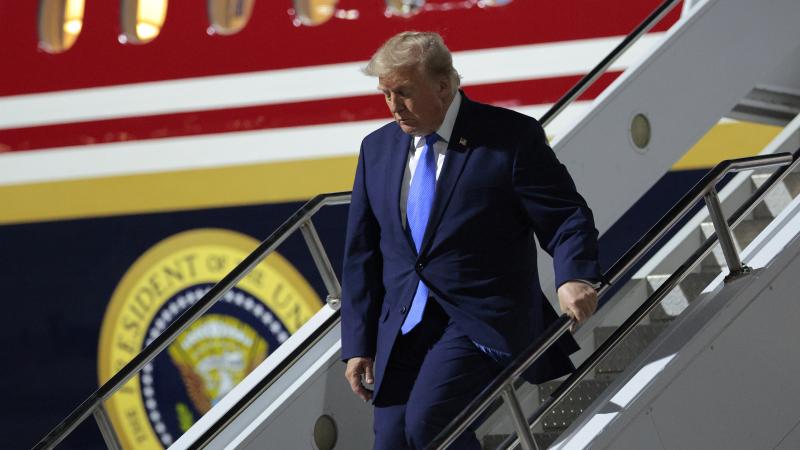
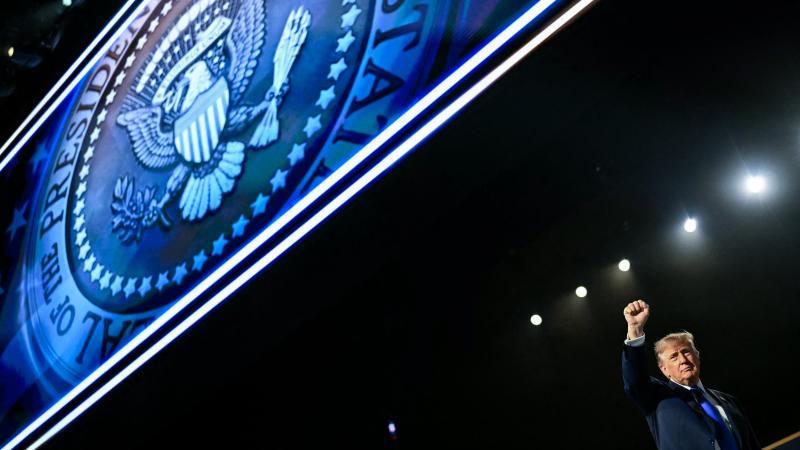
The fact sheet approved by the chiefs of the Central Intelligence Agency, the National Security Agency, the Office of the Director of National Intelligence and the Homeland Security Department followed President Donald Trump's declassification of documents and July 16 speech exposing weaknesses in the U.S. election system ranging from voting machines vulnerabilities to noncitizens making it illegally onto state voter roles.
Those declassified documents, the spy chief's noted in Thursday's fact sheet, included the intelligence community’s official definition for election interference, which includes a foreign power targeting voter registration infrastructure or data.
“Election influence includes overt and covert influence activities of foreign governments or actors serving as agents of, or on behalf of, foreign governments intended to affect directly or indirectly a US election- including candidates, political parties, voters or their preferences, or political processes," the statement said, citing the official definition.
"Election interference is a subset of election influence targeted at the technical aspects of the election, including voter registration, casting and counting of ballots, and reporting of results," it added.
Under that definition—used by the Central Intelligence Agency (CIA), National Security Agency (NSA), Homeland Security and the Director of National Intelligence (DNI)—China’s acquisition of U.S. voter registration data constitutes election interference.
The statement also noted that when China acquired 220 million American voter registration records, it "bought, stole or hacked" the data and obtained non-public information that could not be commercially bought.
The revelation comes after Trump delivered a primetime address presenting what he described as new evidence of multiple election security breaches that he said were concealed by a self-proclaimed “shadow government” and the Biden administration.
According to Trump and documents that were simultaneously released, the intelligence community in the spring and summer of 2020 detected Chinese acquisition of U.S. voter databases containing tens of millions of files, yet made a concerted effort not to inform the then-president, Congress or the public.
The number of compromised files later grew to roughly 220 million by 2023 as the Biden administration took no action to halt the activity, Trump said. Evidence also indicated China activated interference methods specifically targeting Trump even as the intelligence community publicly assessed that Beijing had not deployed efforts to alter the election outcome.
Trump further cited intelligence reports dating to 2020 that identified vulnerabilities allowing foreign powers to hack U.S. voting machines and alter ballots in ways undetectable by post-election hand audits. In the summer and fall of that year, Venezuela moved from theory to a practical plan exploiting those weaknesses, he said, and a recent Department of Homeland Security test confirmed the vulnerabilities remain
Democrats quickly dismissed Trump’s revelations about Chinese acquisition of hundreds of millions of U.S. voter files, persistent voting machine vulnerabilities and other election security lapses as falling short of actual interference, arguing that the intelligence showed no evidence foreign actors had altered ballots or changed outcomes.
Senate Minority Leader Chuck Schumer and other party leaders framed the address as an attempt to undermine public confidence ahead of the midterms rather than a genuine national security alert, with some noting that much of the voter data in question is commercially available.
The stance stood in notable contrast to earlier warnings from the same party: In December 2019, Sens. Elizabeth Warren, D-Mass., Amy Klobuchar, D-Minn., and Ron Wyden, D-Ore., along with Rep. Mark Pocan, D-Wisc., sent letters to private equity firms invested in Dominion Voting Systems and other major vendors, declaring that the companies had “long skimped on security in favor of convenience” and left voting systems nationwide “prone to security problems.”
Those earlier alarms about hackable machines and foreign risks, once treated as urgent threats to democracy, appeared to carry less weight once raised by Trump.
Amanda Head is White House Correspondent for Just The News. You can follow her here.
The Facts Inside Our Reporter's Notebook

Top Stories




Trending
Just the News Spotlight
Just News, No Noise