Red carpet outrage meets White House action: Hollywood’s Trump blind spot
Despite years and repeated instances of celebrities and Democrats hysterically sceaming about forced labor, those who yelled the loudest are notably silent amid Trump’s crackdown on the human rights abuses.
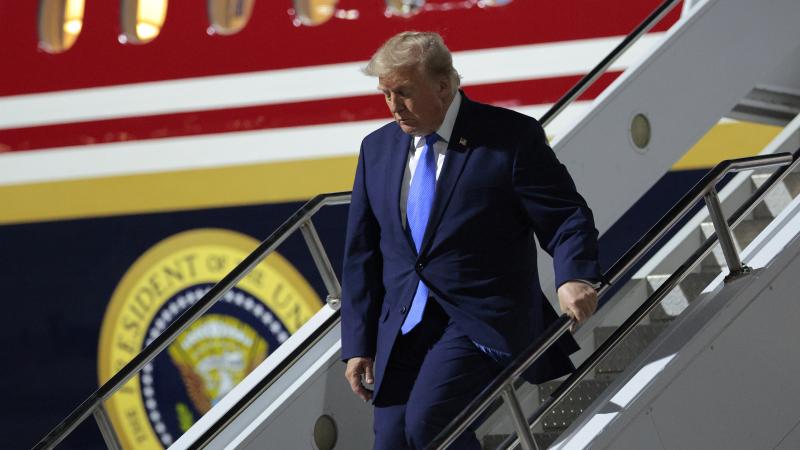
The Trump administration on Friday imposed new tariffs on imports from 60 trading partners that have failed to ban or effectively enforce prohibitions on goods produced with forced labor. The action highlights an issue that Democrats and Hollywood elites used to at least pretend to care about, though none have spoken up about this latest move to crack down.
"They hate Trump. So if Trump's doing something, they think it's bad," Sen. Rick Scott, R-Fla., told Just The News.
The new tariffs range from 10% to 12.5% and target practices the White House says distort global markets and undercut American workers, in addition to the human rights aspect of forced-labor in nations like North Korea, China, India and others.
Countries that allow it and companies that ignore it
State-imposed forced labor remains most severe in China’s Xinjiang region, where authorities have transferred hundreds of thousands of Uyghurs and other Muslim minorities into factories under coercive “labor transfer” programs involving surveillance, restricted movement, and ideological re-education, according to U.S. government and independent reports.
The high prevalence of forced and bonded labor also persists in North Korea’s state-run system, Pakistan’s brick kilns and agriculture, and parts of India’s informal economy.
U.S. companies with the most widely documented supply-chain exposure to these risks include Apple, Nike, Adidas and Victoria's Secret, whose products or components have been linked in multiple investigations to factories or raw materials (such as cotton, polysilicon, aluminum, and electronics parts) connected to Xinjiang labor transfers, though the companies maintain they audit suppliers and prohibit forced labor.
In 2011, Blomberg's Markets Magazine detailed how Victoria's Secret used child labor to produce cotton in Burkina Faso. In reaction, the company promised to end the practice.
Democrats used to care about human rights abuses
Democratic lawmakers previously prioritized efforts to combat forced labor abroad, most notably through the bipartisan Uyghur Forced Labor Prevention Act, which was introduced by Rep. Jim McGovern, D-Mass., and signed into law by former President Joe Biden in December 2021.
The measure created a rebuttable presumption that goods produced in China’s Xinjiang region involve forced labor and banned their importation unless companies could prove otherwise, with former House Speaker Nancy Pelosi and other leading Democrats hailing it as a major human rights step.
As of Tuesday, however, leading Democrats have not publicly praised or endorsed the Trump administration’s new tariffs targeting countries that fail to ban or enforce prohibitions on forced-labor goods.
Hollywood joins the virtue signaling
Hollywood has often chosen forced labor as its cause-du-jour, drawing attention to human rights abuses abroad. In 2008, director Steven Spielberg resigned as an artistic adviser to the Beijing Olympics to protest China’s support for the Sudanese government amid the Darfur conflict, which involved widespread forced displacement and labor abuses.
In 2020, comedian John Oliver devoted a full segment of his HBO show Last Week Tonight to the mass detention and forced labor of Uyghurs and other minorities in China’s Xinjiang region, detailing the scale of the camps and supply-chain links.
Separately, actors including Alyssa Milano, Cher, Danny Glover and Jada Pinkett Smith participated in the International Labour Organization’s “End Slavery Now” campaign, publicly calling for action against the estimated tens of millions trapped in modern slavery and forced labor worldwide.
These celebrities have made no mention as of Tuesday of Trump's actions against the offending nations.
Fast fashion and other hard-hit industries
Fast fashion’s relentless demand for low-cost, quickly produced clothing has long amplified forced-labor risks in global supply chains, particularly through heavy reliance on cheap materials like polyester and garments from China’s Xinjiang region and factories in Bangladesh, Cambodia, and Pakistan.
Retailers and brands such as Gap, H&M, Zara (Inditex), Shein, and Forever 21 have faced repeated scrutiny for sourcing materials or finished apparel linked to state-imposed labor transfers of Uyghurs or other exploitative practices, according to investigations by human-rights groups and U.S. government reports.
While some companies have pledged to exit Xinjiang cotton or strengthen audits, the industry’s high-volume, low-margin model continues to create pressure for the cheapest possible inputs, sustaining exposure to the very forced-labor conditions that recent U.S. trade actions, including the Trump administration’s new tariffs, aim to address.
Other industries that may likely suffer from the tariffs will be technology, specifically, brands like Samsung, Apple, Google, Microsoft and LG. In the auto sector, Toyota, Ford, BMW and Volkswagen will be hard-hit. Even the fast-food industry can't escape it. Companies like McDonald's, Starbucks, KFC, and Coca-Cola have appeared in reports on critical minerals, packaging, or other inputs potentially tied to Xinjiang sourcing.
Amanda Head is White House Correspondent for Just The News. You can follow her here.
The Facts Inside Our Reporter's Notebook

Top Stories


Trending
Just the News Spotlight
Just News, No Noise