Related Articles

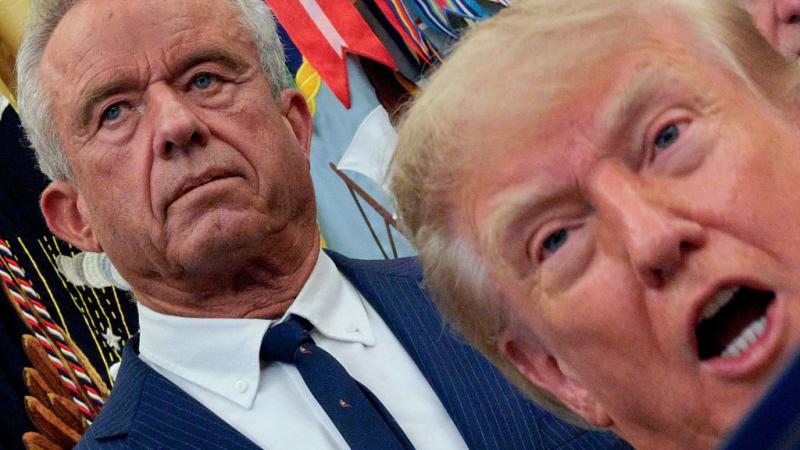
A full agenda: The president signed an arctic security pact, put public pressure on Tehran and Moscow, found an opening with Beijing and made a clear statement that Washington intends to keep the lead in what Trump now calls “superintelligence.”
President Donald Trump used the United Nations gathering this week and the run-up to a White House summit to work through the largest foreign-policy files on his desk in one stretch: Iran, Russia, China, artificial intelligence, Greenland and a contracting global peace organization.
The results were plainly evident Tuesday when the second-term president signed an Arctic security deal that many said was impossible, forced Cuba's diplomats to storm out of a global meeting and earned polite applause from the UN General Assembly (UNGA) audience for defanging Iran's nuclear ambitions.
And on Wednesday, Trump pivots to another high-stakes meeting when China's president arrives for the summit.
"We've not seen anything like this, even during President Trump's first term, which in many ways was his learning phase. He was figured out how to pull the levers of government. Now he's very very capable at it," former Deputy National Security Adviser Victoria Coates told Just The News.
"That's what he really laid out today in this historic UNGA speech: everything he's been doing while everyone else in that hall has been sitting around and bellyaching and clutching their pearls and generally getting upset over things," Coates added.
While some of the disputes are not over, what this week produced was a rare stacking of them on the same calendar — a signed Arctic security pact, public pressure on Tehran and Moscow, an opening with Beijing and a clear statement that Washington intends to keep the lead in AI, which Trump now wants to be branded as “superintelligence.”
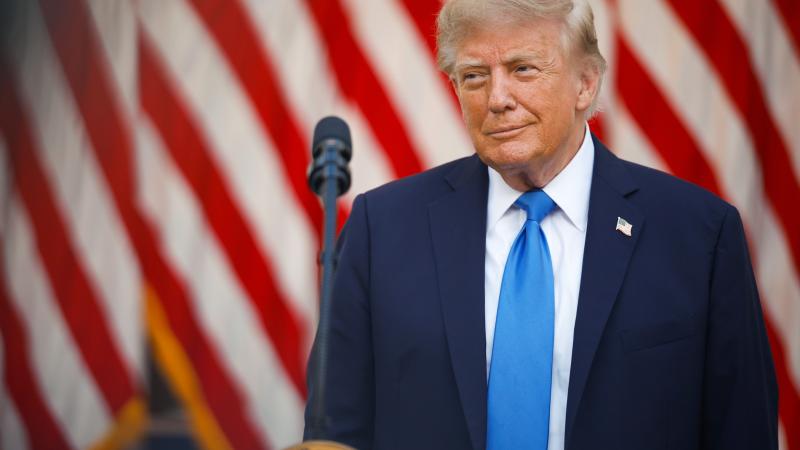
Trump reserved the hardest language in his Tuesday address to the General Assembly for Iran. He repeated that he will “never allow Iran to have a nuclear weapon,” defended the U.S.-Israeli campaign and framed the choice as a deal that would let Iran rebuild — or, if talks collapse, a far more destructive strike, driving them "into hell."
He told delegates he believes an agreement is more likely after the November 3 midterm elections, arguing that Tehran is waiting for any meaningful change in the composition of the next Congress. The war, now approaching the seven-month mark, has shaken energy markets and tested alliances.
Trump kept both tracks open: both military pressure and an offer of “full economic cooperation” if Iran ends its nuclear program and support for terror groups. Meetings with gulf leaders are also on his New York schedule as the White House weighs its next steps.
On Ukraine, the tone was more of a closer’s pitch. “We’re working very closely with the leaders of Russia and Ukraine, and we will get that one done,” Trump said, adding the war would end “more quickly than people understand.”
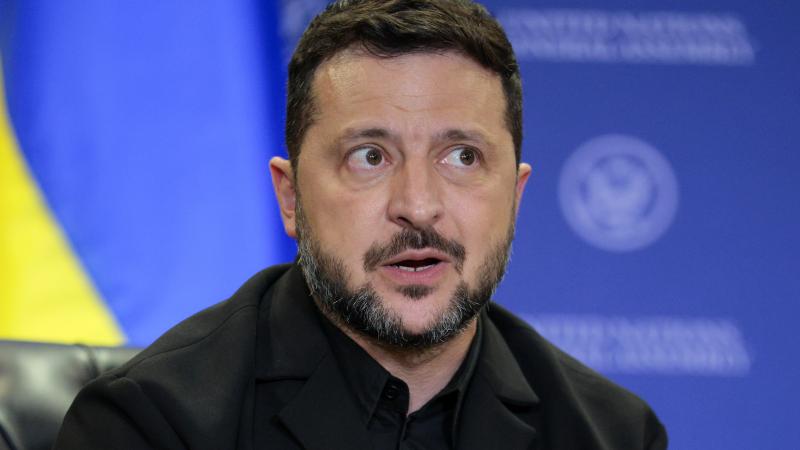
The remark landed as he met Ukrainian President Volodymyr Zelenskyy and as Russian Foreign Minister Sergey Lavrov prepared for New York talks. Trump has pressed Kyiv toward an energy truce after Ukranian drone strikes on Russian refineries and a subsequent climb in U.S. diesel prices.
Last week, Trump signed a new sanctions package aimed at Moscow’s energy sector while still holding out the prospect of commercial deals if the fighting stops. That mix has not produced a ceasefire, and has kept the United States in the middle of the contretemps.
The U.N. week is the runway for Thursday’s meeting with Chinese President Xi Jinping, Xi’s first state visit to Washington in more than a decade. Neither side is advertising a grand bargain. The practical test is whether they extend a fragile trade truce set to expire Nov. 10 and open a formal dialogue on AI.
Treasury Secretary Scott Bessent said weekend talks produced an opening for an AI notification channel and more trade in nonsensitive goods. Rare earths, chips, Taiwan and Iran remain on the same table. Hosting Xi is the administration’s bet that a managed rivalry beats another tariff spiral.
Trump used the General Assembly to reject a “globalist scheme” to control the technology and to rebrand it as “superintelligence.” “We’re leading China now by a lot and everyone else,” he said. “I’m not going to stifle growth of something that will be bigger than the Industrial Revolution.”
The speech followed his weekend proposal for an “AI Force” and an AI czar. The policy is acceleration first, with the Justice Department as the backstop rather than a new international regulator. While critics want binding global limits, Trump’s answer is American lead-time, watched at home.
On the sidelines, Trump signed a security agreement with Danish Prime Minister Mette Frederiksen and Greenland's Prime Minister Jens-Frederik Nielsen. The pact expands the U.S. military footprint beyond Pituffik Space Base, with new sites expected at Narsarsuaq and Mestersvig, and is designed to keep U.S. adversaries from basing or making sensitive investments on the island without Washington’s approval.
It is not annexation. Denmark says the deal recognizes the kingdom’s sovereignty and Greenland’s right to self-determination and places Arctic security in a NATO frame. After months of takeover talk that rattled the alliance, the signed paper trades maximalist rhetoric for a larger, more durable U.S. presence in the High North.
Trump told the Assembly the United Nations has “great, great potential” but “must stop imposing the far-left agenda of globalist bureaucrats who nobody ever elected.” He said U.S. pressure helped cut the U.N. budget by 15% in 2026 and trim thousands of posts.
Officials have separately touted more than $1 billion in assessed-budget reductions this year, including a smaller military peacekeeping budget.
Washington has withdrawn from dozens of U.N. entities and delayed dues, then released a partial payment to preserve voting rights. The result is a leaner institution and a more transactional American role: keep the forum, shrink the bureaucracy, fund what the White House calls core peace-and-security work.
That is the week’s through-line. Trump did not end the Iran war, stop the fighting in Ukraine or lock in a China deal. He did shine the spotlight on every major issue on the same stage — and left New York with a signed Arctic pact, a public clock on Tehran and Moscow, and a message that the next contest, in his telling, belongs to the country that wins superintelligence.
Amanda Head is the White House Correspondent for Just the News. You can follow her here.